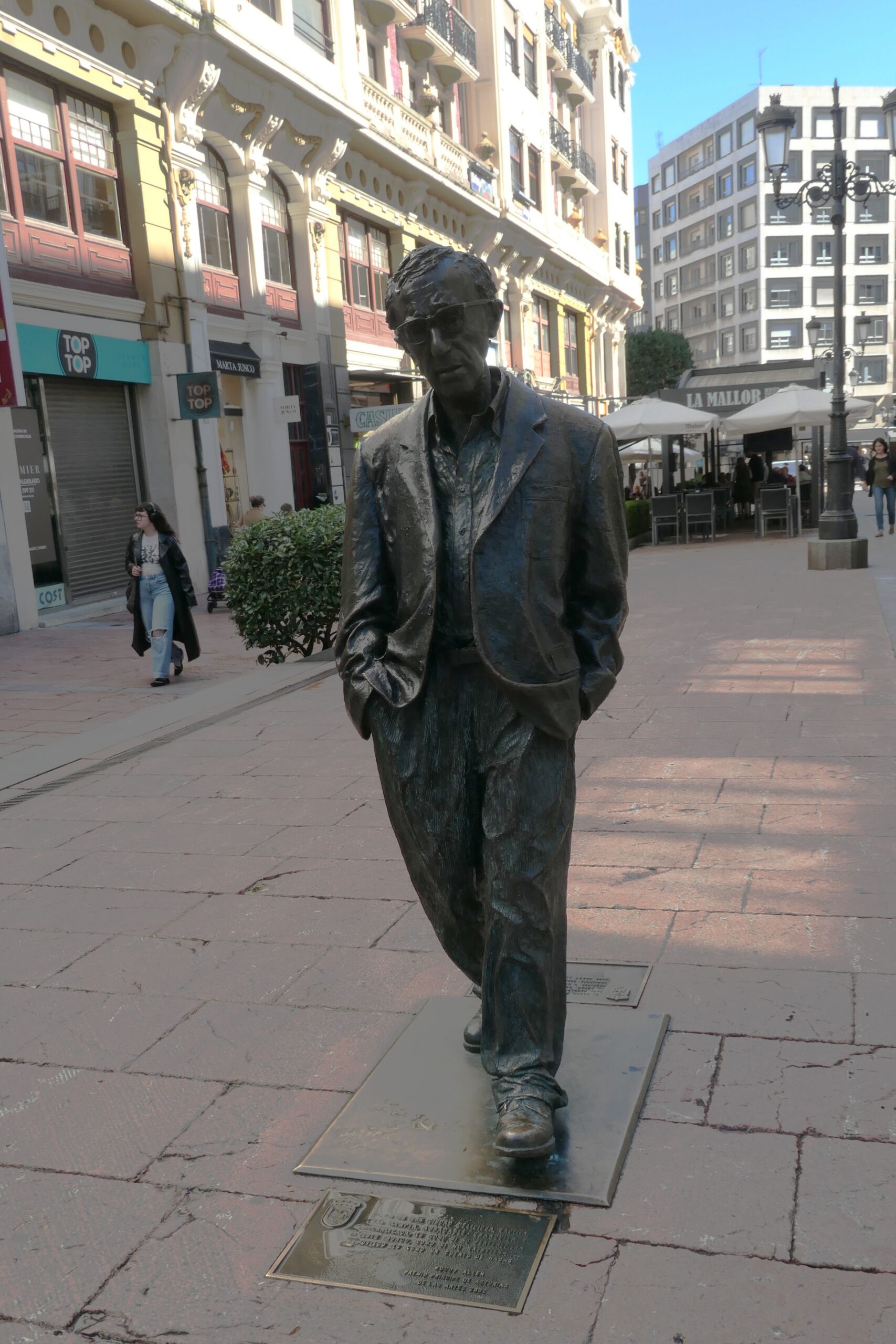
SEPTEMBER 7, 2024 : As a tourist destination, Oviedo is charming. However, as a place to see Jewish heritage sites, I have mixed feelings. It feels somewhat off that the most prominent symbol of Jewish heritage in the city is a statue of Woody Allen. Details to follow.
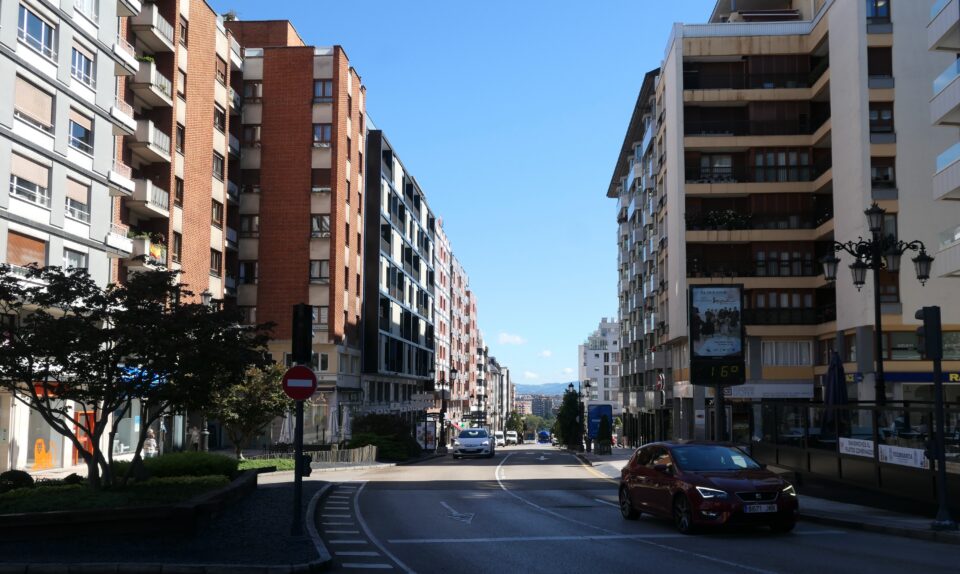
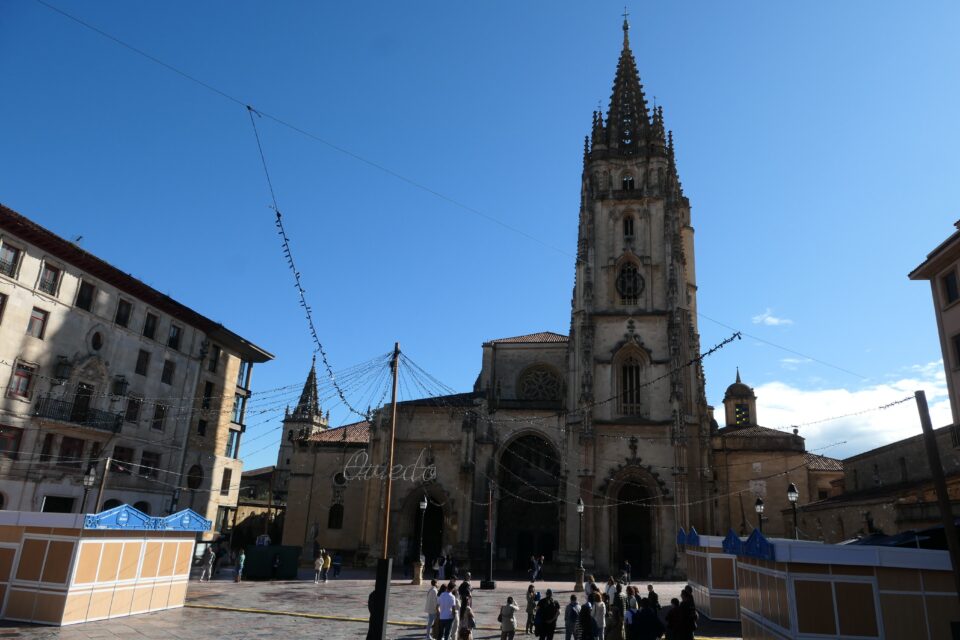
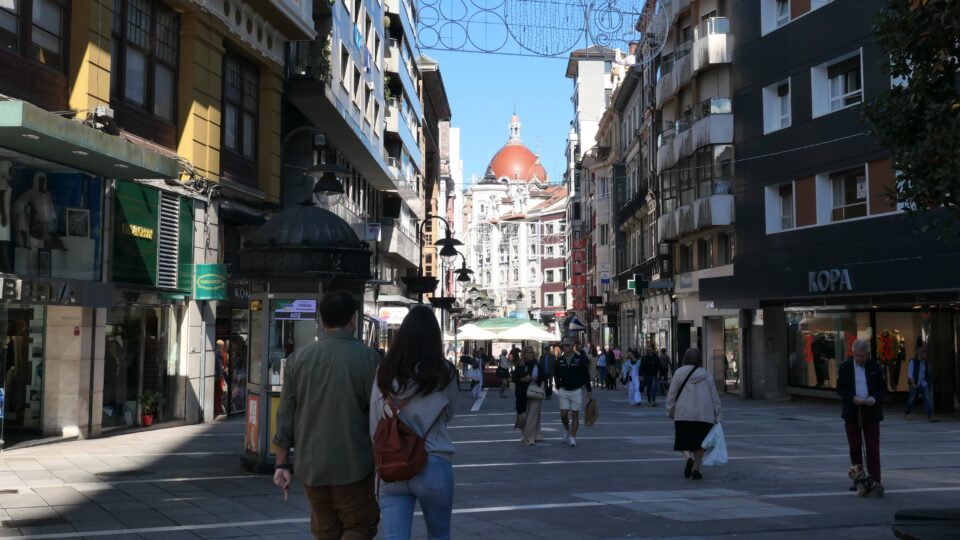
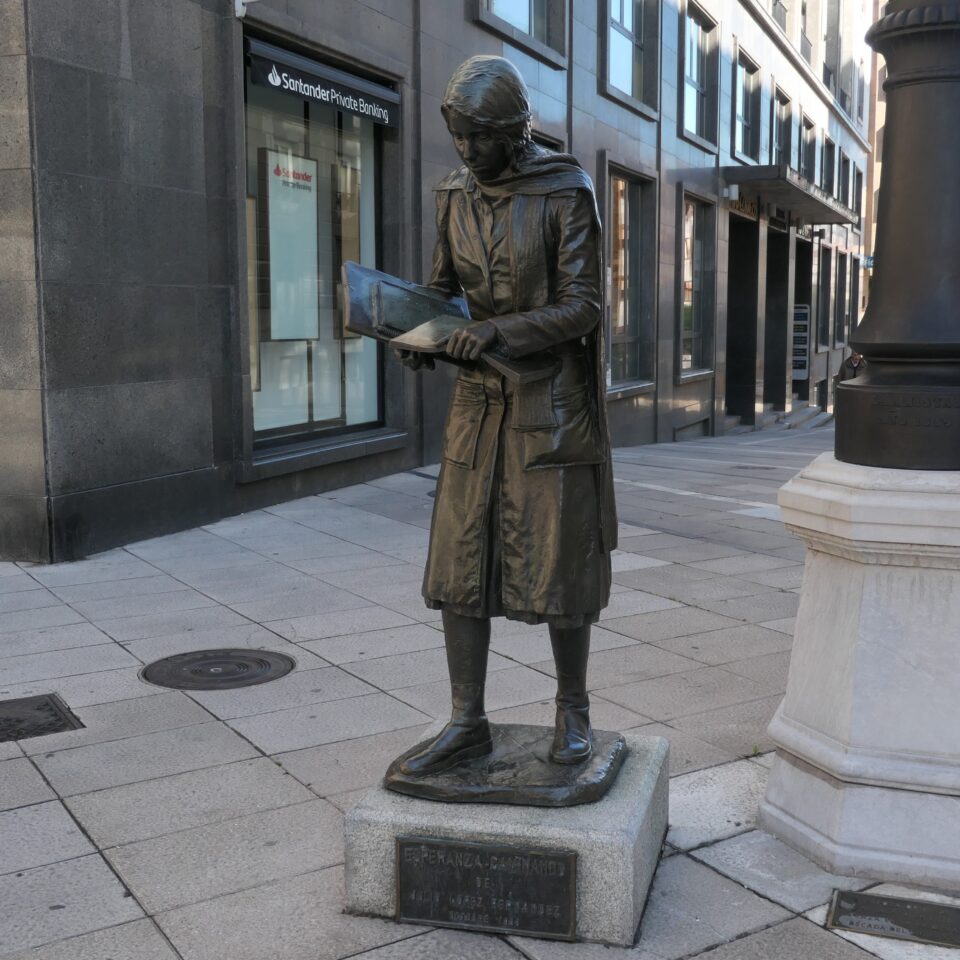
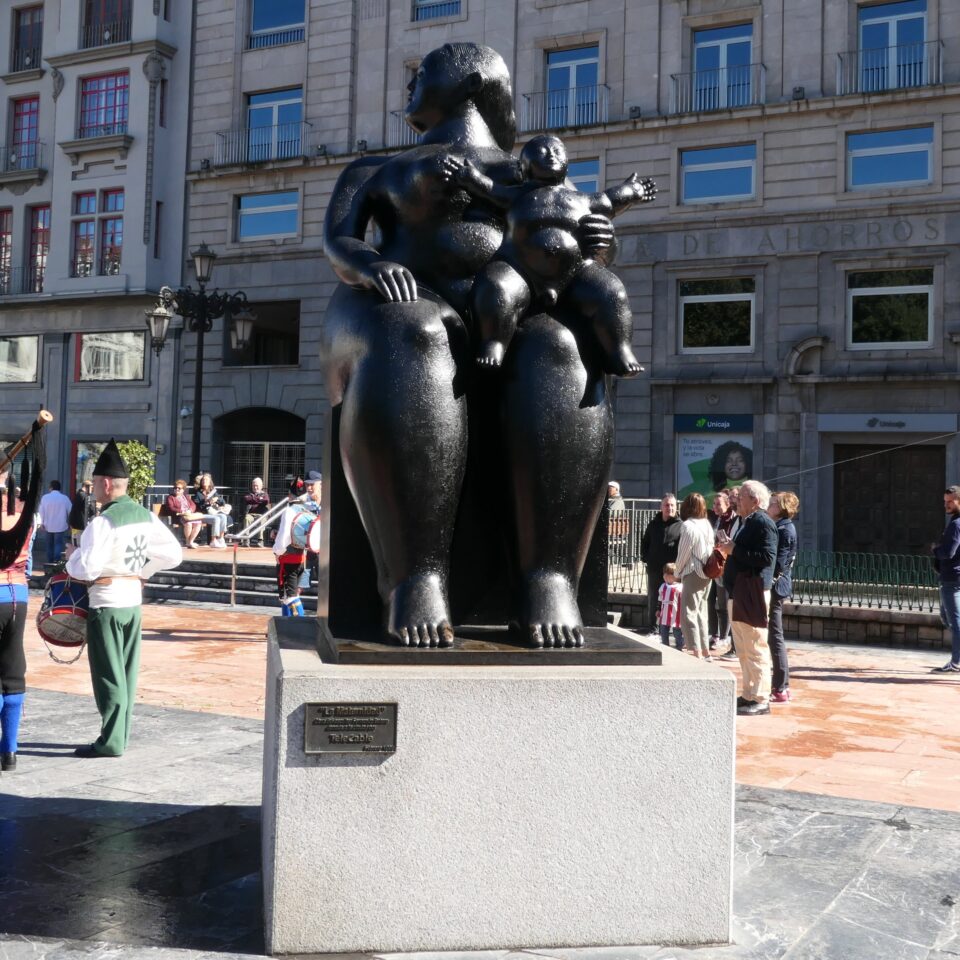
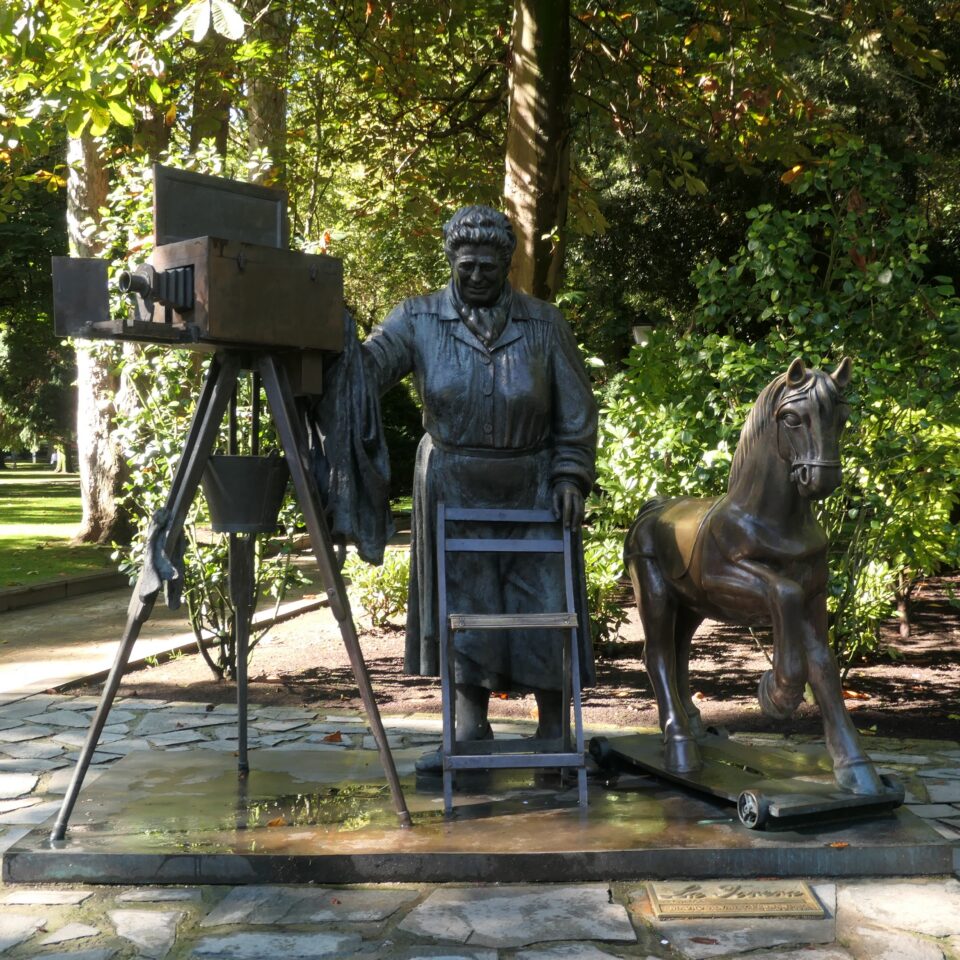
There are plenty of reasons to visit Oviedo. The city has a beautiful medieval old town, with narrow cobblestone streets, handsome old buildings, and an impressive Gothic cathedral at its heart. It has a lively cultural side as well, with museums, theaters, and galleries. As you walk around, you keep coming across statues and outdoor sculptures — more than a hundred of them are scattered throughout the city. Oviedo has a clean, well-kept, welcoming feel, and becomes a very easy place to like.
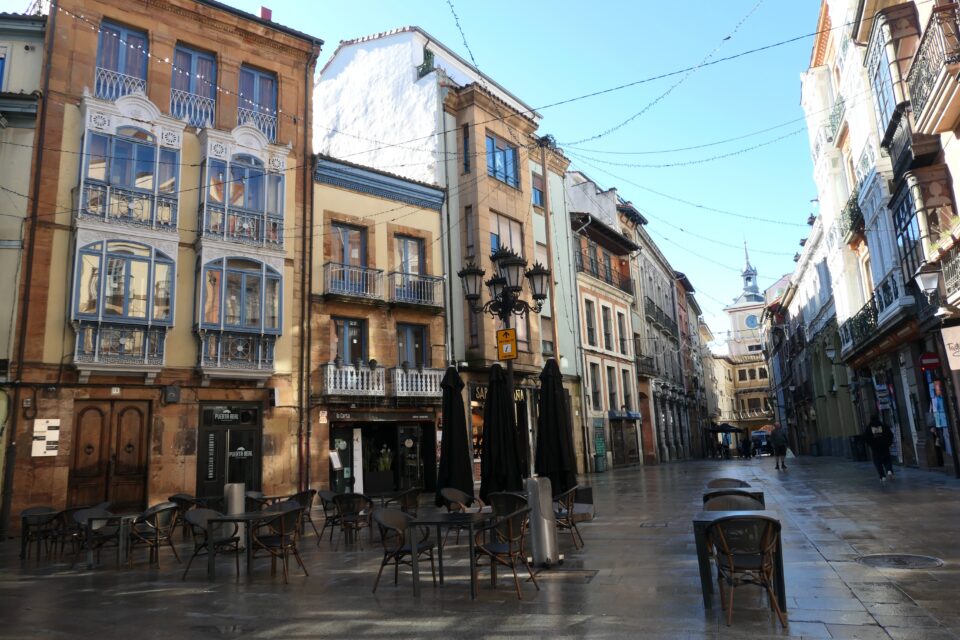
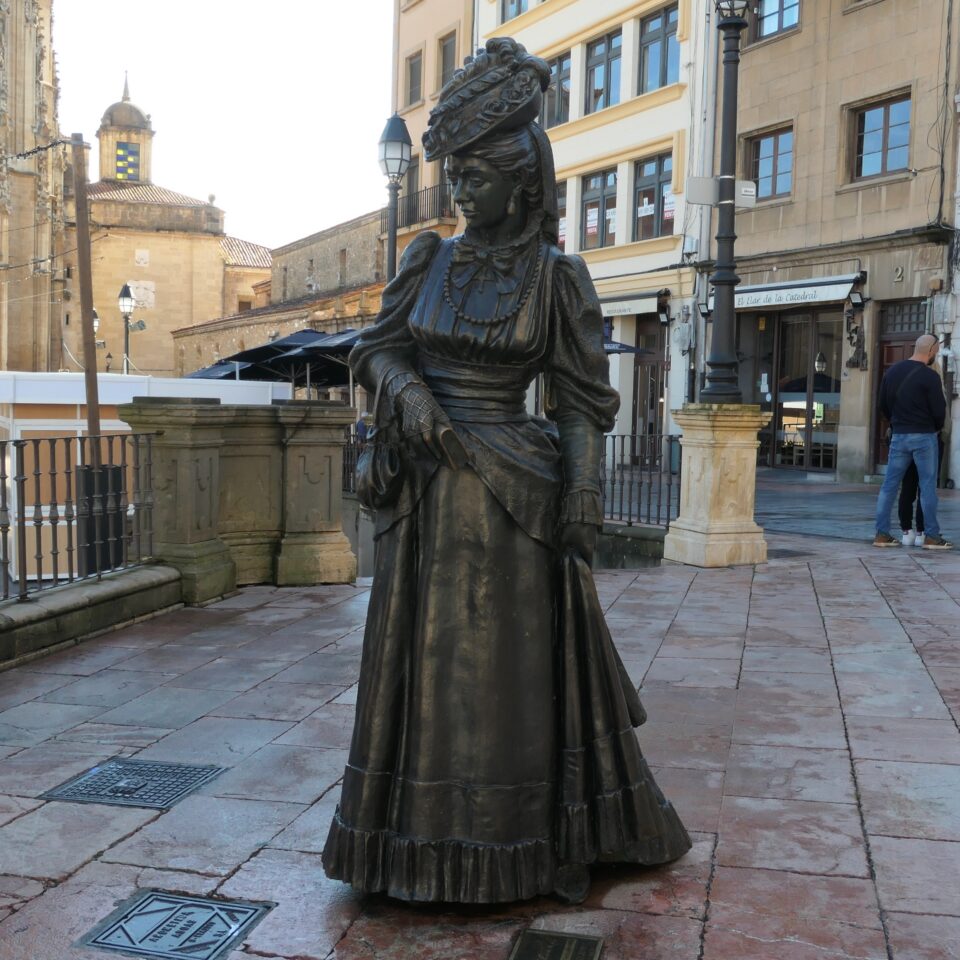
The Jewish history of Oviedo, like in many parts of Spain, is marked by a period of thriving community life followed by decline and expulsion. After 1492, any remnants of the Jewish community were repurposed or lost to urban development. In other words, there is not much left to see.
Recently, Oviedo wanted to acknowledge its Jewish heritage through historical markers and cultural events. We found that today these markers are mostly hidden and unkept. It seems that in the past, Oviedo belonged to the Network of Jewish Quarters (Red de Juderías de España), which promotes the preservation of Jewish history and culture, but is no longer a member.
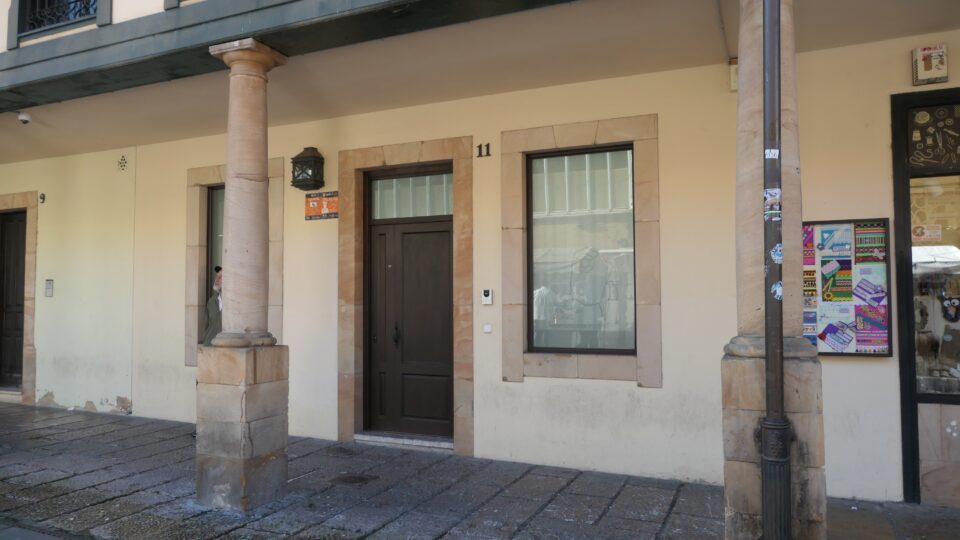
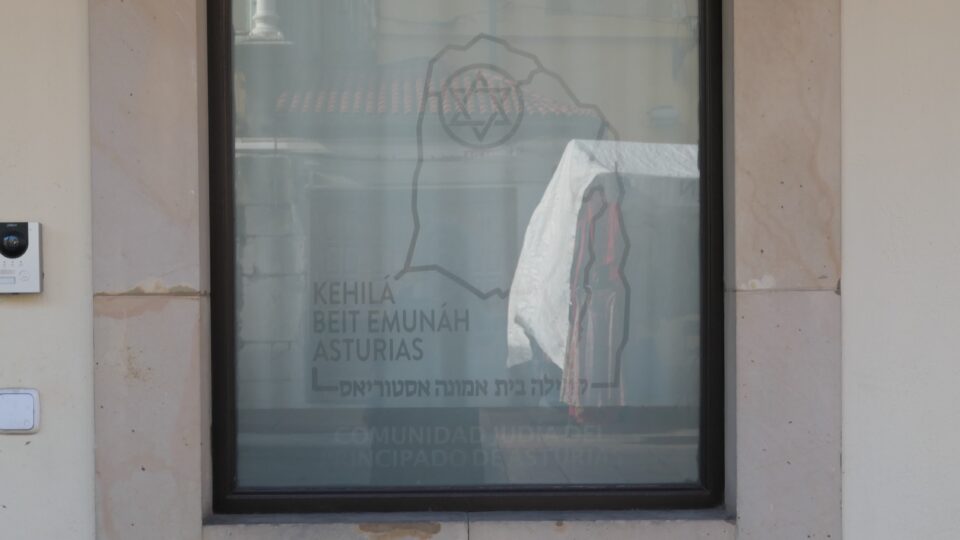
On the other hand, there seemed to be a working synagogue in the city, Kehila Beit Emunáh, which, according to its website, offers daily prayers and weekly classes.
This morning, on Shabbat, we walked to the synagogue, expecting to find a service in progress, but the building was locked. We waited for half an hour, hoping someone would arrive, but there was no sign of anyone. The only way to contact the congregation is through an online form on their website, but that did not seem to work. Disappointed, we continued to the tourist bureau.
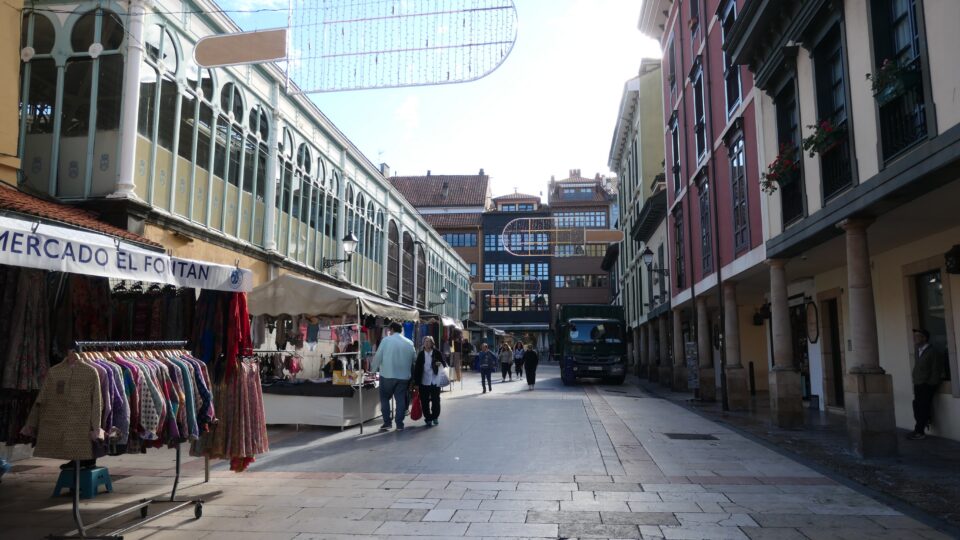
At the tourist bureau, there was a line, and when it was finally our turn, we asked the clerk about Jewish heritage sites in the city. To his credit, he admitted he didn’t know anything but made the effort to find out, even with other people waiting. After a few minutes searching on his computer, he returned with a list of places for us to explore.
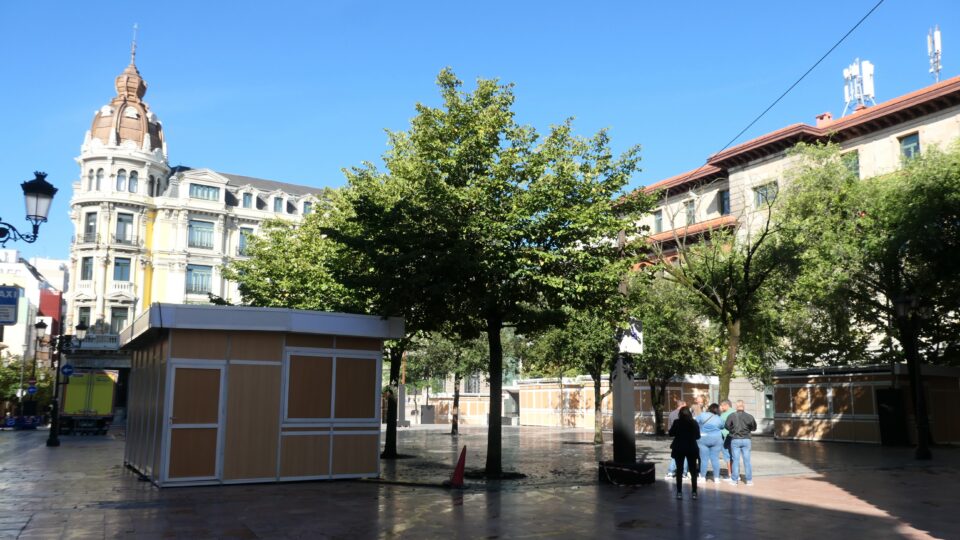
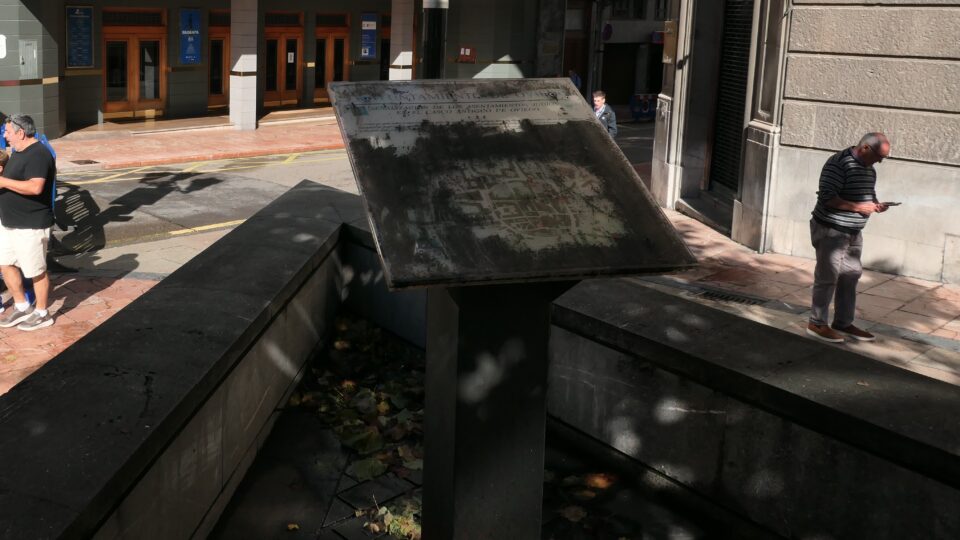
Our first stop was Plaza Porlier, which was once the location of the Royal Castle and marked one of the boundaries of the Jewish Quarter. A sign commemorating the former Jewish community stands there. However, there were market booths blocking access to the sign, but we managed to squeeze through, only to find the sign weathered and unreadable.
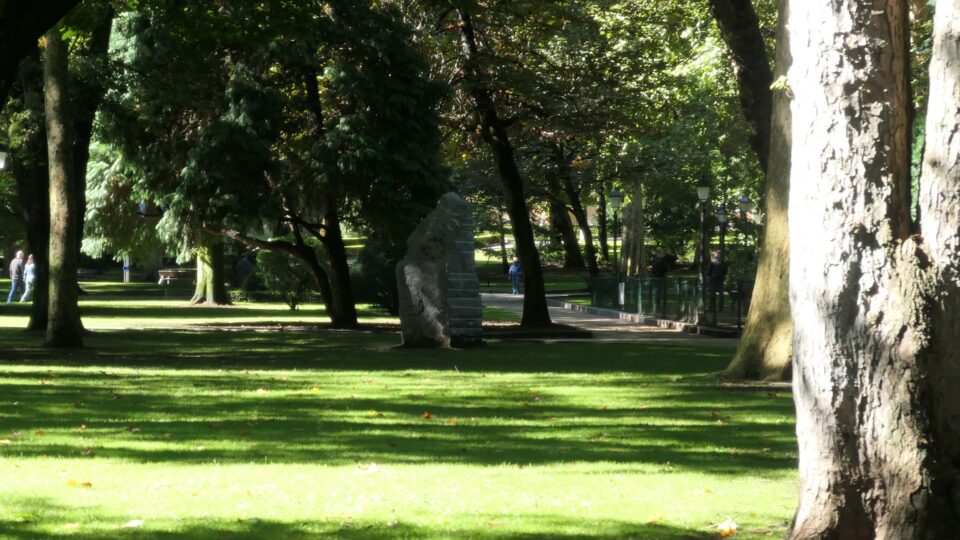
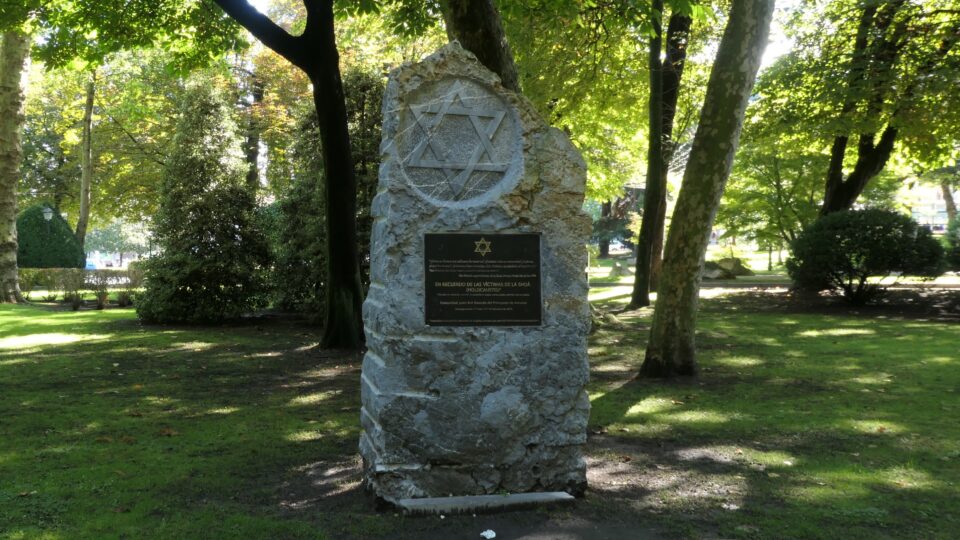
We left the historic center and went to see the Holocaust memorial, a monolith erected in 2017 in Parque de Invierno, one of the town’s most well-known parks. In November 2021, the monument made news headlines when vandals defaced it, scratching and damaging it with a sharp object. Fortunately, the monument appears to have been repaired, as we found it in good shape.
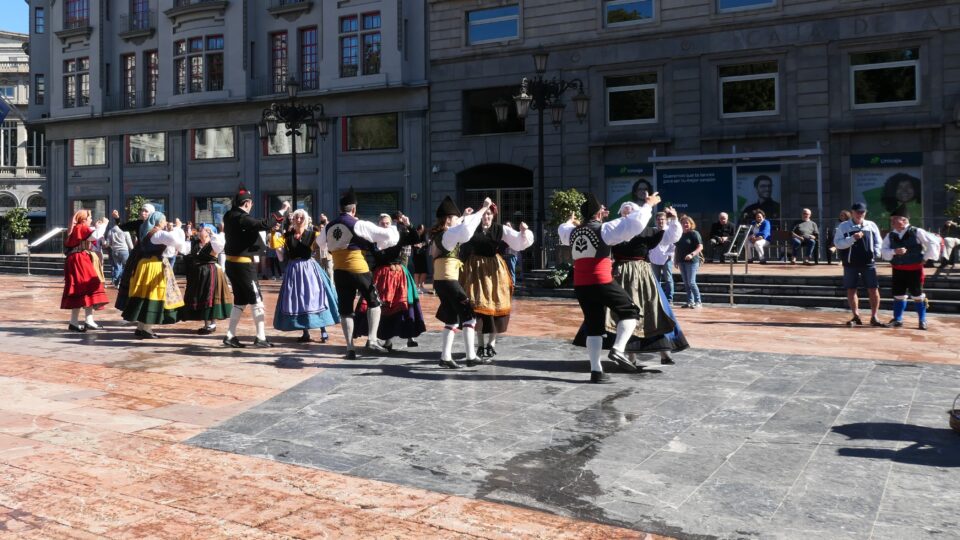
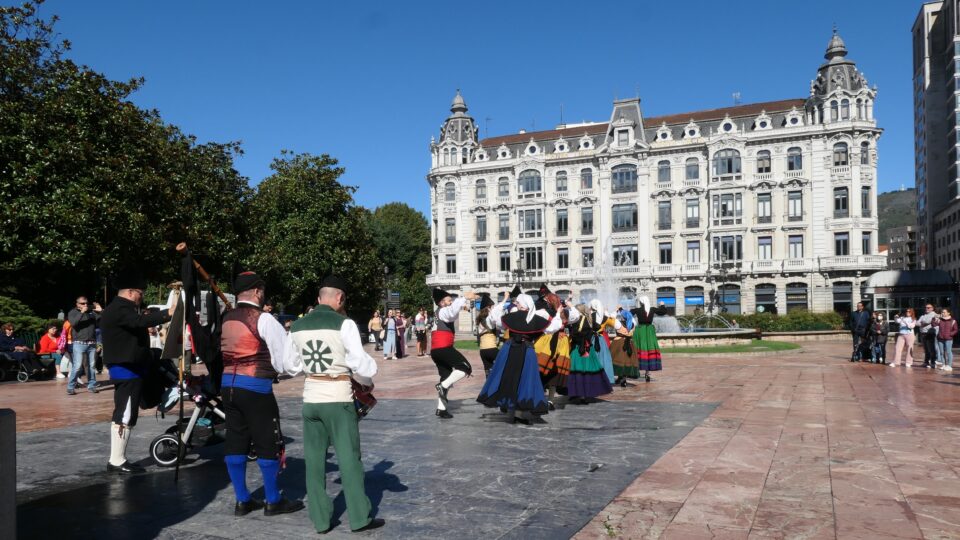
As we left the park, we heard music playing and saw a group of people dancing in traditional costumes in a nearby square. One of the musicians was playing what looked like a bagpipe. It was a gaita asturiana, a type of bagpipe native to this region.
From the park, we walked to the nearby Teatro Campoamor, the city’s main opera house which is located at the intersection of two busy streets. Each October, it is the venue for the Princess of Asturias Awards ceremony, considered by many as the second most important in the world, after the Nobel Prize.
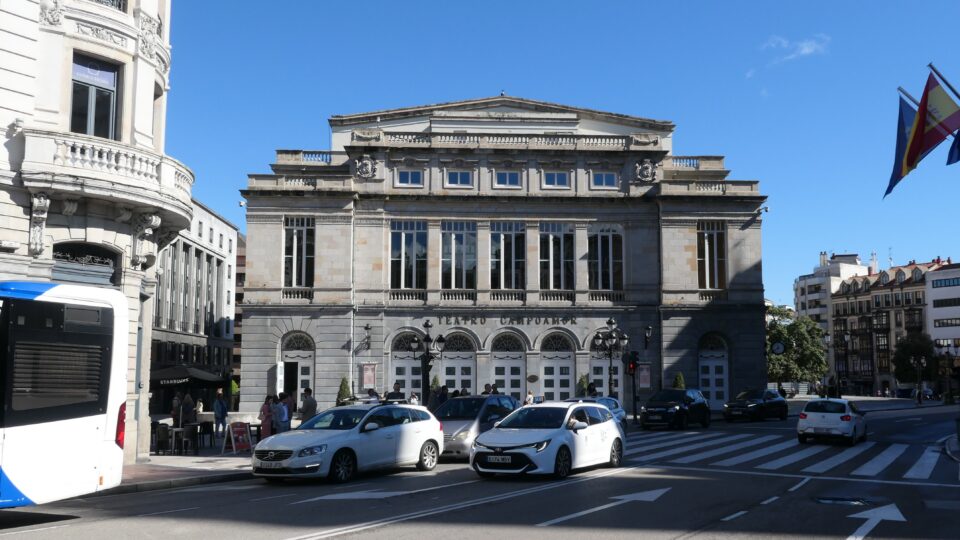
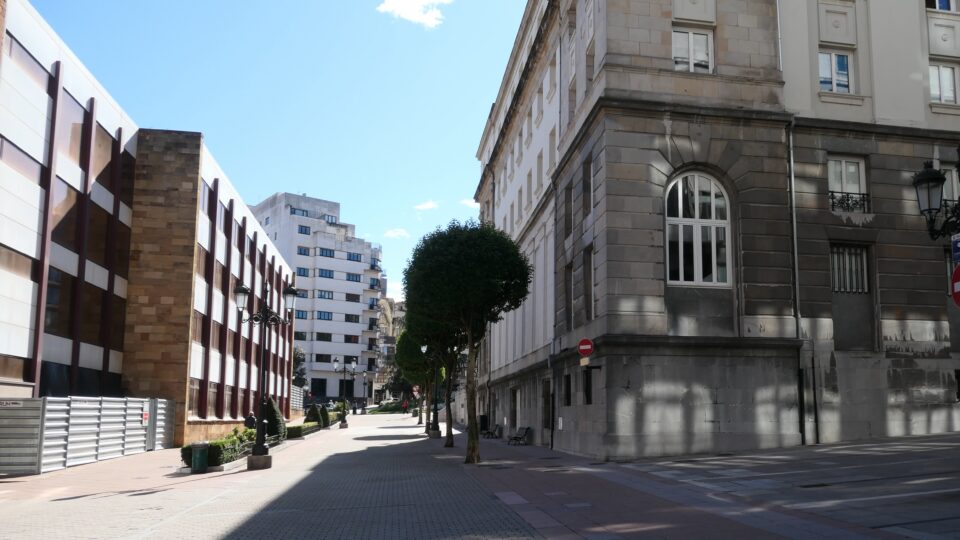
The opera house, which opened in 1892, stands on the site of Oviedo’s former Jewish cemetery, a fact now marked by a plaque. We searched around the building for quite a while before finally finding it at the back, near a rear entrance on a quiet, almost deserted pedestrian street — not exactly a place where many passersby are likely to notice it.
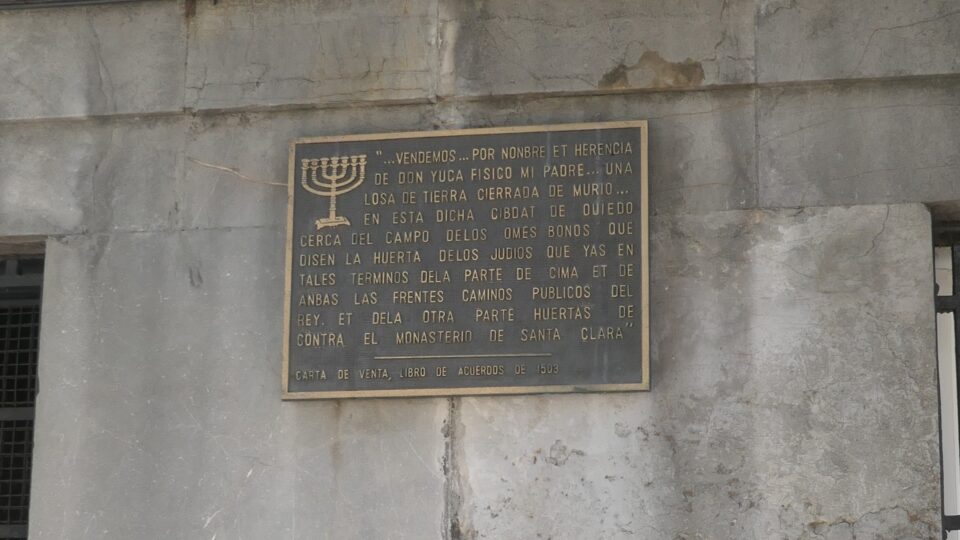
The plaque features text from a letter of sale from 1503, documenting the land’s transfer from its Jewish owner. Since this occurred several years after the expulsion of the Jews from Spain, the sale likely just served as a formality to legalize the change of ownership.
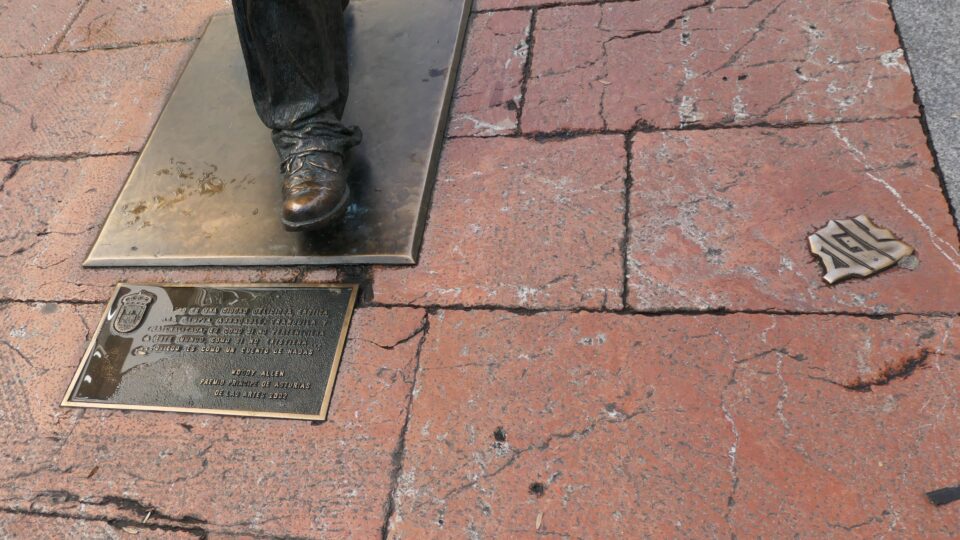
From the opera house, we continued strolling along the wide pedestrian streets, encountering many more statues. We were searching for the one of Woody Allen. In 2008, Allen filmed parts of Vicky Cristina Barcelona in Oviedo and was captivated by the city’s charm. His admiration is captured on a plaque near his statue, which quotes him: “Oviedo is a delicious city, exotic, beautiful, clean, pleasant, calm, and pedestrian-friendly, as if it doesn’t belong to this world, as if it didn’t exist… Oviedo is like a fairy tale.“
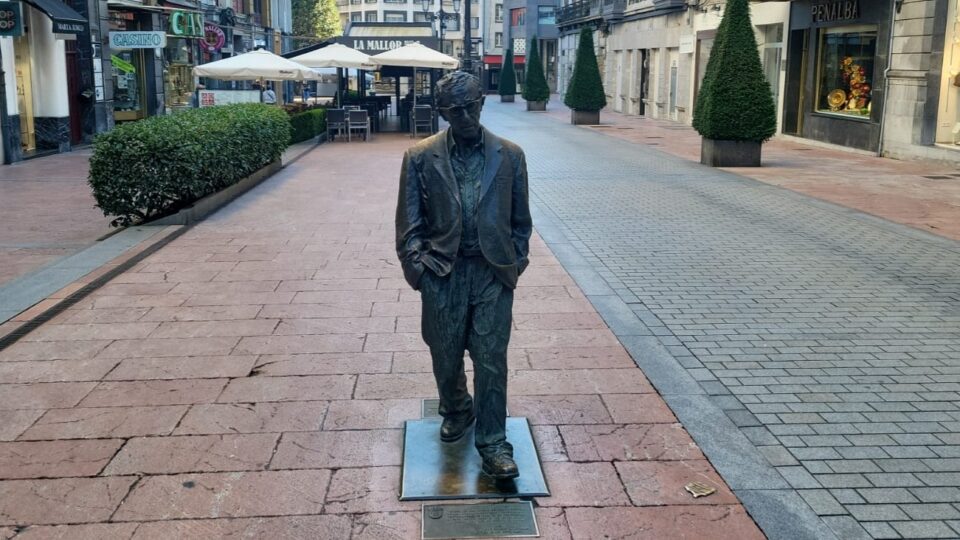
One interesting fact about the Woody Allen statue is that his glasses have been repeatedly stolen or vandalized over the years. In fact, replacing or repairing the glasses had become somewhat of an expensive routine for the city. To address this issue, the city decreed that the glasses would only be repaired once a year. I guess we were lucky to see them intact.
On the pavement, next to the Woody Allen statue, is a Seferad marker, indicating this as a Jewish Heritage site. I’m not sure how I feel about this connection. Nevertheless, like Woody Allen, we also found Oviedo to be a charming place. We look forward to discovering more of its magic tomorrow.
Oveido was charming and we also had beautiful weather for the first time in a few days.