
JUNE 12-15, 2026: I always dreamed of spontaneously taking a short trip to Europe with friends. This was that dream come true: three woman friends, a short flight to Tivat, Montenegro, and four days exploring the area — all imagined, planned, and organized within a single week. The idea was simple: rent a car, drive north, and use an apartment near Dubrovnik, Croatia, as our base.
My personal challenge for this trip was managing for four days with only hand luggage. Having never traveled before with less than 23 kilos, packing took me a long time. Eventually, I managed to fit everything I wanted to bring into one trolley and a backpack.
The trip began Friday morning at 3:30, which is never the best way to start a vacation, but by 4:40 I was already on the train from Herzliya to Ben Gurion Airport with one of my friends. Clearly, we were not alone in choosing an early flight; even at that hour, several other travelers with suitcases were making their way to the airport.
Our flight to Tivat, a small town on the Bay of Kotor along Montenegro’s Adriatic coast, took about three hours. As the plane approached the airport, our first impression of the area was simply beautiful. We saw tall, jagged stone mountains full of character, dotted with small towns of stone houses with orange-tiled roofs. The overall color was lush green.
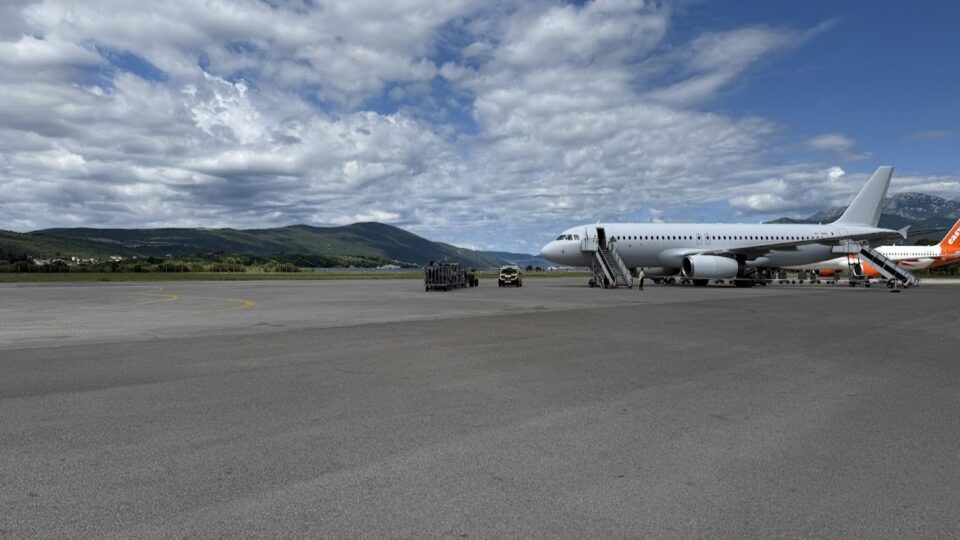
After picking up our rental car, we drove toward Kotor, an old walled town at the end of the Bay of Kotor, also known as the “City of Cats.” Cats are everywhere in Kotor’s lanes, courtyards, shops, and souvenirs, and there is even a small Cats Museum. The cats are revered because, as a historic port town, they helped protect ships and homes from rats and mice and the plagues they carried.
As an important port town, Kotor once had a small Jewish community, mostly involved in trade. Today, all that is left is a very small Jewish cemetery, founded in 1880, that we had hoped to see.
On the map, Kotor is only a 15-minute drive from the airport, but it took us twice as long. Traffic was heavy, and once we reached the town, it was overrun not only by cats, but also by tourists. The streets and sidewalks were full of cars and people. We circled, looking for an empty parking space, and when we were unsuccessful, eventually decided to drive onward to our next destination.
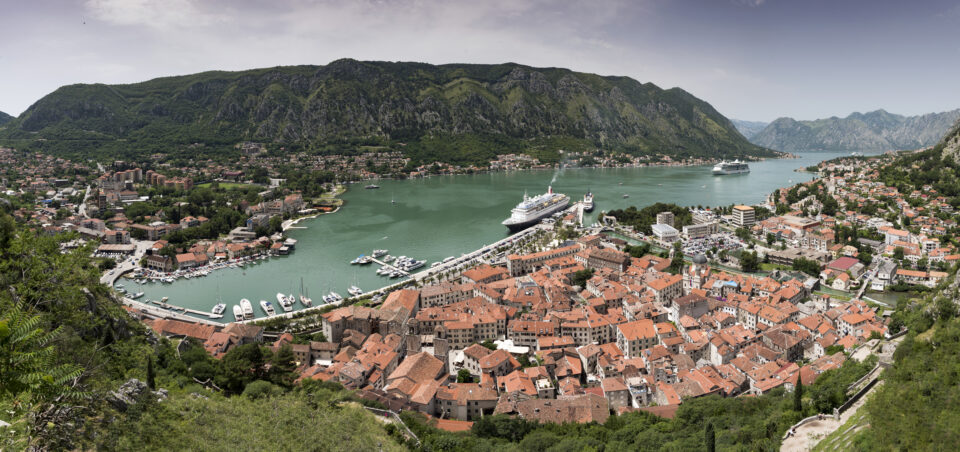
Chensiyuan, CC BY-SA 4.0, via Wikimedia Commons
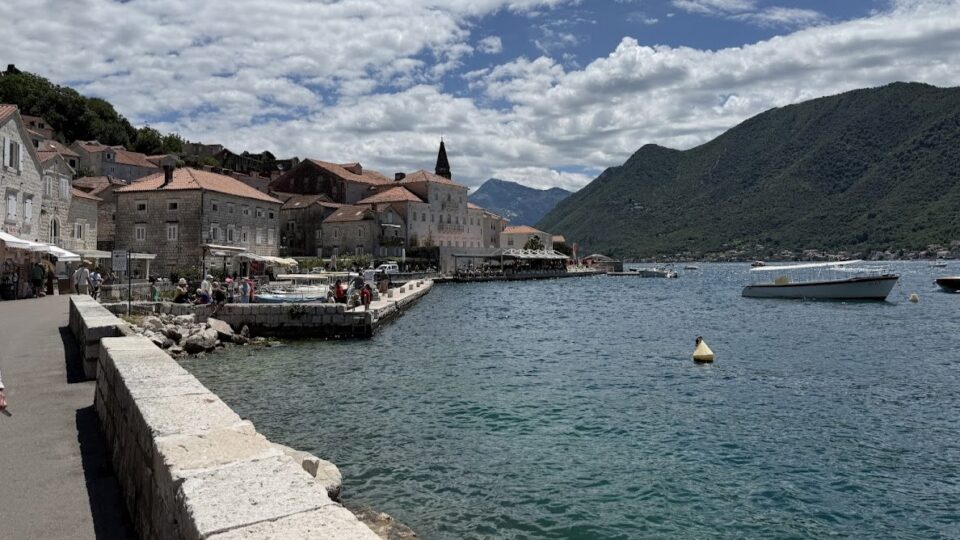
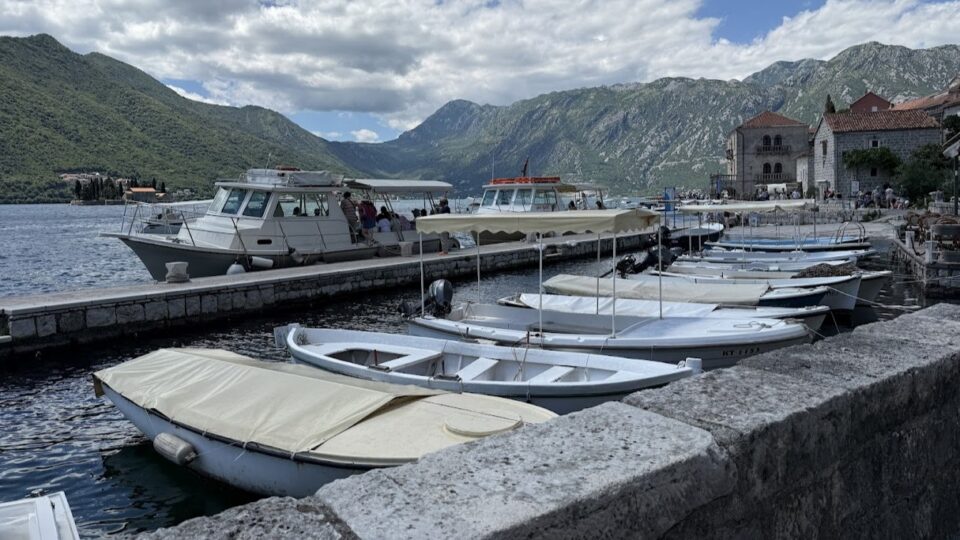
We continued along the coast, a beautiful drive beside the Bay of Kotor. Our next stop was Perast, a small waterside town known for the island church just offshore. Parking there was also limited, but just as we were about to give up, someone pulled out and we managed to get a spot. We walked along the waterfront and had a pleasant vegetarian lunch by the water.
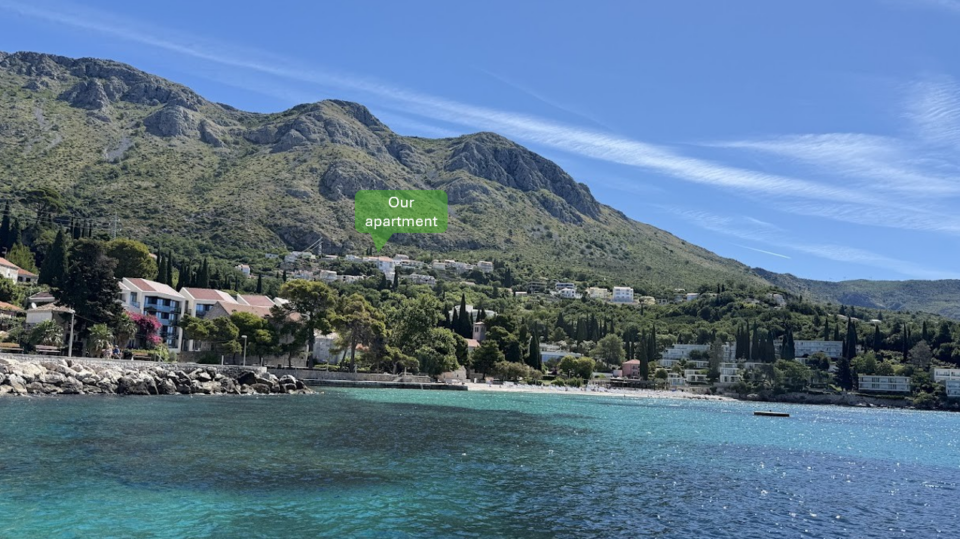
From Perast, we headed toward Mlini, a small town about 10 kilometers south of Dubrovnik, where we had rented an apartment. It should have taken us about an hour and a half, but Google Maps warned us that we still had at least two hours of driving ahead. Traffic was heavy, and we had heard that the border crossing from Montenegro into Croatia could take a long time.
At one point, Google suggested an alternate route that would save about twenty minutes, so we turned off onto smaller mountain roads. The scenery was beautiful: green hills, scattered cypress trees, small agricultural fields, and winding roads that reminded us a little of a wild version of Tuscany. We reached what we thought was the border crossing, where a man in a booth checked and stamped our passports. We were very pleased with how quick and easy it had been — until a few minutes later, when we rounded the hill and came to another border crossing.
There was only one booth open and at least fifteen cars ahead of us. Some cars passed through quickly, while others took much longer, with drivers and passengers getting out to be photographed. Finally, half an hour later, when our turn came, the officer looked at our passports and let us continue. In the end, it was not terrible, but it was certainly not as simple as we had first thought.
Croatia is part of the Schengen Area — Europe’s passport-free travel zone — while Montenegro is not. Crossing the border therefore meant showing our passports twice: once to leave one country and once to enter the next. To add to the confusion, the Schengen Area is not the same as the European Union. Some EU countries are in Schengen, some are not; and some Schengen countries, like Switzerland and Norway, are not in the EU.
The currency adds another layer of confusion. Both Croatia and Montenegro use the euro, but only Croatia belongs to the European Union. Montenegro is still in the process of trying to join. It adopted the euro unilaterally, meaning it decided to use it on its own, without being an EU member. Before the euro, Montenegro used the German Deutsche Mark as its currency.
In short: Croatia belongs to both the EU and the Schengen Area, while Montenegro currently belongs to neither, although it hopes to join the EU.
Eventually, we turned off the small back road onto the main highway, which was not much bigger – only two lanes, one in each direction. We continued northward along the Adriatic coast. Then, just one kilometer before the turnoff to our Airbnb, traffic came to a complete standstill. Eventually, we crept forward and passed a serious three-car accident. Our host later told us, that these are a common occurrence here. Shortly past the accident site, we turned off the main road and climbed in sharp turns up the hill to our apartment.
The house was worth the effort. It was clean, spacious, and well equipped, with three bedrooms and a balcony overlooking the sea.
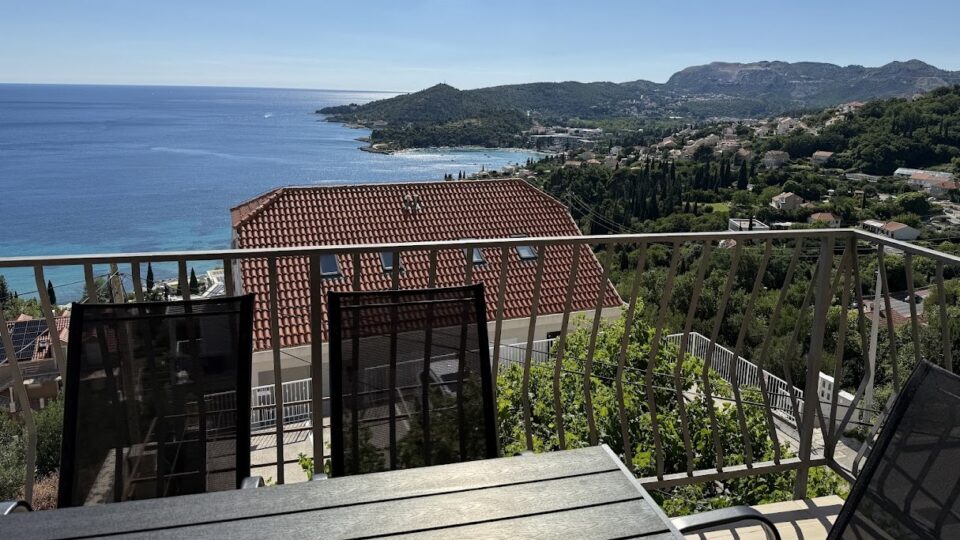
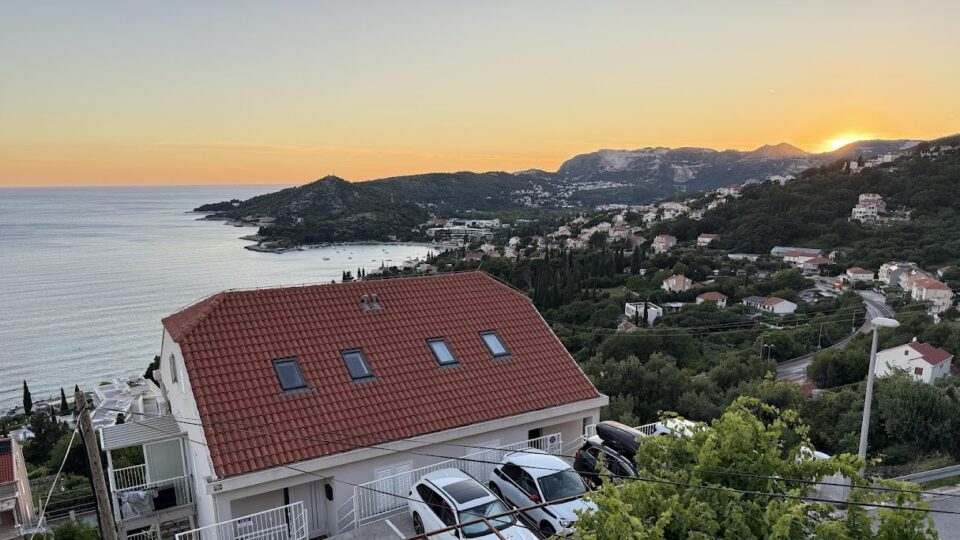
After resting, we drove down to the Mlini waterfront to get information about the boat to Dubrovnik for the next day, walked along the shore, and later ate dinner on the balcony back at the apartment, watching the sky turn red as the sun set.
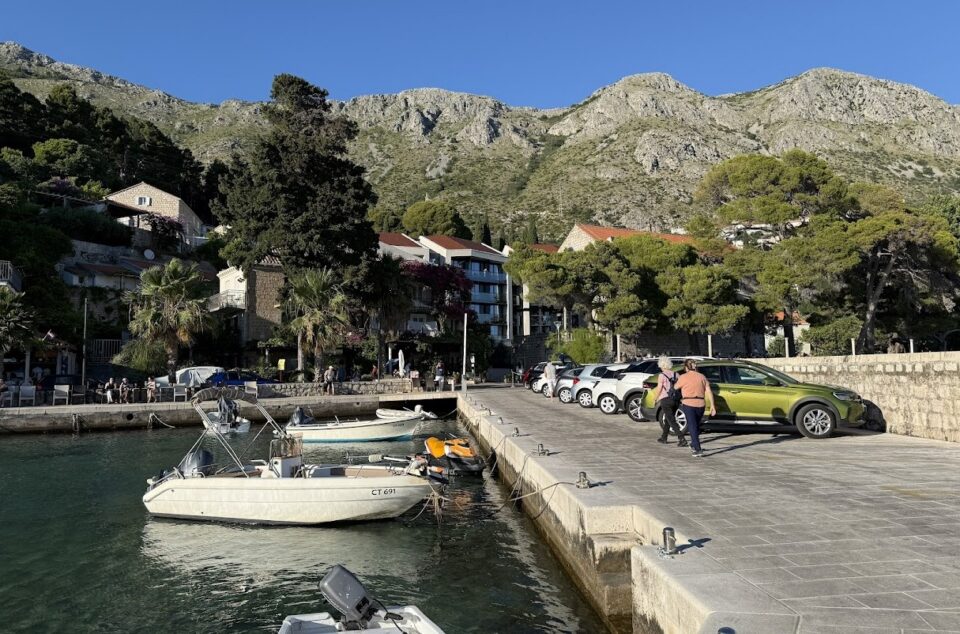
The next morning, we drove down to the Mlini pier and took a boat to Dubrovnik. The ride brought us directly to the old harbor, a lovely way to enter the Old Town, which has been a UNESCO World Heritage Site since 1979.
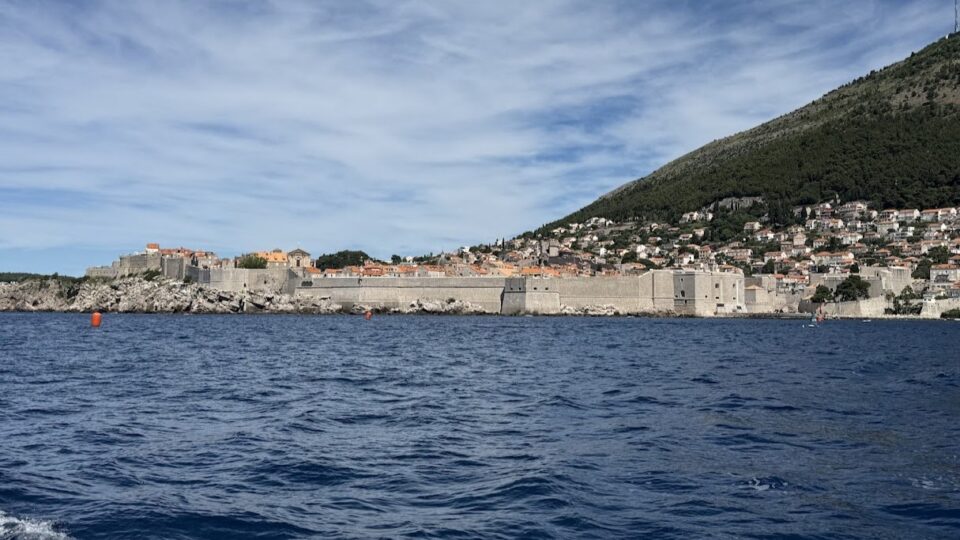
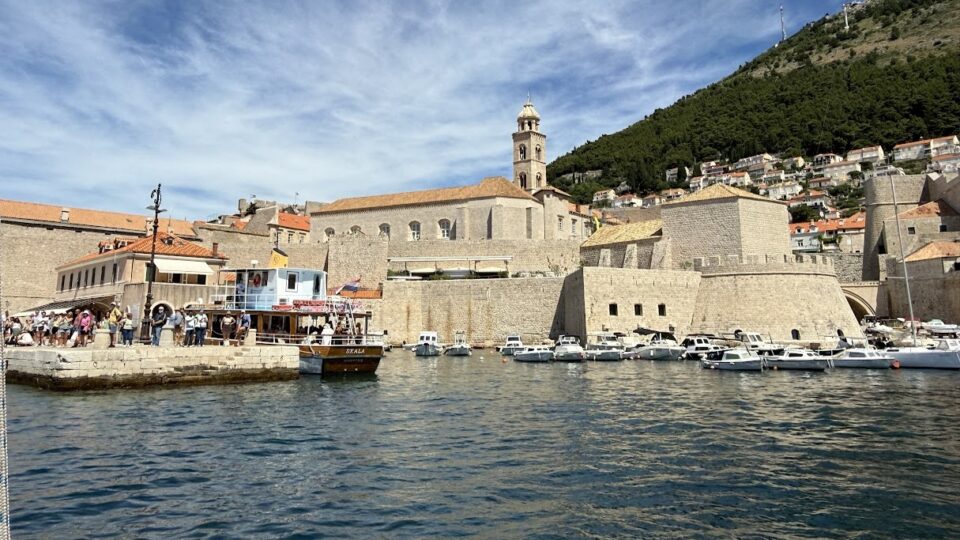
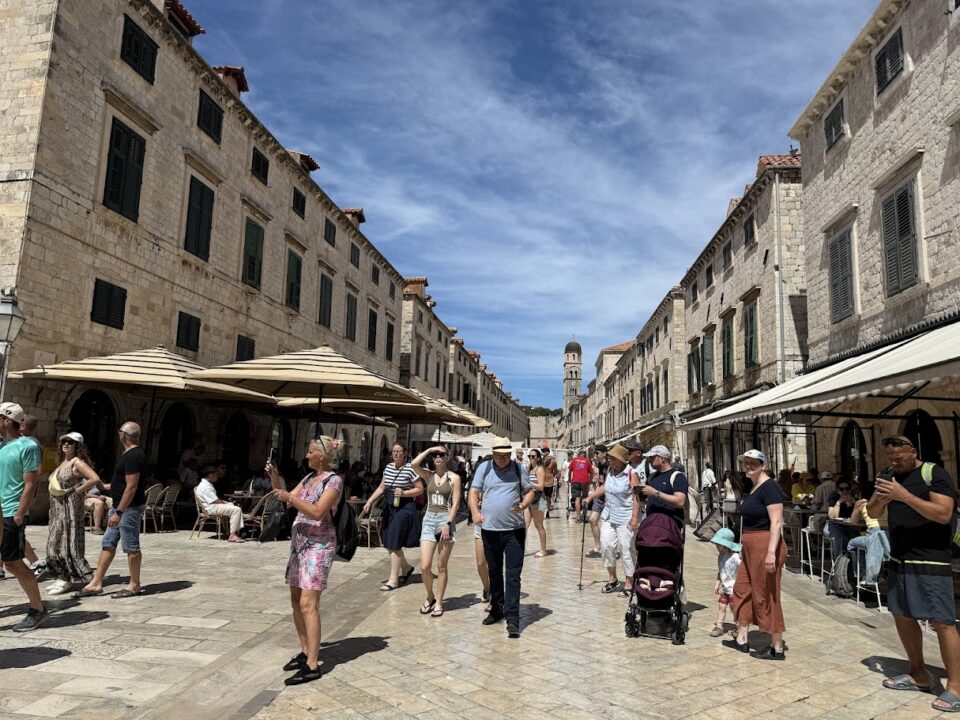
From the harbor, we walked through the main street, known as Stradun, toward Pile Gate and then climbed up to walk the city walls, one of Dubrovnik’s main attractions.
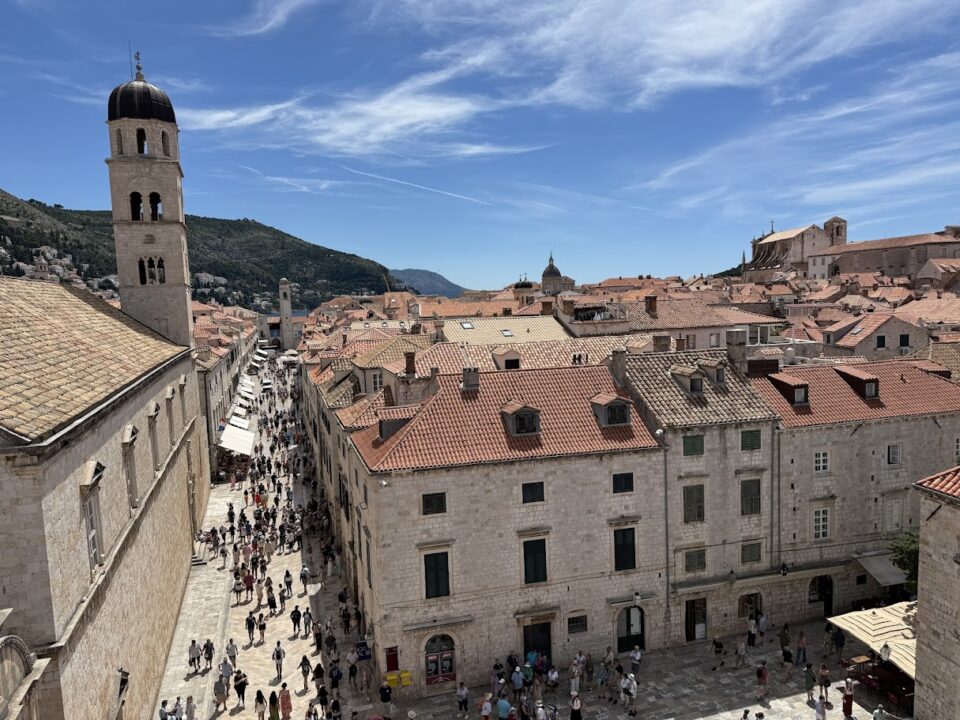
The walls of Dubrovnik, built and strengthened mainly between the 13th and 17th centuries, run for almost two kilometers around the Old Town. From above, you see orange-tiled roofs, church towers, narrow stone lanes, and hidden courtyards on one side, and the blue Adriatic, rocky cliffs, boats, and distant islands on the other. Spectacular.
The path along the walls is not flat or uniform. It rises and descends, narrows in some places, and opens into wider sections in others. We walked about three quarters of the way around in the hot noon sun, and then decided to exit before the start of another steep ascent.
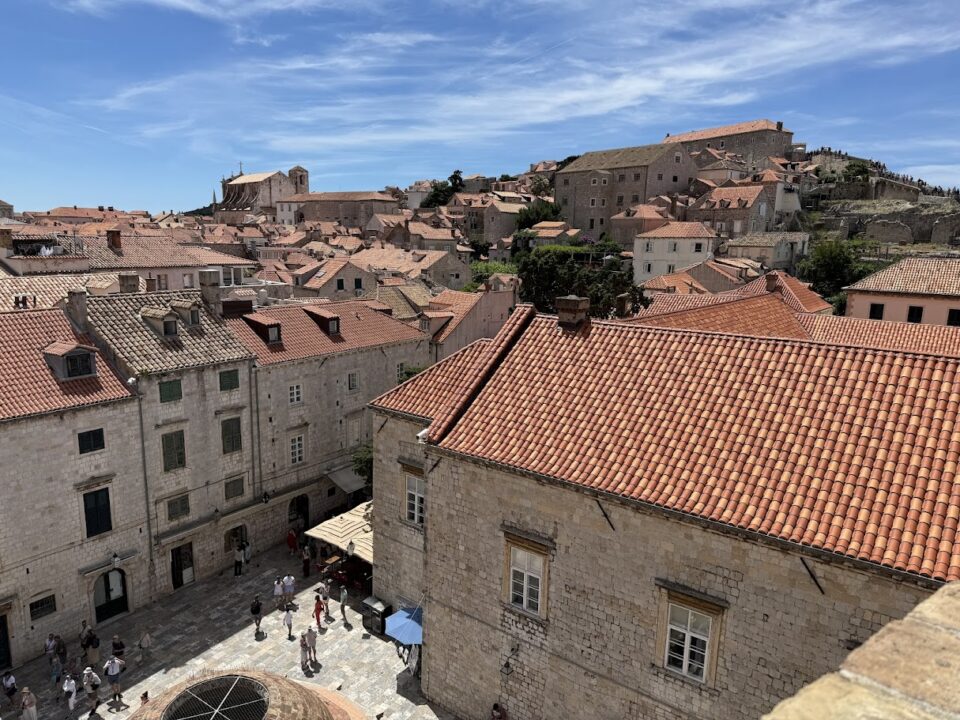
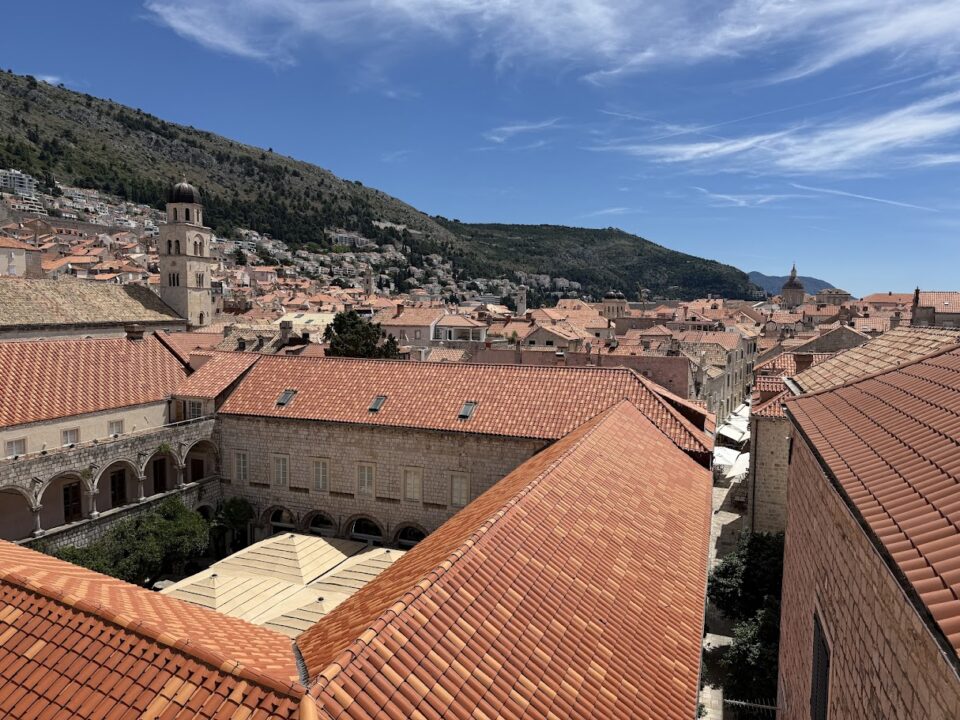
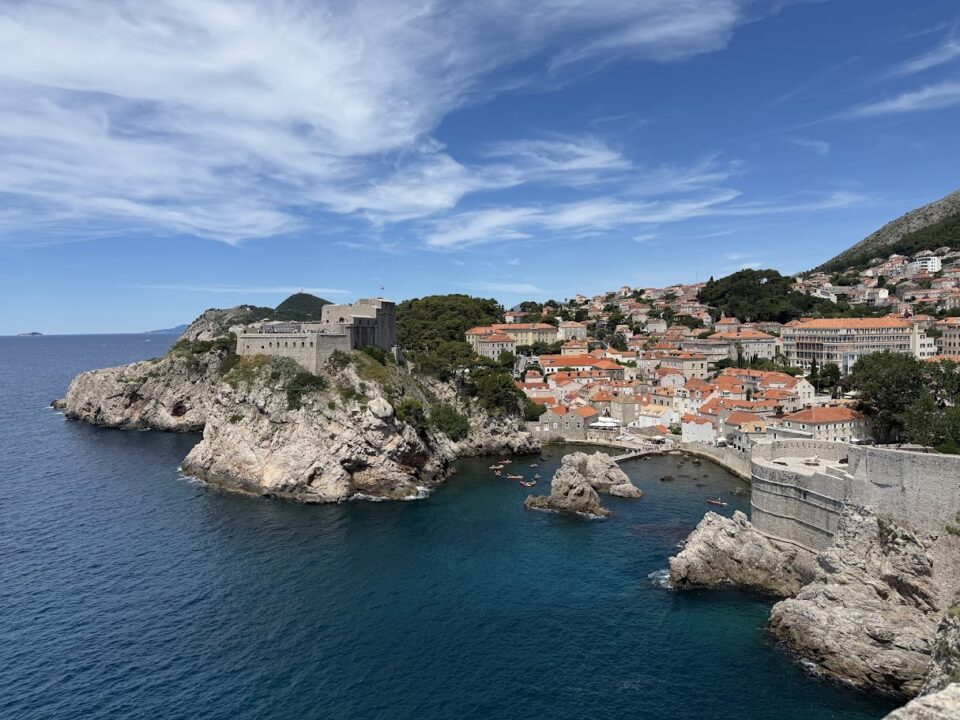
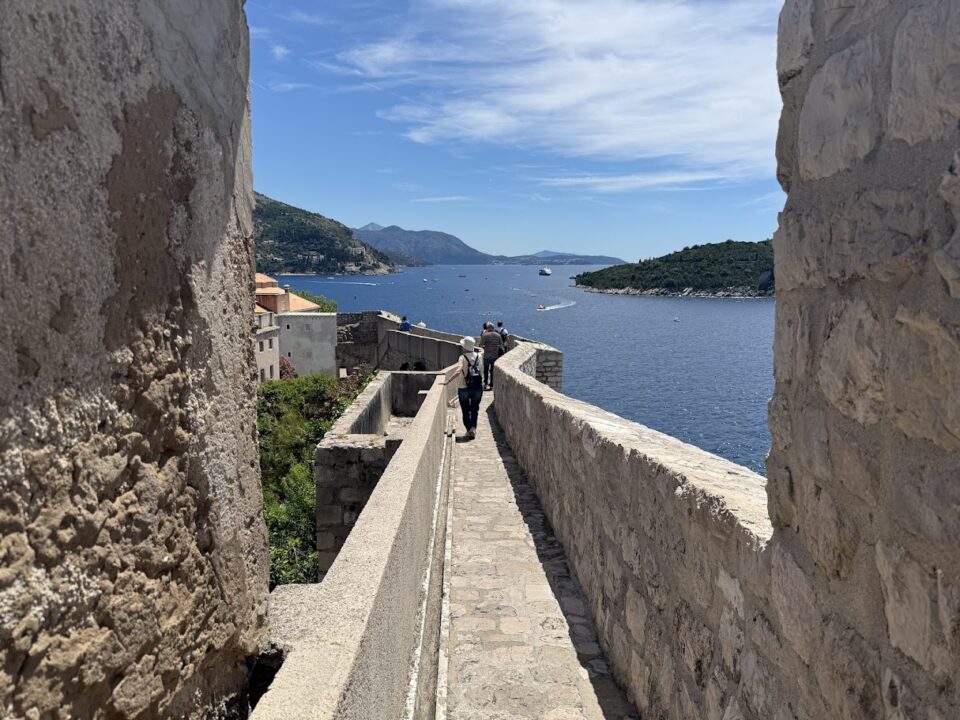
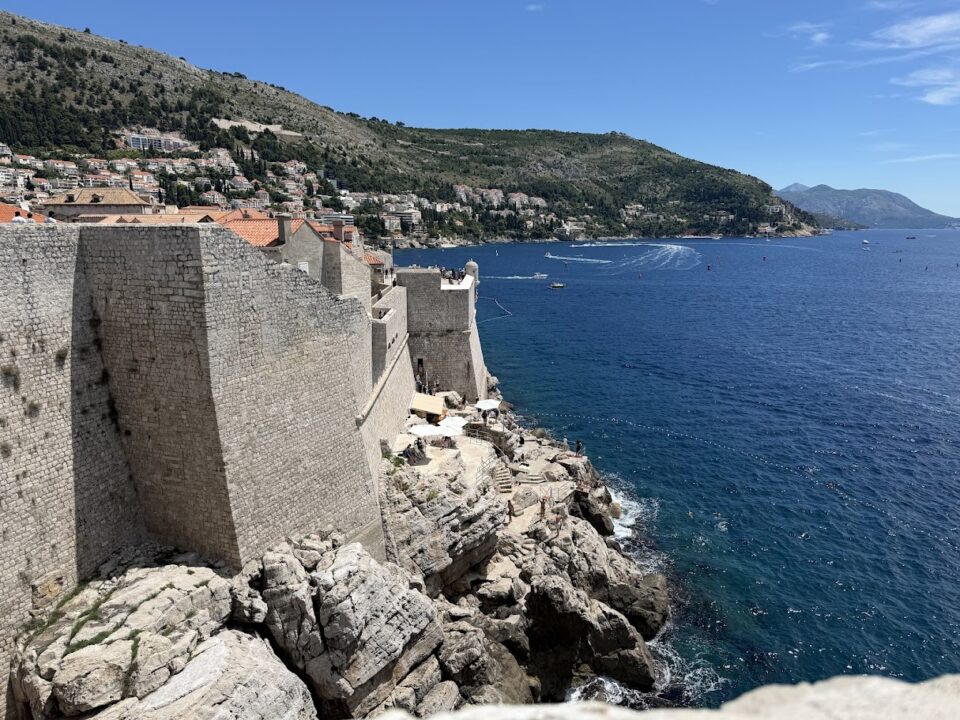
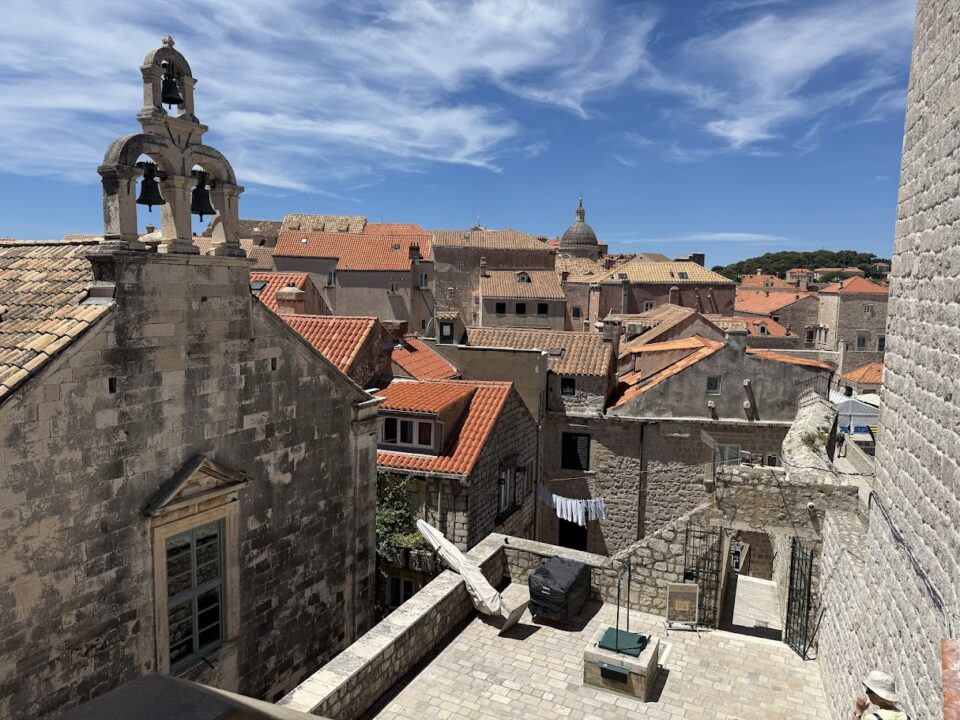
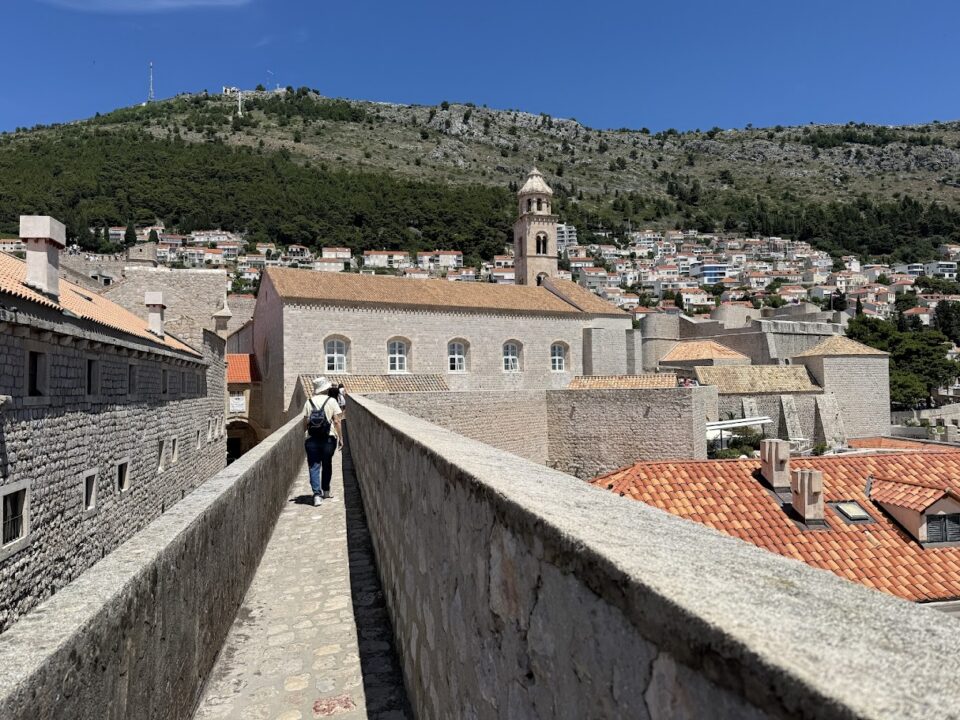
Once back at street level, we made our way to Ulica Žudioska, the Jewish street, to visit the synagogue and Jewish museum.
A small Jewish presence existed in Dubrovnik by the 14th century, and the community grew after the 1492 expulsion from Spain. Many Jews were merchants, physicians, interpreters, and traders in goods such as spices, textiles, silks, and other Mediterranean products. The Jewish quarter was on Žudioska ulica, a narrow, steep alley in the Old Town with stone houses and a synagogue, once gated at each end.
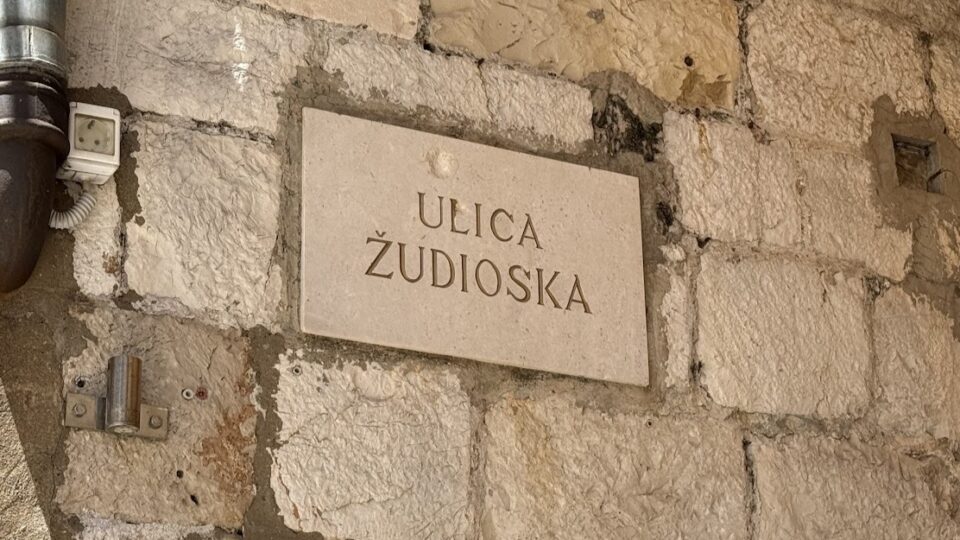
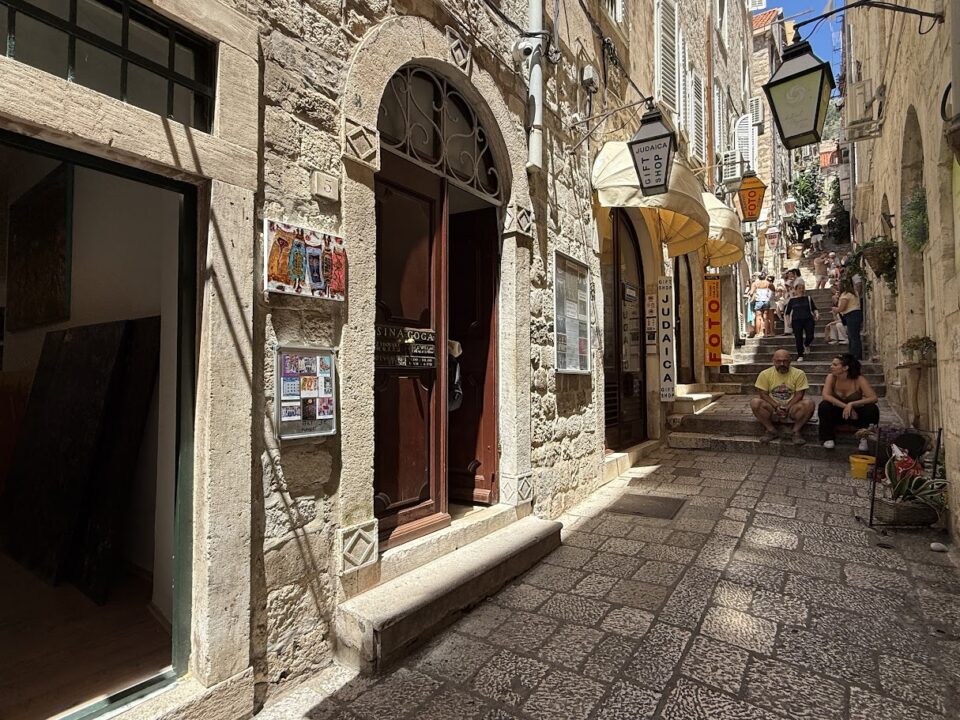
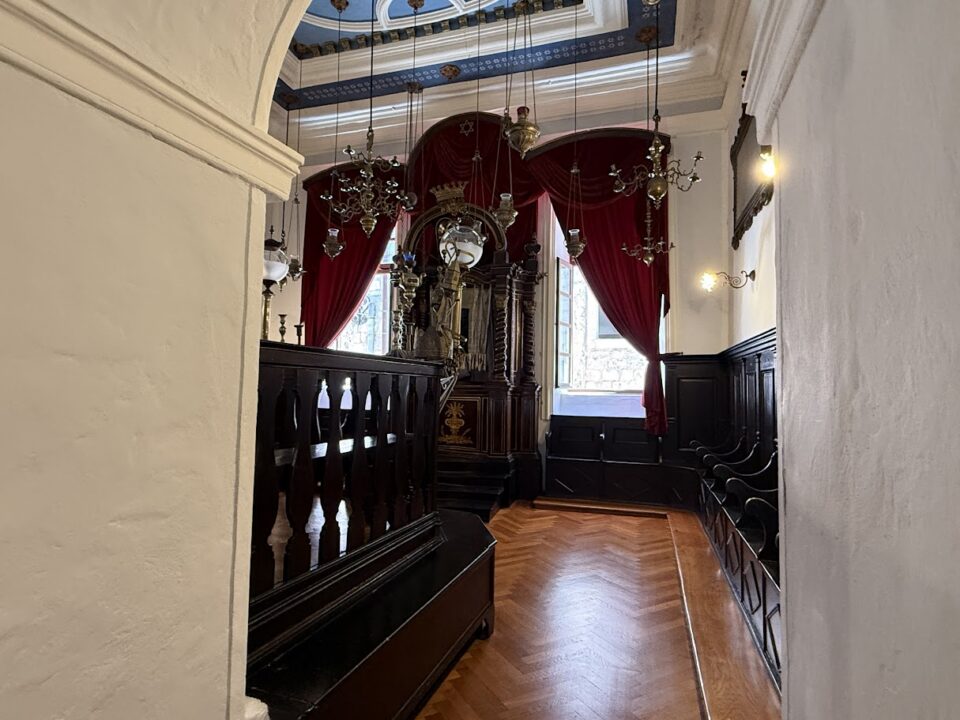
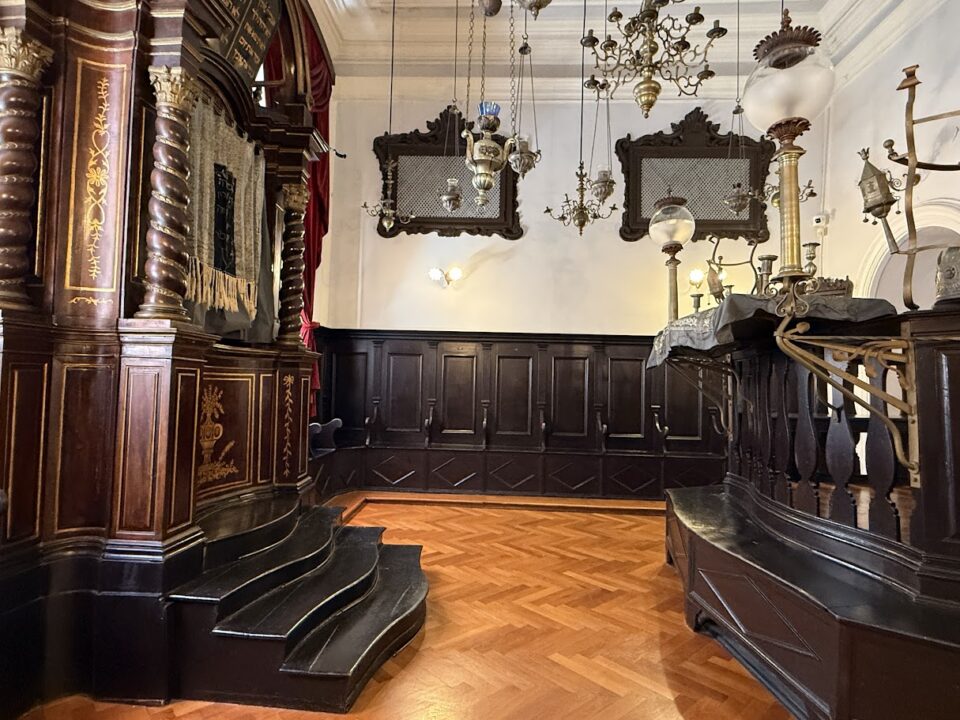
The synagogue is considered one of the oldest Sephardic synagogues in the world still in use; it is said to have been established in 1352 and legally recognized in 1408. Today, it functions mainly as a small Jewish museum, while still being used for High Holidays and special occasions.
The synagogue was damaged during the shelling of Dubrovnik in 1991, during the Croatian War of Independence, and restored by 1997. Located on the second floor, it is small and intimate, arranged in the Sephardic style, with benches around the perimeter and the bimah in the center. A small women’s gallery is reached by a staircase at the back.
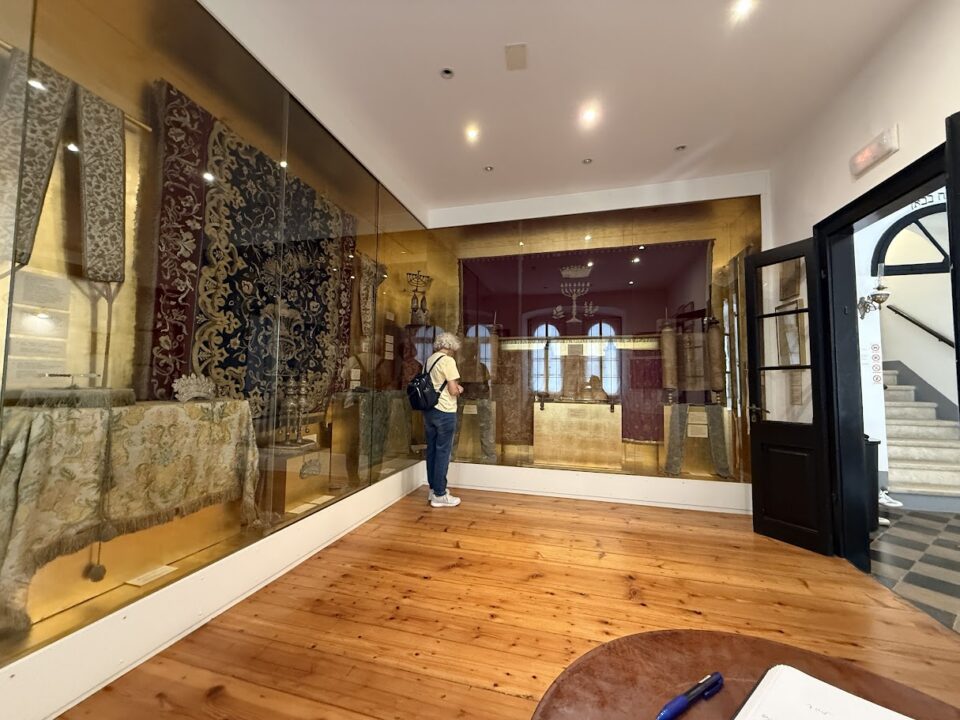
The Jewish museum is on the first floor. During World War II, Torah scrolls, silver, textiles, and other ritual objects were hidden to keep them from being seized by the Nazis. Today, the small museum displays some of the items that survived.
After our visit, we had lunch at an outdoor café on the Jewish street. While we were waiting for our food, I noticed a Hebrew inscription on one of the stone walls opposite the synagogue.
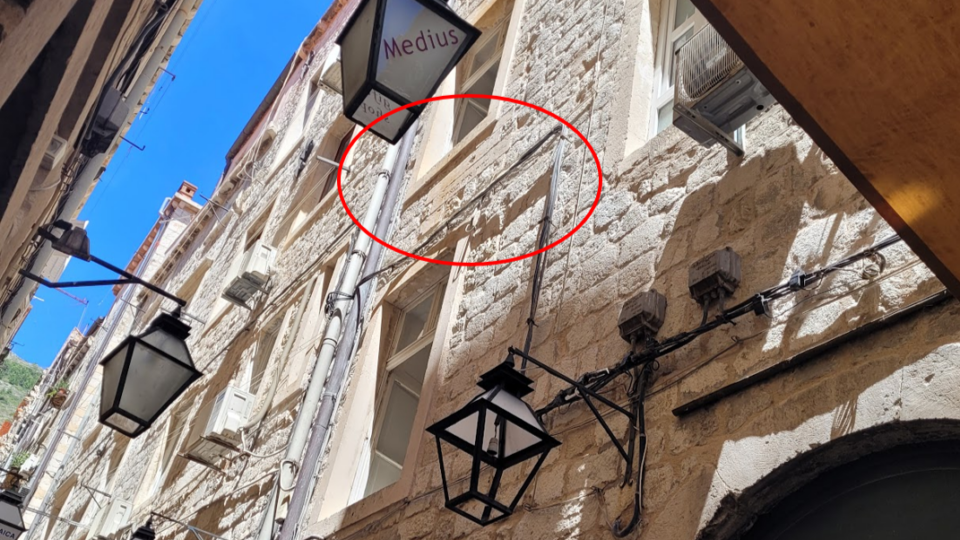
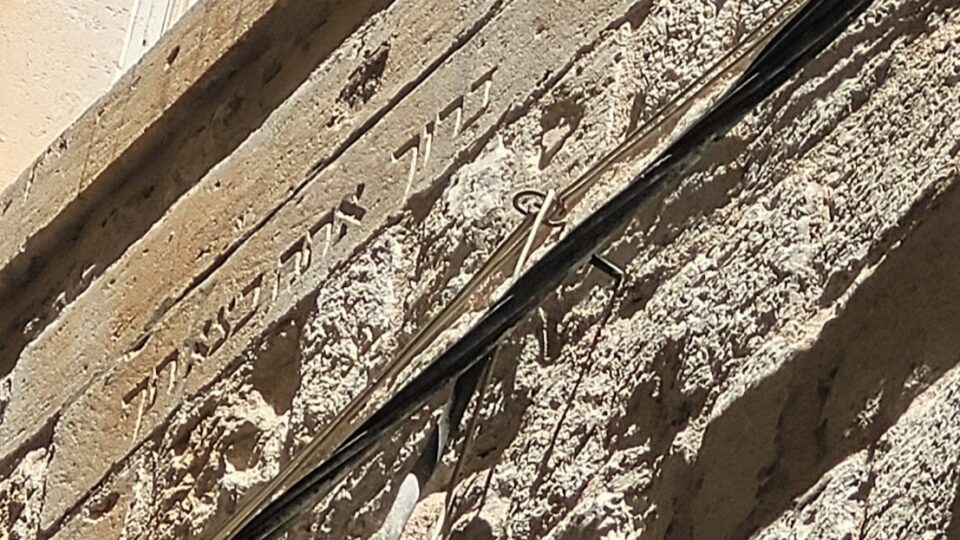
After lunch, we wandered through the lanes of the Old Town. Dubrovnik is undeniably crowded and tourist-oriented, with souvenir shops, restaurants, and tour groups filling many of the main streets. Yet here and there, especially in the quieter side lanes, there were reminders that this is not only a place for visitors. Laundry hung from upper windows, potted plants stood outside doorways, and narrow staircases led up to homes where people still live inside the old stone city.
Another popular attraction in Dubrovnik is the cable car up the mountain above the city, which offers a bird’s-eye view of the Old Town and the Adriatic. It did not seem to be operating now, so we decided to head back and returned to the harbor to take the boat to Mlini.
The rest of the day was quiet: resting, watching a movie, making dinner, and eating on the porch with the sea in front of us.
On Sunday morning, we drove 15 minutes south to the very small town of Čilipi for their weekly folklore program. To make sure we would get a parking space, we arrived early, well before the dancing began, and had time to look at the booths selling traditional handwoven items. We spoke with an older woman working at a loom, who explained that her generation still knows how to make the traditional items, but it will end with them – the next generation has not learned the craft.
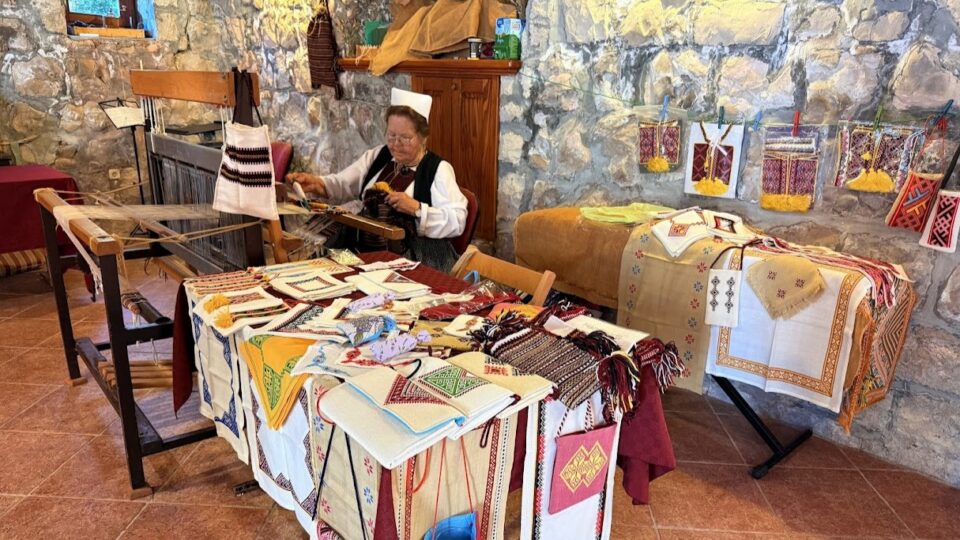
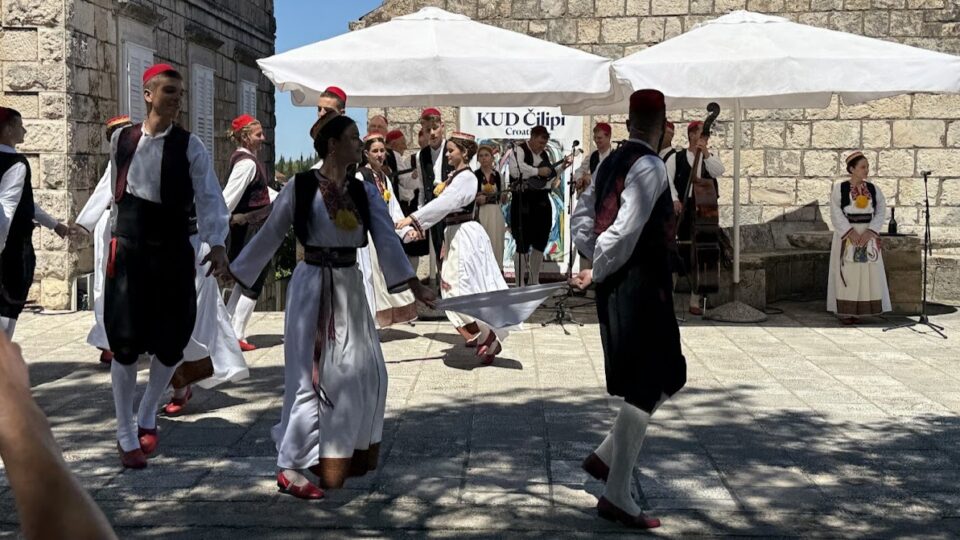
The folklore show, intended for tourists, introduced the music and dances of the region which are usually performed after Sunday Mass in the village square. All the participants wore traditional costumes, a dozen dancers danced while several musicians played rhythmic local songs on string instruments. The host introduced each number in Croatian, English, and French, explaining the significance of each dance.
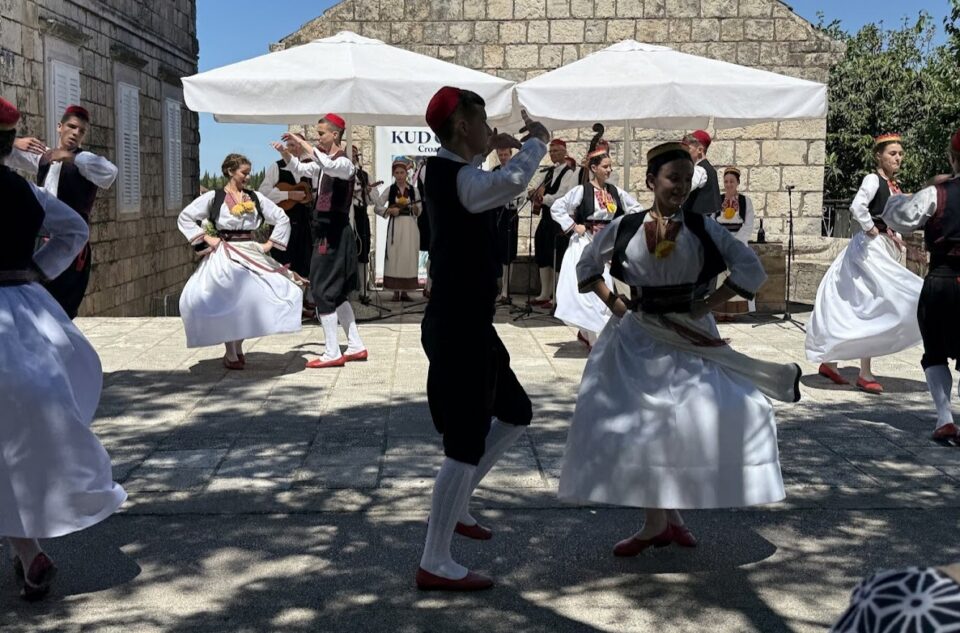
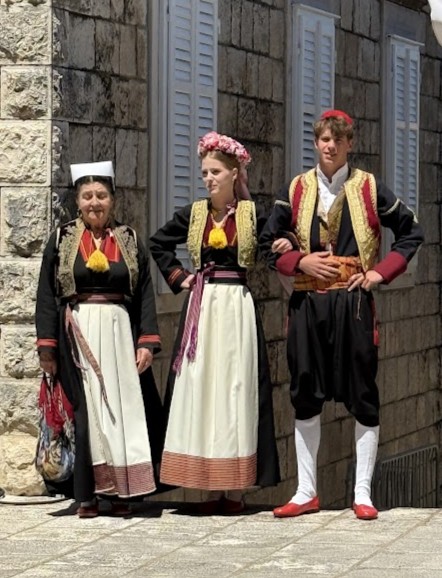
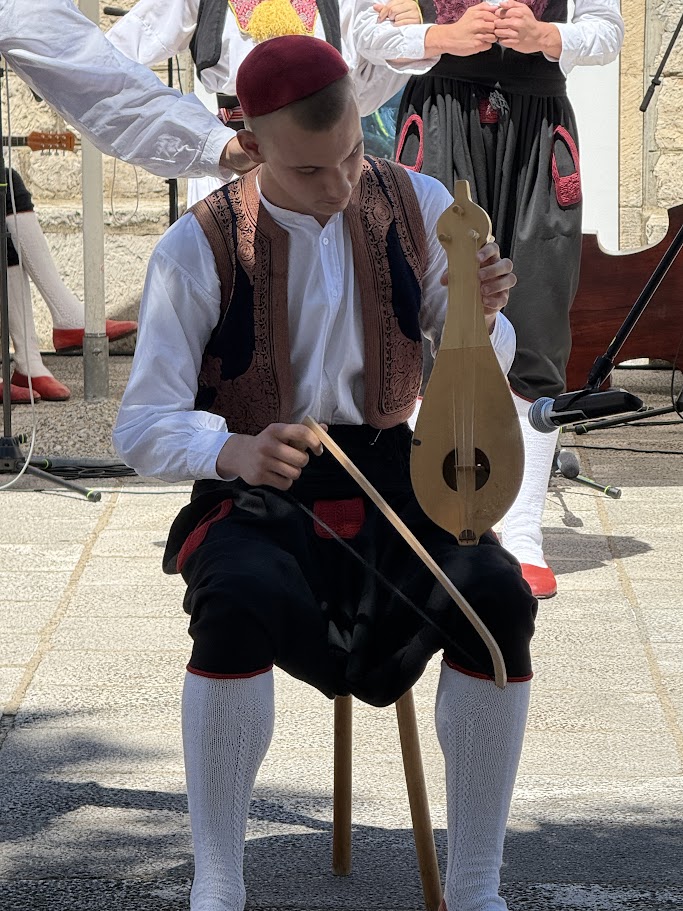
Although the customs were all local, we noticed that several elements felt familiar from the Jewish tradition: dancing with handkerchiefs, a blessing said over a cup of wine during the wedding celebration, throwing candies as part of the festivites, men wearing small caps resembling kippot and white socks with knee-length pants reminiscent of Hassidic sects. Perhaps this illustrates how Jewish communities often developed parallel customs within the cultures around them.
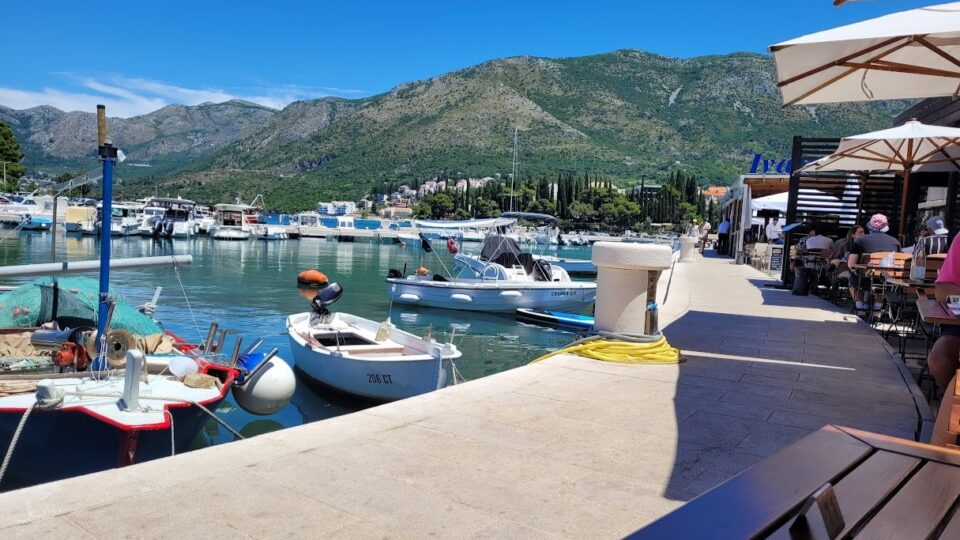
From Čilipi we drove to Cavtat, one of the best-known tourist towns in the area after Dubrovnik, filled with with cafés, souvenir shops, a waterfront promenade, boats, and beaches.
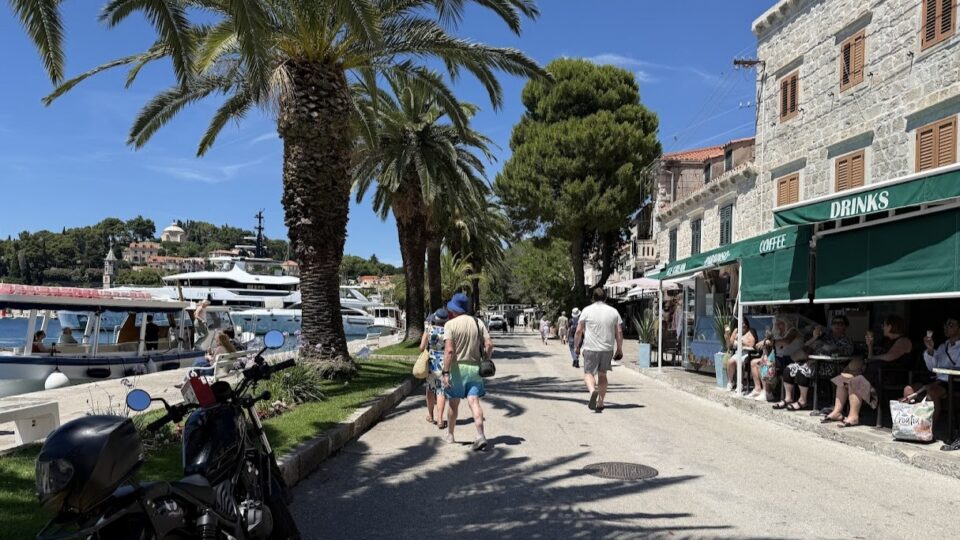
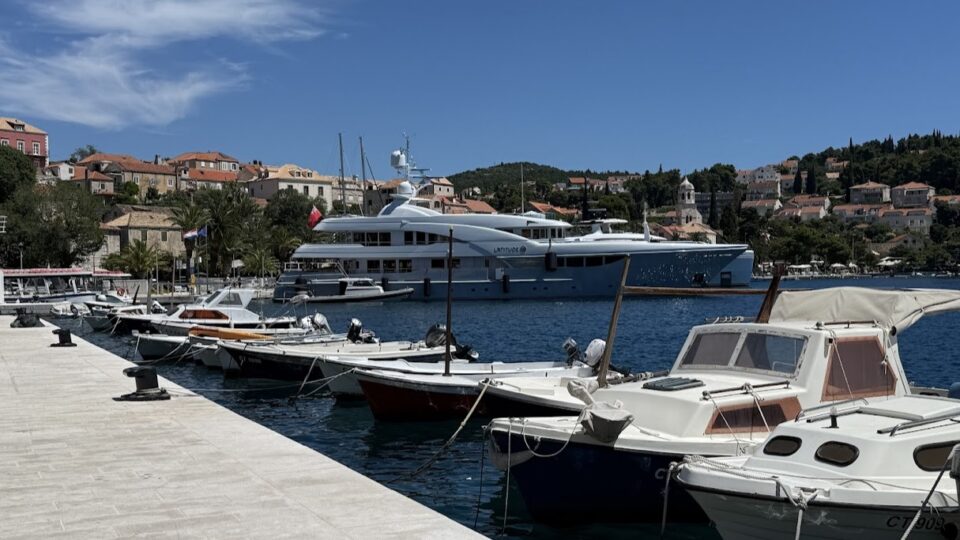
The town is the birthplace of Vlaho Bukovac, one of Croatia’s most important painters. His childhood home has been turned into the Bukovac House museum, dedicated to his life and work, though we only passed through the town and did not visit it. Another museum in Cavtat that we did not go to but looks interesting, is the Glossus Humanus Shell Museum, a small private museum devoted to seashells. Its collection began as a family project and now includes thousands of shell species from oceans around the world. Always leave something for next time.
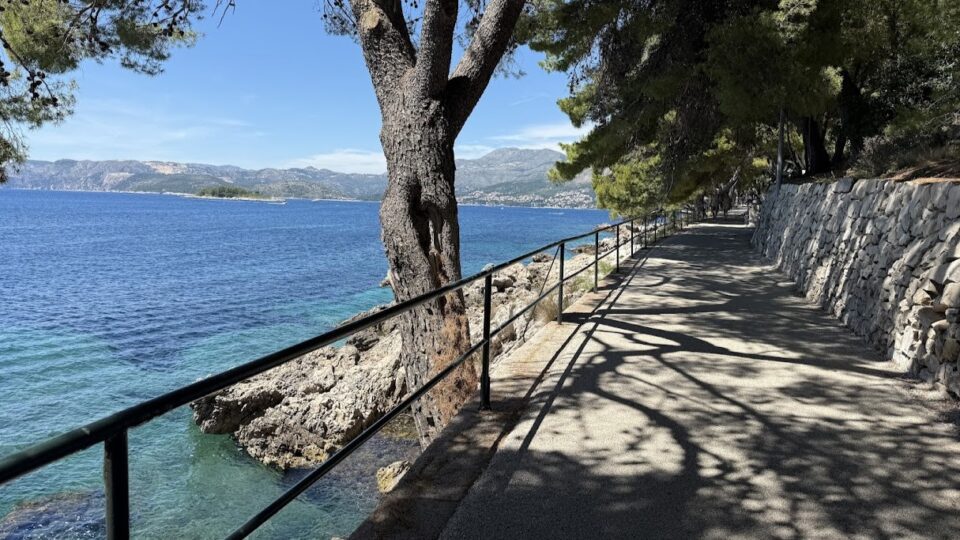
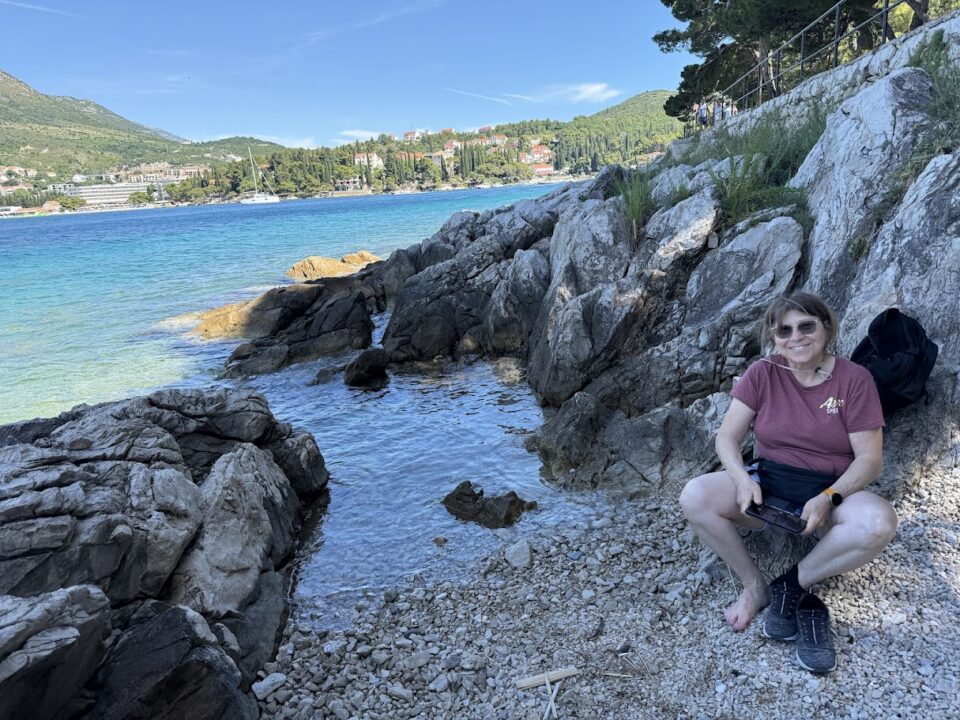
What we did do in Cavtat, is have lunch and then take a walk. The town sits at the end of an inlet between two peninsulas. Along the peninsulas are walking paths that follow the coastline, under the shade of trees, with views of the sea the whole way. We even dipped our toes into the water before heading back to the apartment.
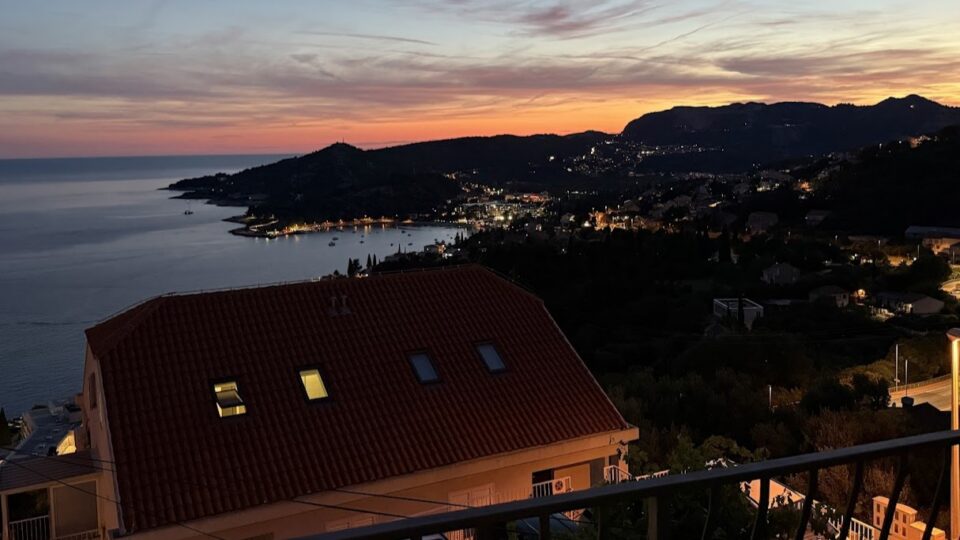
Monday was our return day. After breakfast on the balcony, we packed up and started the drive back to Tivat. This time, the border crossing was much quicker, with only a few cars ahead of us. When entering Montenegro, we were asked to get out of the car and be photographed and fingerprinted. Not sure why now, on the way home, and not on the way there.
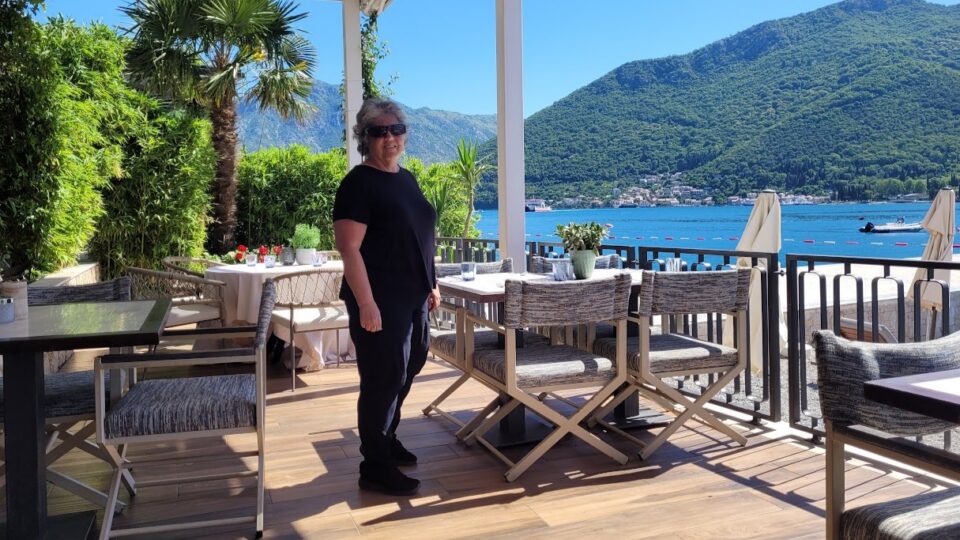
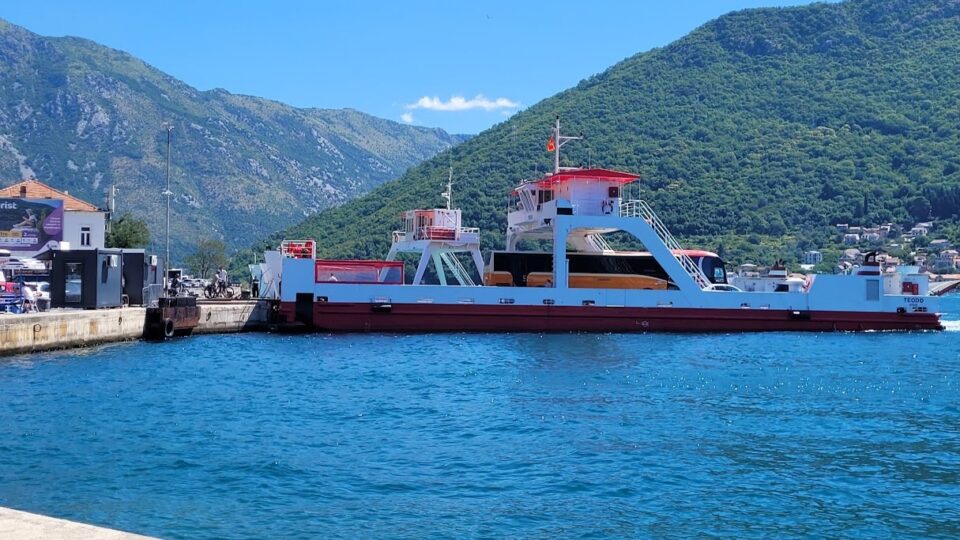
We continued along the coast road, which was much more built up than the mountain route we had taken on the first day. Near the Bay of Kotor, we took a short ferry ride to shorten the drive, stopping first for coffee and a delicious slice of kremšnita cake at a restaurant by the water. Kremšnita, also called krempita, is a cream cake made with layers of flaky puff pastry and thick vanilla custard cream, usually topped with powdered sugar.
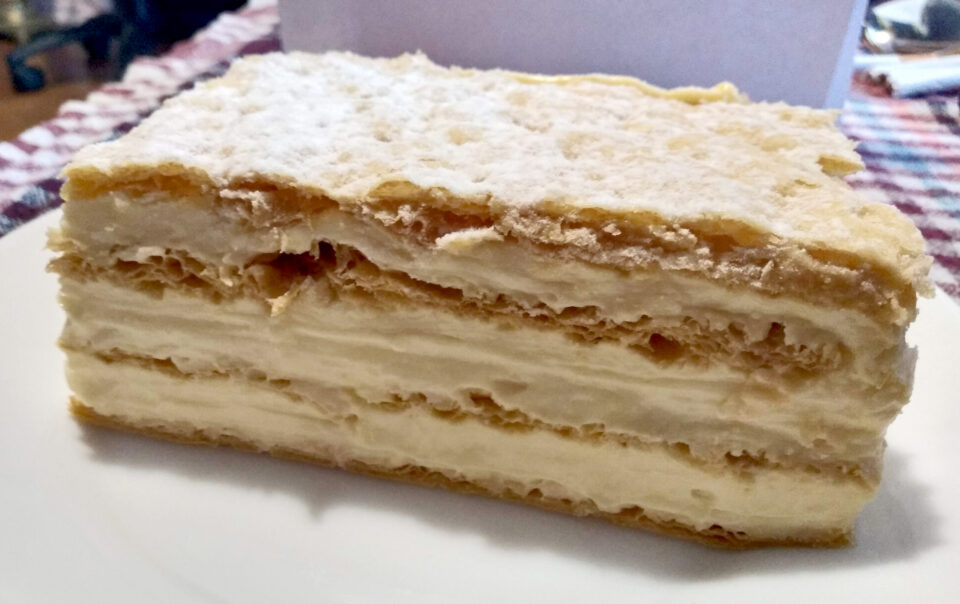
BuhaM, CC BY-SA 4.0, via Wikimedia Commons
The ferry itself took only about five minutes, but it was a pleasant little break in the journey.
Our flight home from Tivat was delayed, so before returning the rental car, we stopped briefly at a large grocery store, just to see what a local supermarket carried. Not much different than what we have at home, except everything was labeled only in Croatian. Hardly any English.
The airport was crowded and somewhat chaotic, with long lines and not enough seats near the gate. Tensions were high among the Israeli passengers, and while standing in the boarding line, two people near us began fighting; one fell back into me, and I was lucky not to fall.
Overall, it was not a long trip, and parts of it were tiring: early flights, traffic, border crossings, parking challenges, and crowded airports. But it was mostly beautiful and refreshing. Montenegro and southern Croatia gave us mountains, sea, old stone towns, boat rides, Jewish history, folk traditions, and sunsets from a balcony.
For four days, it was just the change of pace we needed. Yes, it was a dream come true.
It looks gorgeous and you had great weather!
That cream cake looks like Napoleon 🙂
Maybe they only care if you’re a criminal if you’re entering their country, not so much if you’re leaving, lol.
Sounds like a lot of fun.
Looks gorgeous
You captured it very well. Looking forward to more trips together. 🙂
It all looks so beautiful!!! Weather looks perfect!