When we emptied the closets of my mother’s apartment after she passed away, I discovered boxes and boxes of old documents. I knew they contained important information, but I did not yet understand how many stories were hidden inside them.
A few days ago, one of my cousins asked if I had a copy of my grandmother’s birth certificate. While searching through one of the boxes, I found not only the certificate, but also a treasure: an eleven-page typewritten document detailing the Bergwerk family and their fate during World War II.
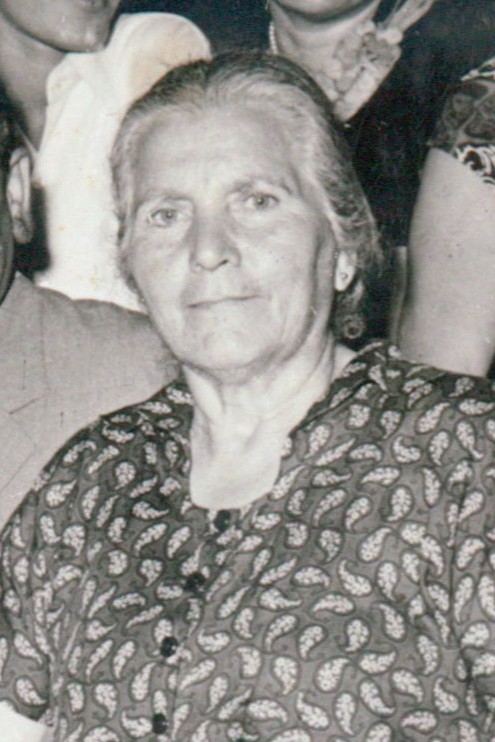
The document was prepared by my great-grandmother, Dora Feuerstein, who was affectionately known to us as Oma. She was then living in Petah Tikva, Israel. Oma, whose maiden name was Bergwerk, was born in Kalusz, Poland, in 1884. She was one of nine siblings.
One of her older brothers, Max Meier Bergwerk, did not survive the war. On 31 December 1953, the District Court of Berlin-Charlottenburg officially declared him dead under file number 18 II 744/756/53. His legal date of death was set as 31 December 1945.
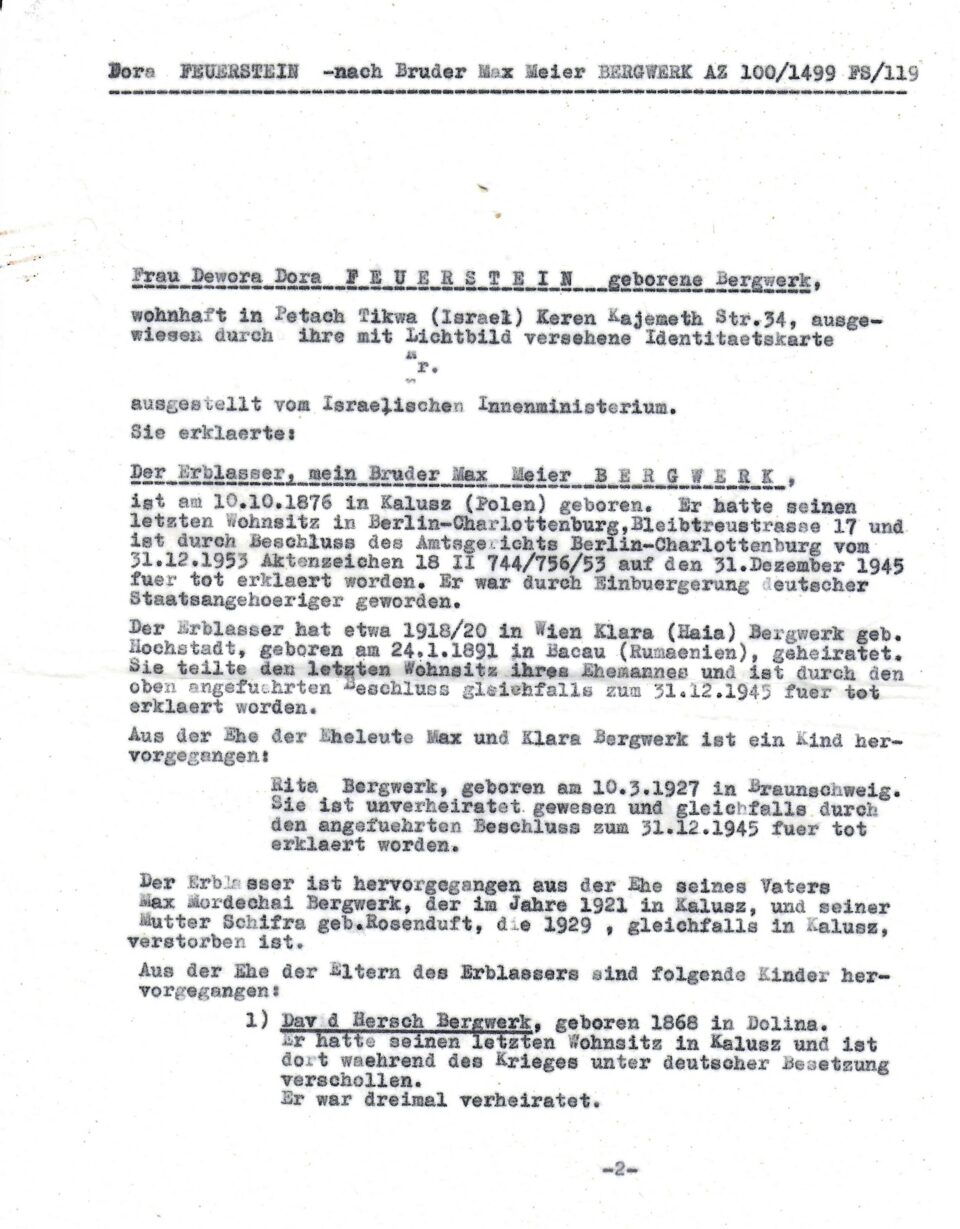
The document I found appears to be connected to an Erbschein — a German certificate of inheritance — for the estate of her brother. An Erbschein identifies the legal heirs of a deceased person and their exact shares in the estate. For this reason, the fate of all of Oma’s siblings and their families is outlined in great detail.
The document itself is not dated. The latest date mentioned in its pages is 1955, which means Oma’s testimony must have been given sometime after that year.
Inside its pages, the testimony covers three generations: the Bergwerk siblings and their spouses, their children — Oma’s nieces and nephews — and, when known, the children of those nieces and nephews. It records where they lived, whom they married, where they fled, and, in many cases, where they disappeared.
Growing up, my impression of the Bergwerk family was that they had largely survived. Oma’s immediate family did survive: my grandmother Frieda, her brother Issi, and her sister Hilde. In addition, my childhood was filled with visits to relatives from the Bergwerk side of the family. There was Gabi and her family from Toronto; in New York, there were the Goldbergs, the Kavalers, and Dov’s family, who continued the Bergwerk name. In Israel, there was Herman and his family in Arad. There were Gerda and Thea and there was Miriam, the daughter of Silvia from Australia. All Bergwerk descendants in varying degrees.
Although some Bergwerks did survive, when I went through this testimony name by name, I saw a very different picture. What to me seemed like many, was only a small part of the whole picture.
Understanding the Bergwerk family tree is not simple. Families were large. Cousins married cousins. Some people married more than once. Certain first names appear over and over again. It takes time to follow each branch and figure out who belongs where.
Once I pieced it together, I saw that of Oma’s eight brothers and sisters, all had perished. Only the spouse of her youngest sister, Regina, survived. All the other brother and sister-in-laws were gone. She had 35 nieces and nephews, and only 12 made it through the war. Oma also knew of 10 from the next generation – children of her nieces and nephews – who did not survive.
The survivors themselves were scattered across continents. People who had once lived relatively close to one another, were now spread between Israel, the United States, Australia, Sweden, Argentina, and Brazil.
The document made painfully clear how much had been lost. Looking at the names and numbers, you can feel the upheaval of Oma’s world: the destruction of an entire family network. To us, most of the names in this document remain faceless. We do not know what they looked like, and most likely we never will. To Oma, she knew not only what they looked like, but also what they were like.
Below is a brief summary of the family stories recorded in the document. Oma’s testimony focused on the relatives who were alive during the war and what became of them. I have added what I know about their families after the war. While Oma recorded each sibling’s story in her own order, I have arranged them from oldest to youngest for clarity.
Oma’s oldest brother, David Hirsch, was married three times. His first two wives died before the war. From his first marriage, he had one daughter, Jenny, who gave him three grandchildren.
Jenny’s eldest son Arnold, did not survive the war, and her two younger daughters, Thea and Gerda, were sent to Auschwitz, where they were subjected to Dr. Mengele’s experiments. Astonishingly, both survived and moved to Israel. Gerda later lost her leg during Israel’s War of Independence.
The son from David Hirsch’s second marriage, Bernhard, also survived. Bernhard married his cousin Selma, and they had two children, Marvin and Tzili, who later moved to the United States. Marvin married Irene and was the father of Dov, Gershon, and Ari. They are the only branch I know of today that still carries the Bergwerk name.
From all the extended Bergwerk family, I am closest to Dov who lives near me in Raanana. Although technically we are just third-cousins, I still feel like he is close family.
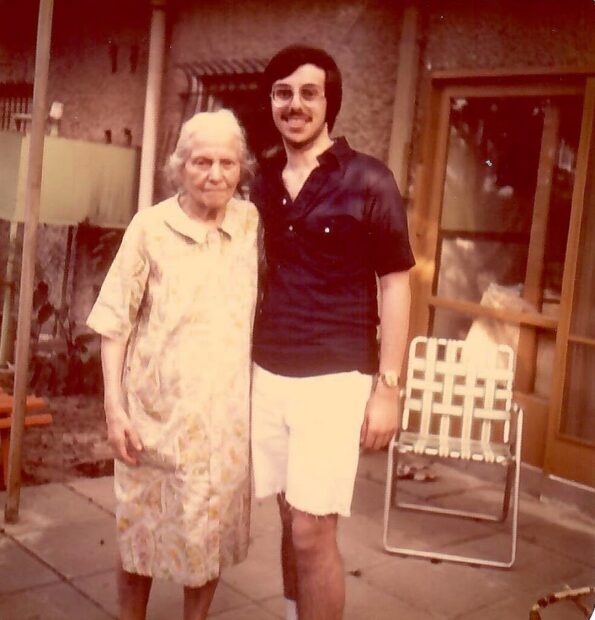
Bernhard’s daughter, Tzili married Alvin Kavaler, and was the mother of Bernhard and Susan.
David Hirsch, his third wife, and their three children did not survive the war.
After David Hirsch, Oma’s next oldest sibling was Wolf. Wolf had five children, four of whom survived. The survivors went to Argentina, Brazil and NY. This is branch of the Bergwerk family I know absolutely nothing about. If anyone has any news about what happened to this branch of the family (or actually any other branch,) I would gladly like to know.
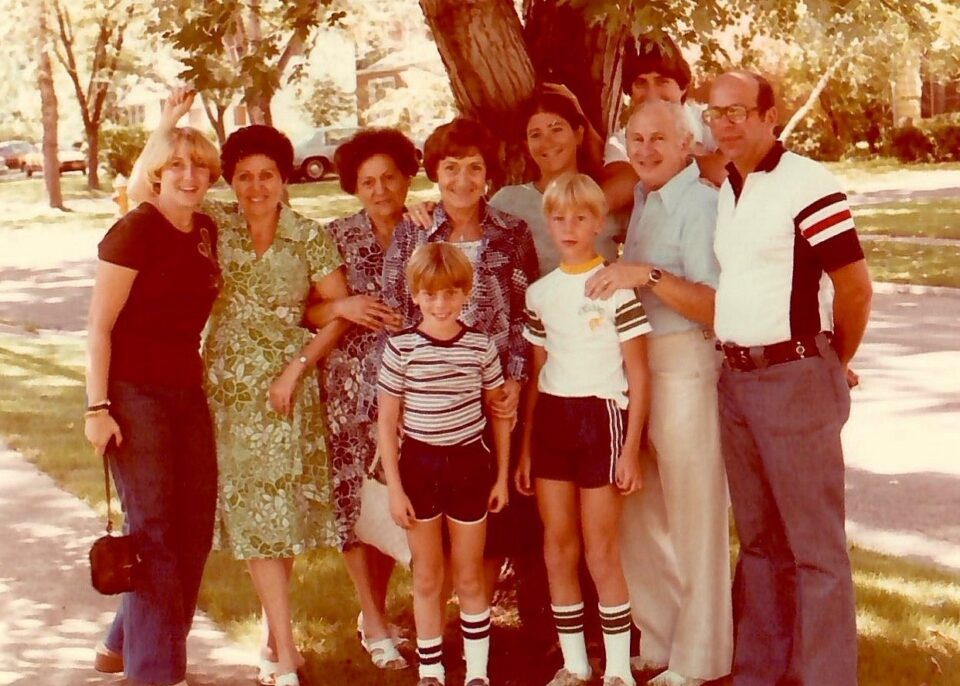
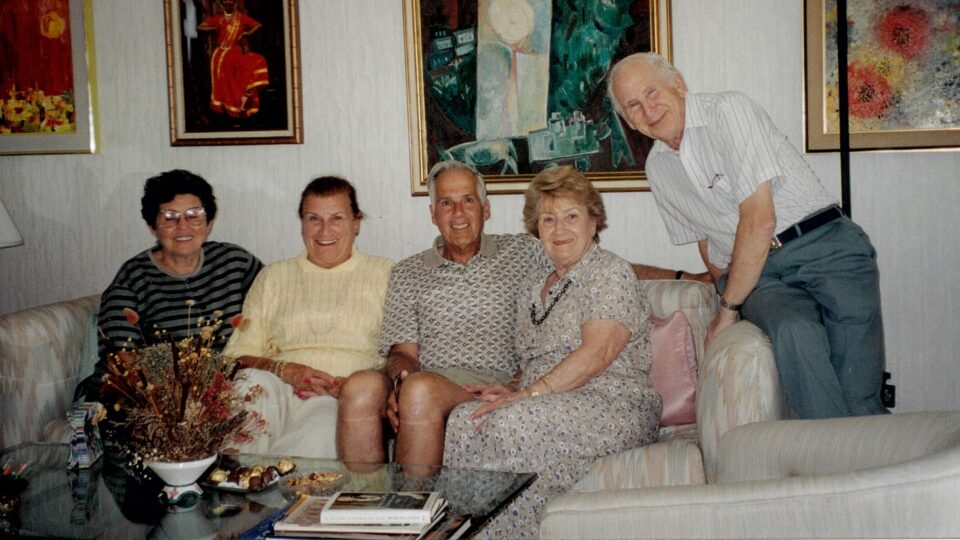
The third of the nine Bergwerk siblings was Isak. Isak was the father of seven children, four of whom survived. This was the branch of relatives that we were closest to growing up. His oldest daughter, Lina, was the mother of Gabi, and Gabi lived in Toronto with her children – Leonora and Gilad. Toronto is only a two-hour drive from Buffalo, where I lived, and we visited each other several times a year.
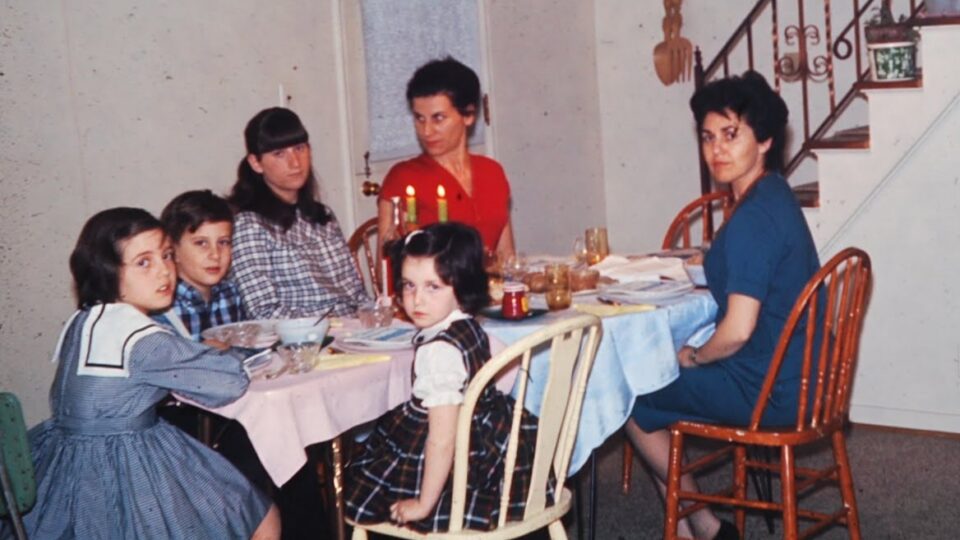
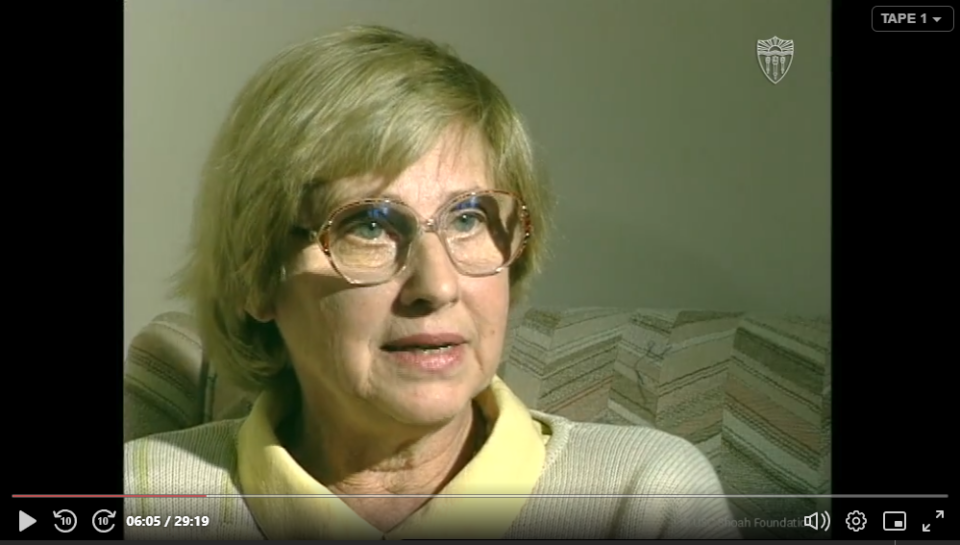
Lina’s sisters Selma, Anny and Fanny all lived in NY. Selma is the one that married her cousin Bernhard, and had the Bergwerk and Kavaler branches of the family. Anny’s daughter was Evelyn, who married Leo Goldberg and was the mother to David and Jeffery Goldberg. These were families that we would see every time we were in the New York City area. Anny gave a testimony to Steven Spielberg’s Survivors of the Shoah Visual History Foundation. In the video, she speaks about, among other things, Bergwerk family members. The video can be found here.
Another sister of Lina, Selma, Anny and Fanny, was called Frieda. She was married to Norbert Andacht. Although Frieda and Norbert did not survive, their daughter Silvia did. She moved to Australia, where she married Migdalek. Like Anny, Silvia gave a testimony to Steven Spielberg’s Survivors of the Shoah Visual History Foundation. In her video, she speaks about, among other things, her life in Herne, and tells how she survived in hiding under the false name of Janina Jaskiewicz. The video can be found here.
The fourth sibling in Oma’s family was a sister called Dresel, who married Aron Schaffer. They had 4 children and 5 grandchildren – none survived.
The fifth sibling was Max – the reason for the testimony Oma gave. As previously mentioned, Max, along with his wife and daughter disappeared during the war.
The sixth of the nine children was Oma herself, born Dora Bergwerk. This is the branch of the family from which I am descended, and our story is told in more detail in my other blog posts.
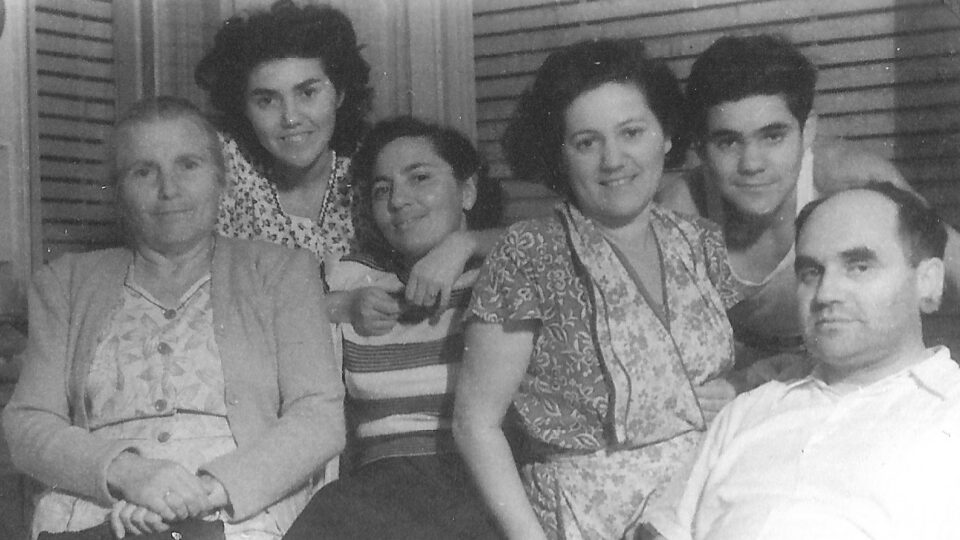
After Oma, came another sister called Fiege. Oma was married to Moritz, and Fiege married Mortiz’s brother Nachman. They had seven children and two grandchildren, none of whom survived.
The eighth sibling in Oma’s family was Mina. She married Jakob Wirth and they had three boys, two of whom survived. One of the survivors was Herman, who moved to Israel and eventually made his home in Arad. He worked as a gardener for the hotels in the Dead Sea area. His daughter Edna, and her brother Yossi, still live in Arad. Mina’s other son that made it through the war was Max, who moved to Sweden. I know nothing about him.
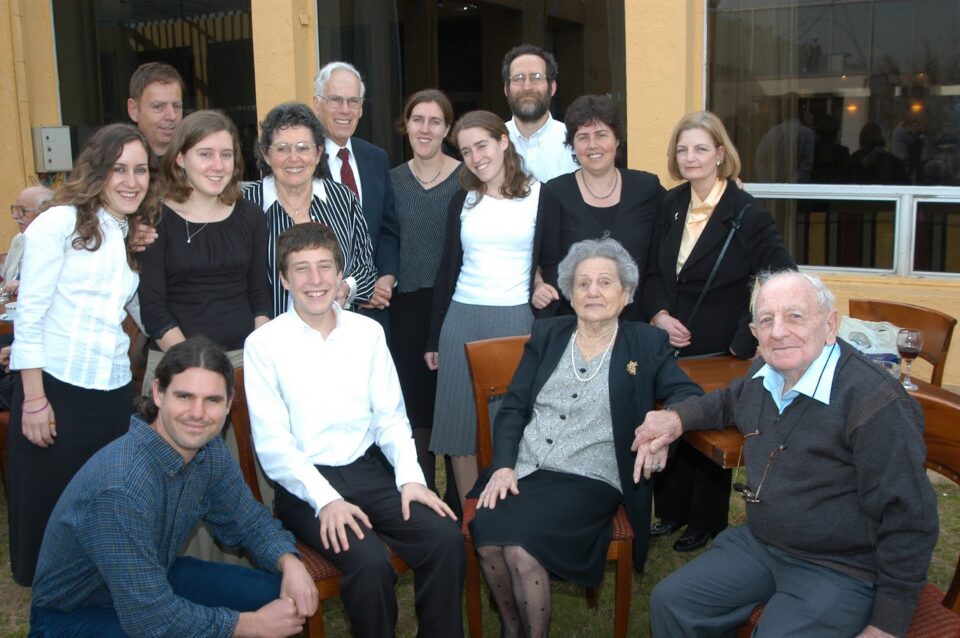
The youngest of Oma’s family was Regina, who married Alexander Kamil. Alexander survived the war and moved to NY. Regina and her three children did not.
As I write this, I see Oma sitting and play Solitaire cards on her small formica kitchen table. The air is heavy with the delicious smells of her cooking. She wears a floral cotton nightdress. Her white hair is pulled together on top of her head. And now I also see the great weight of a lost world on her shoulders.
A very moving history of Oma’s family. Well written.
Very fascinating! A diagram would help to follow better
This is amazing, and you look just like Savta Yona!
Irit, this was simply incredible to read. [applause, applause]. I have seen my grandmother Anny’s SHOAH video and also interviewed her myself on video 37 years ago. After reading your post, I now need to go back and rewatch that — I have not seen in some time. I would be happy to share the link with you, or any of our other family members.
Thank you! I would love to add your interview with Anny to this post. Could you please send me the link? irit_sherman@yahoo.com
this is amazing. i of course have seen my mother’s testimony….but the “family tree” that you have presented is really amazing. thanks so much for sharing.