MARCH 19, 2025: My favorite days are those filled with surprises—when something unexpected happens. Today was one of those days.
Trapani is a large port city on the western coast of Sicily with a population of over 65,000. The historic center is shaped like a sickle curving out into the Mediterranean Sea. When looking for what to do in Trapani, guides recommend visiting the salt flats, going to Erice, a small hilltop village overlooking Trapani and visiting the Egadi Islands, islands off the coast of Trapani – all attractions that are outside the city proper.
In the Middle Ages, Trapani was home to one of Sicily’s larger Jewish communities, with the Jews compromising a tenth of the total population. Like in other parts of the island, Jews here played a vital economic and cultural role, especially as traders, artisans, and physicians. They lived in the Giudecca, the Jewish quarter, though no visible trace of it remains today. With that in mind and considering that the main tourist attractions are all outside the city, my expectations for Trapani were very low.
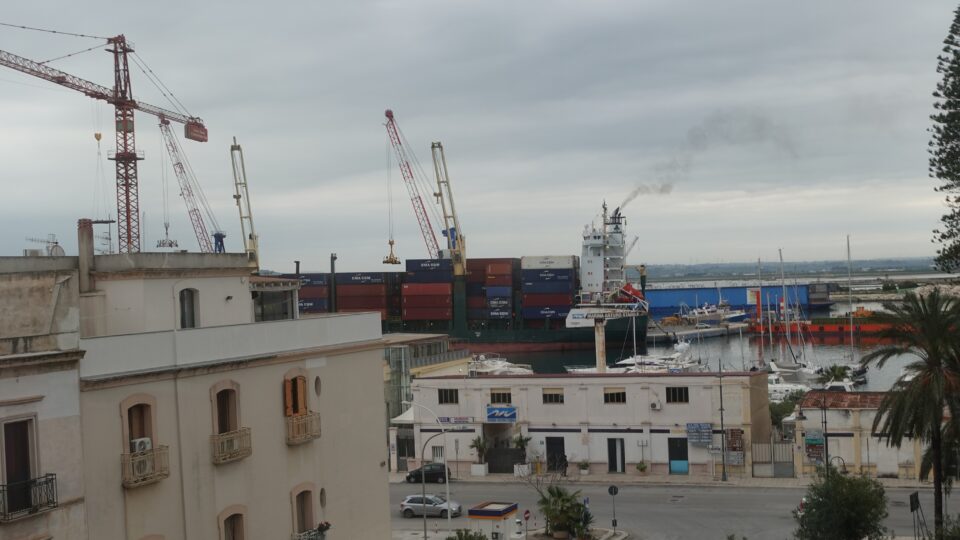
From our apartment, we started the day watching a massive container ship which had arrived into the port overnight being slowly unloaded. The sky was gray and overcast, a sharp contrast to the beautiful weather of yesterday. The gloomy weather added to my doubts about what the day would bring.
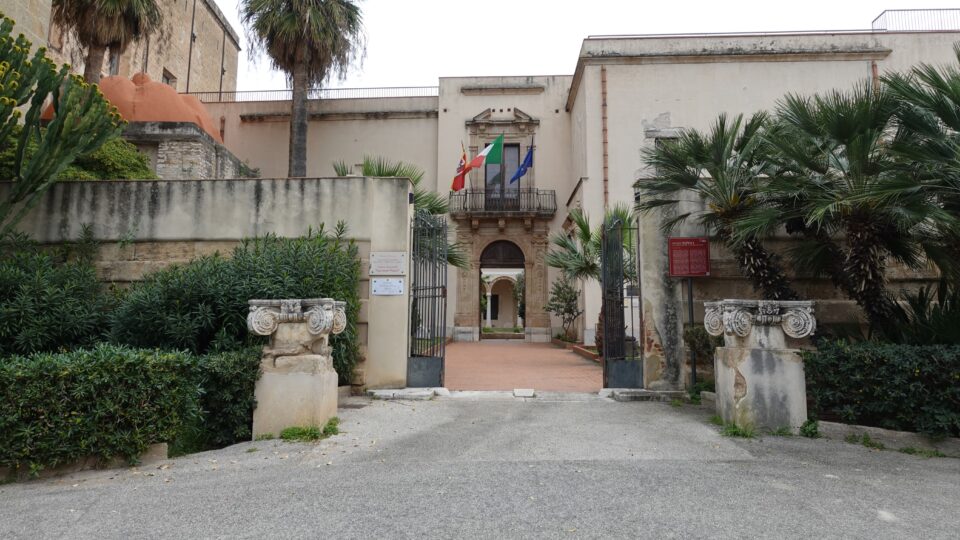
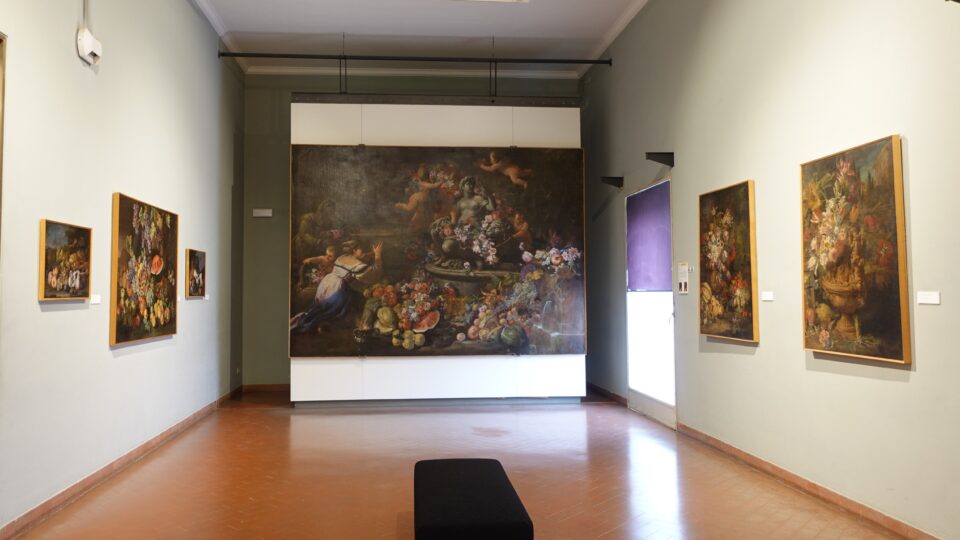
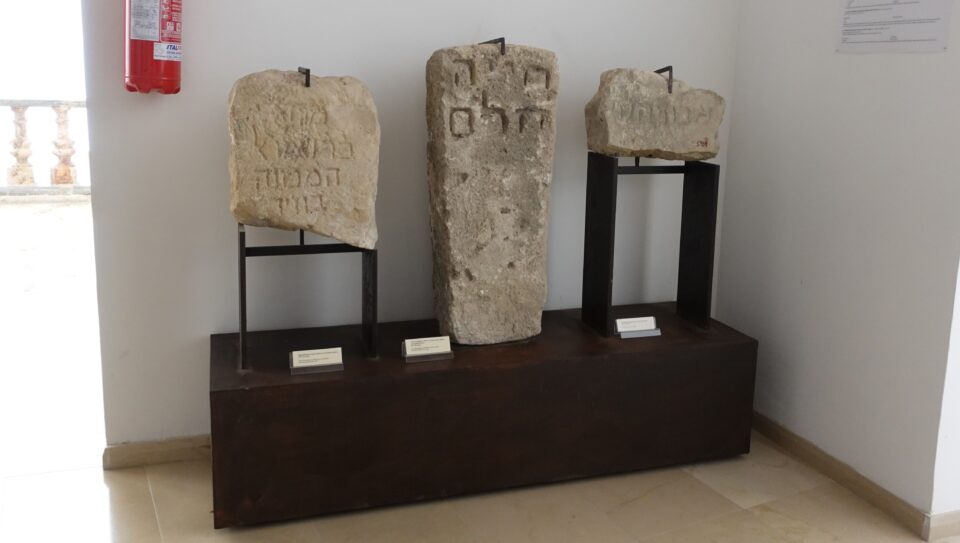
We left the apartment and headed to the Museo Regionale Agostino Pepoli, a museum in Trapani dedicated to art, archaeology, and local history. As we often do in such places, we came on a treasure hunt—hoping to find three Hebrew tombstones supposedly displayed somewhere within the exhibits.
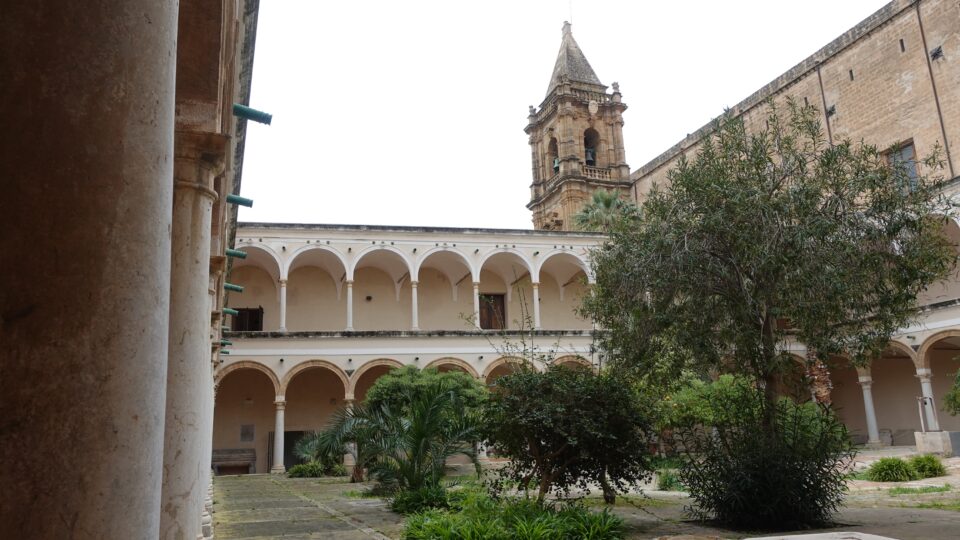
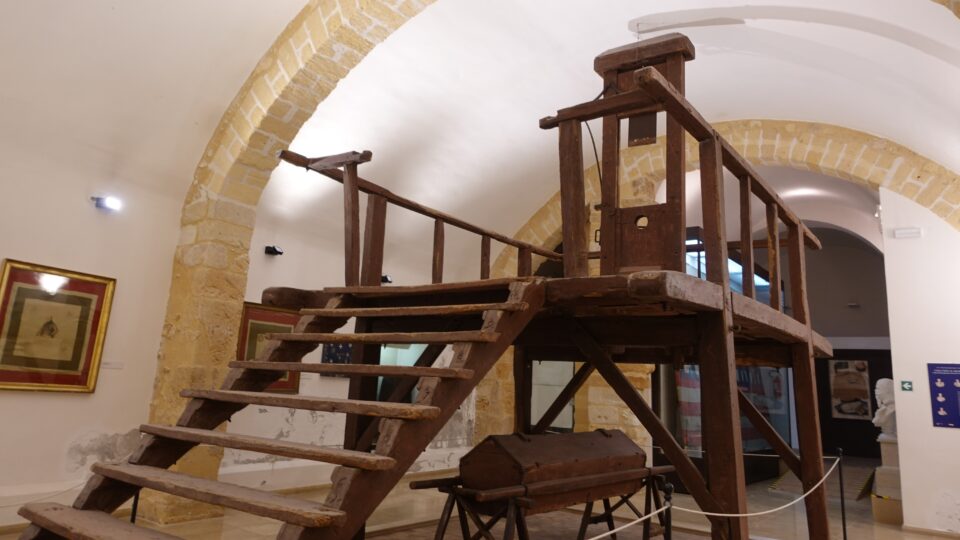
Housed in a former monastery, the museum’s cloister featured numerous tombstones. We circled through twice but saw nothing inscribed in Hebrew. On the first floor, we explored various exhibits but still found no trace of what we were looking for. One interesting artifact we did see was an 1800s-era guillotine – a bit gruesome but fascinating.
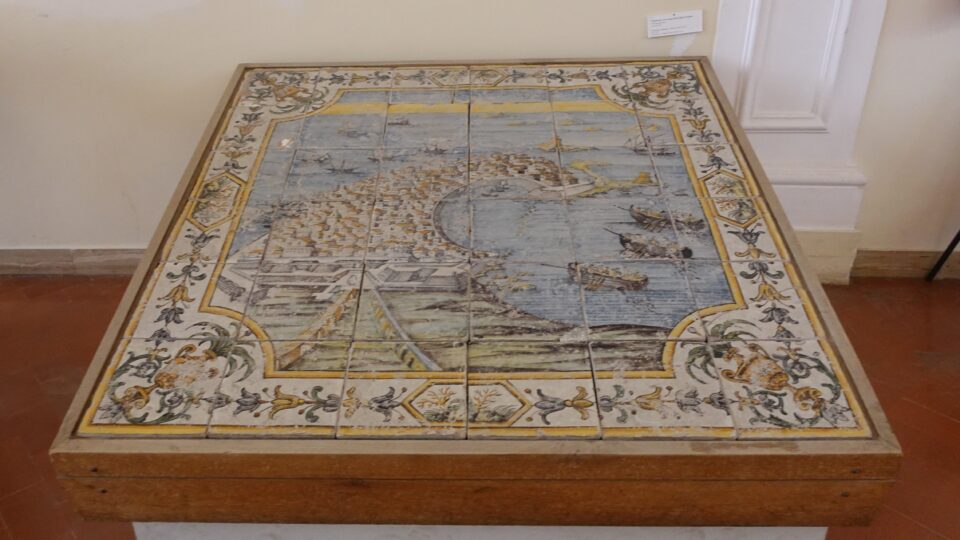
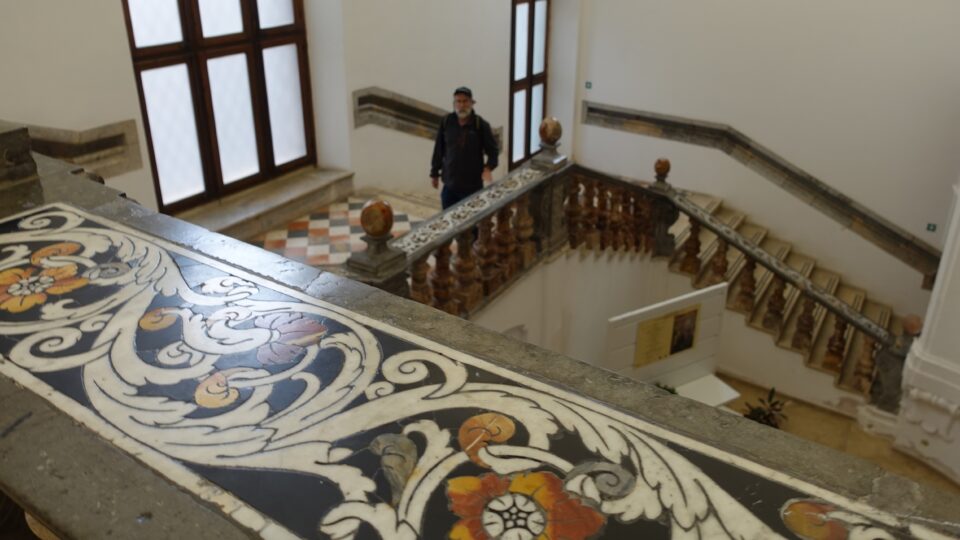
We climbed the colorful tiled staircase to the second floor, and then passed through many rooms of mostly Christian art spanning centuries. We were ready to give up when we spotted a small archaeology section tucked away to the side—and there, prominently displayed, were the three Hebrew tombstones we had been searching for. These stones, from the 15th century, were discovered in 1998 during the renovation of Trapani’s historic fish market.
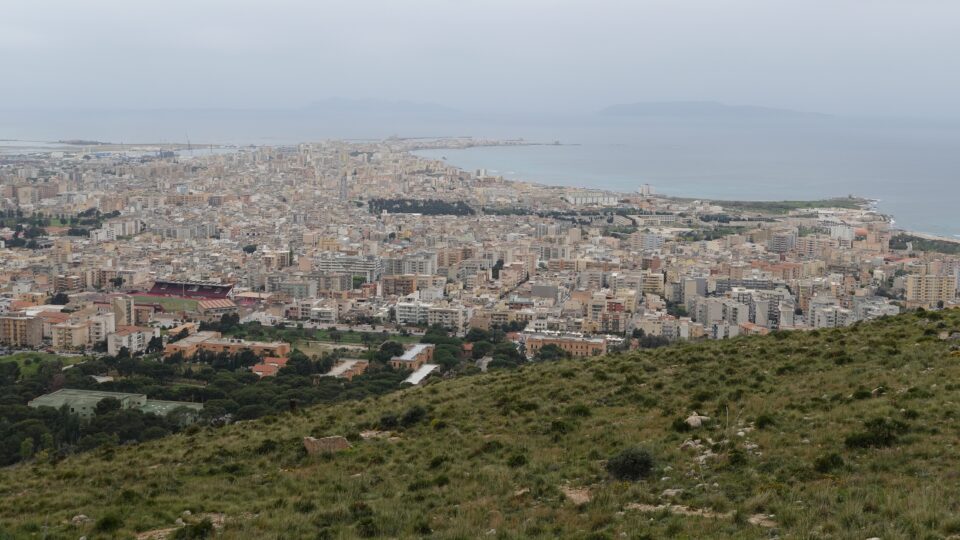
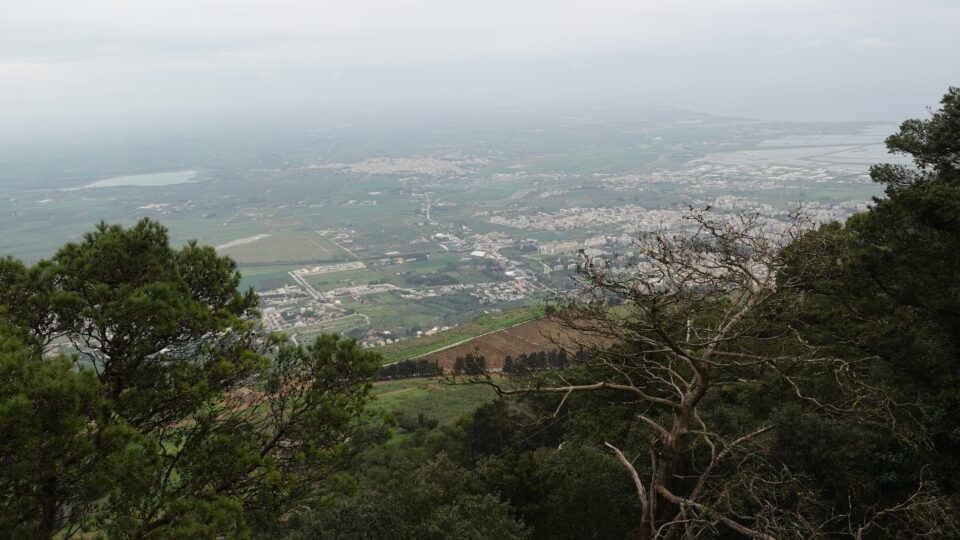
After visiting the museum, we drove up to the hilltop village of Erice. Usually, you can take a cable car from Trapani to Erice, but since we were visiting off-season, the cable car was closed for maintenance. Instead, we wound our way up the mountain by car, with breathtaking views of Trapani on one side and fields of colorful wildflowers on the other. Near the top, we entered a forest and nestled within the forest sat Erice.
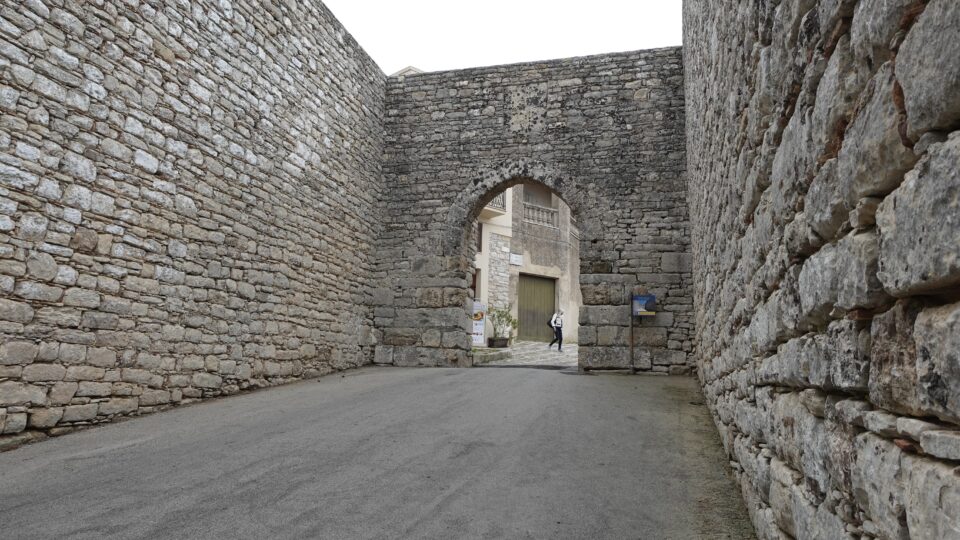
Between the 13th and 15th centuries, a small Jewish community lived in Erice until the expulsion. They were scattered throughout the town, with the highest concentration near the northern wall—an area that was heavily damaged in anti-Jewish riots in 1392. Jews in Erice worked as ironsmiths, goldsmiths, cotton workers, carpenters, merchants, and moneylenders.
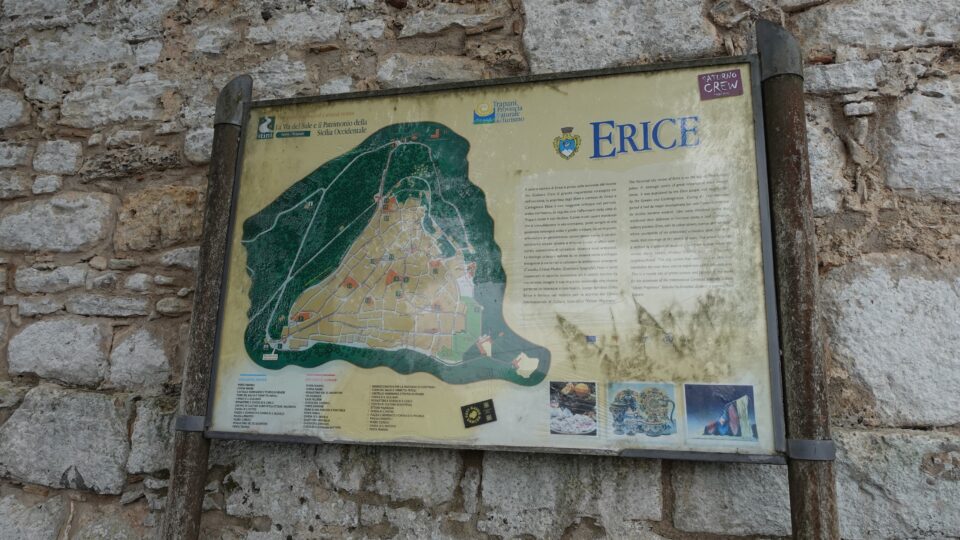
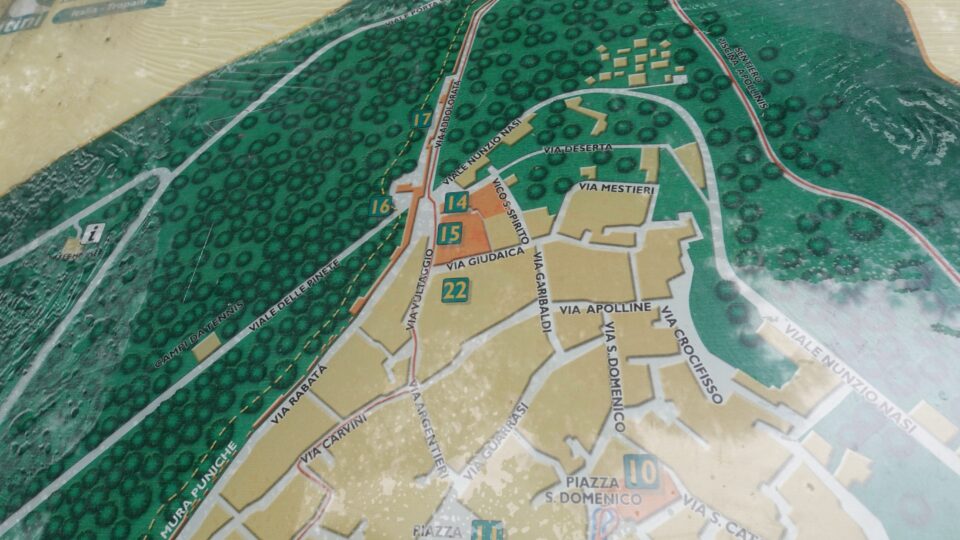
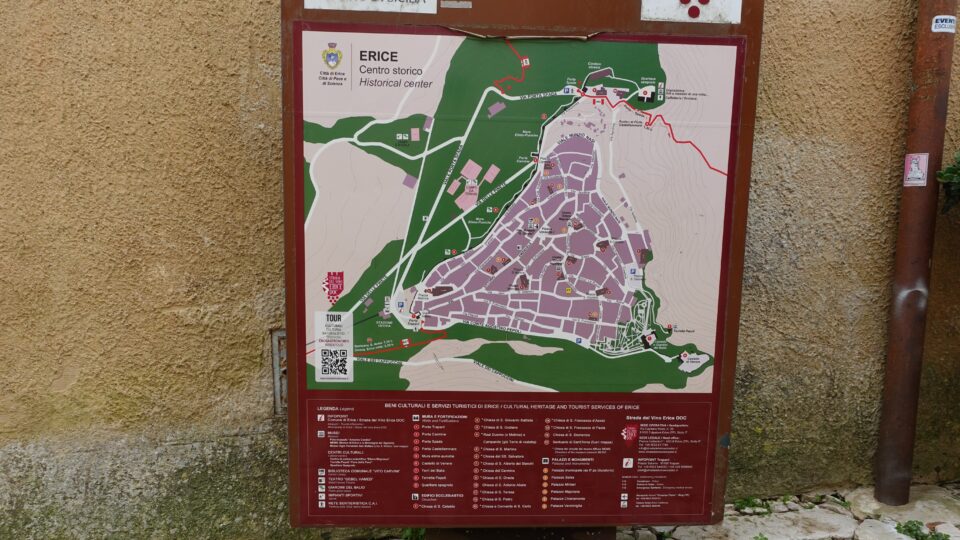
At the entrance to the medieval old city, we stopped at a large map for orientation. To our surprise, we spotted a street labeled Via Giudaica in the town’s northern section, once the heart of the Jewish quarter. Giudecca is a term used in Southern Italy and Sicily to identify an urban district where Jewish communities lived. On Google Maps, this street has a different name, so we hadn’t known it existed. It seems that the only visible trace of Erice’s Jewish past now lives on in this street name.
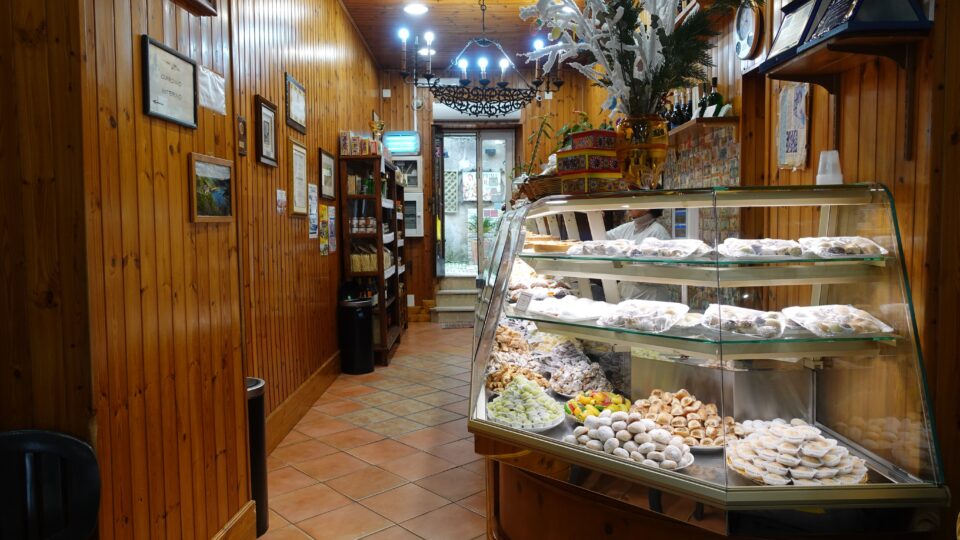
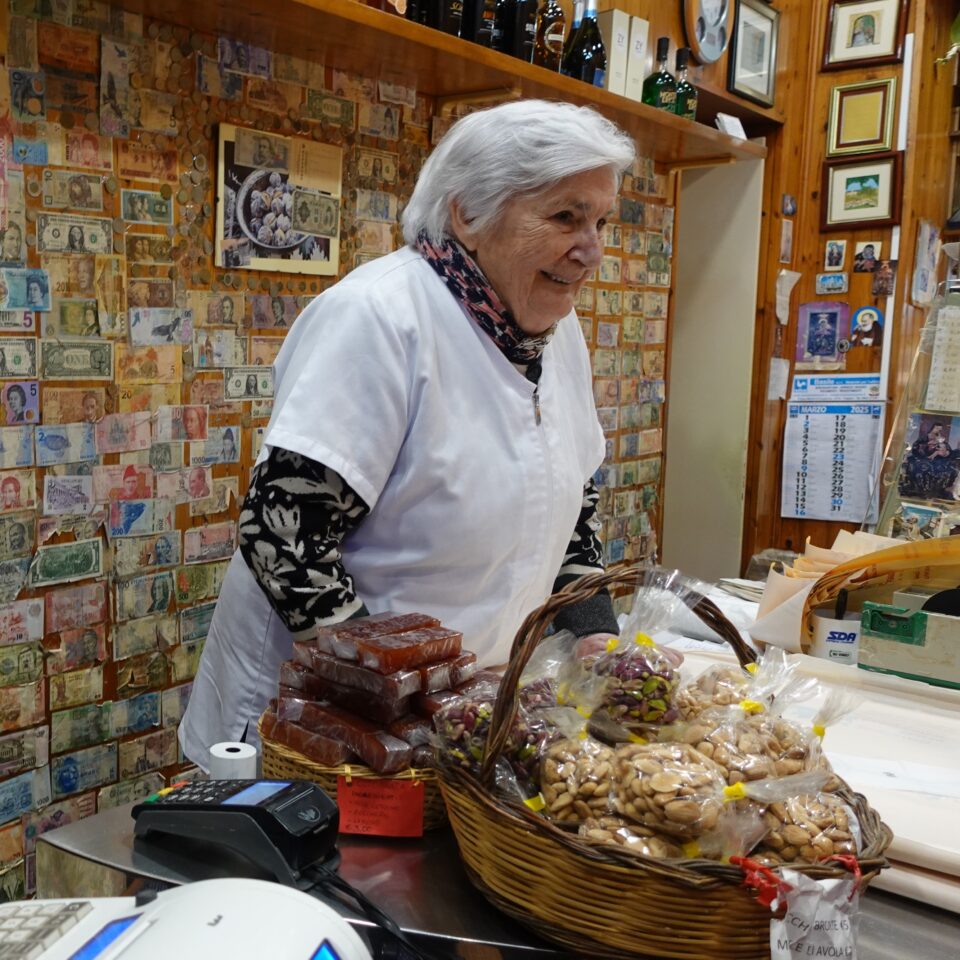
We originally came to Erice with two main destinations in mind. The first was one of Sicily’s most renowned pastry shops: La Pasticceria di Maria Grammatico. After her father died, Maria was sent to the San Carlo convent in Erice at the age of 11. There, she learned the art of traditional Sicilian pastry-making from cloistered nuns, who sold their confections to support the convent. Maria watched and learned in silence, mastering complex techniques—especially those involving almond paste. When she left the convent at 22, she opened her own pastry shop in 1964. Her remarkable story is told in the book Bitter Almonds, which I read a few years ago.
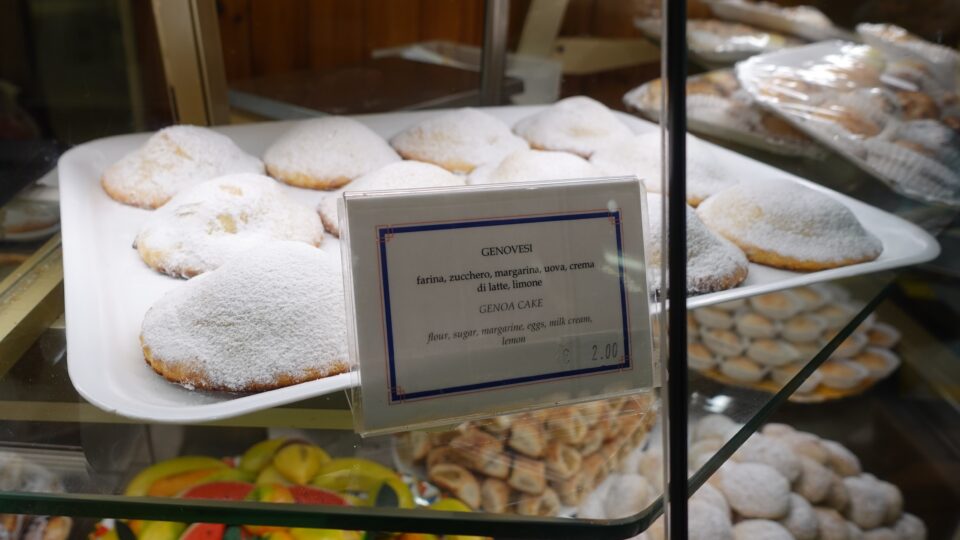
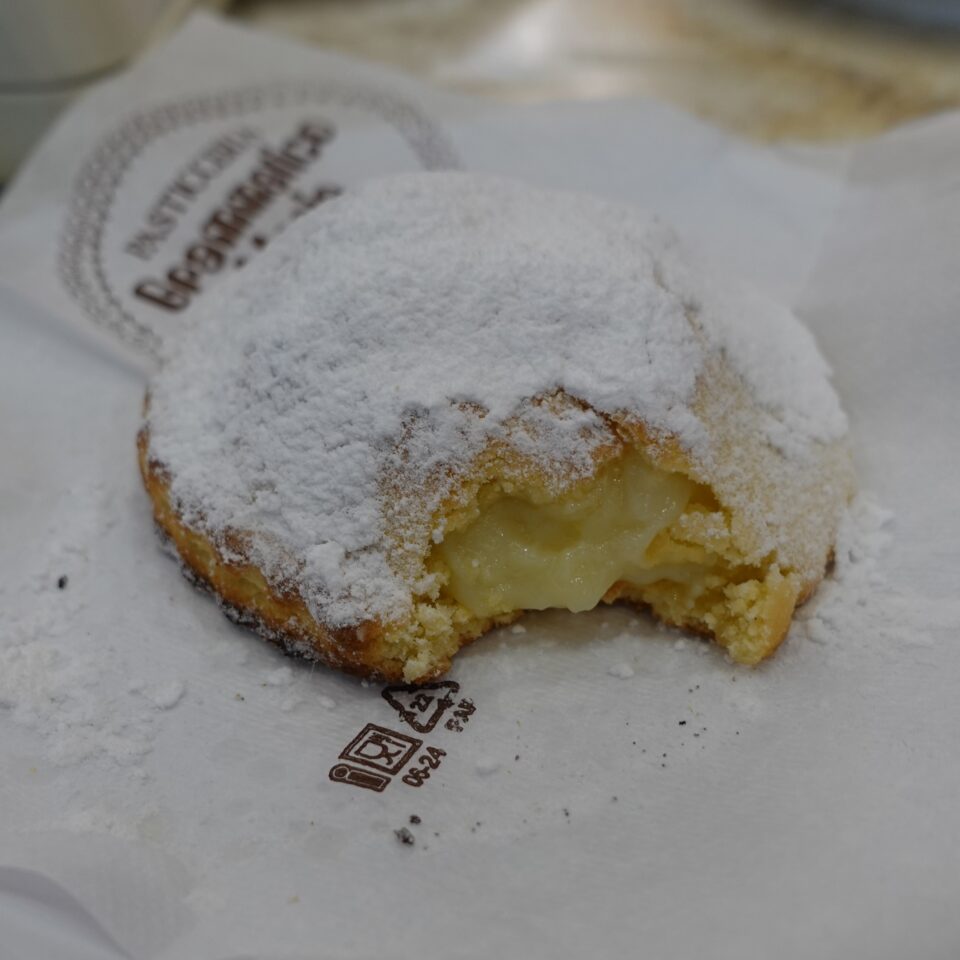
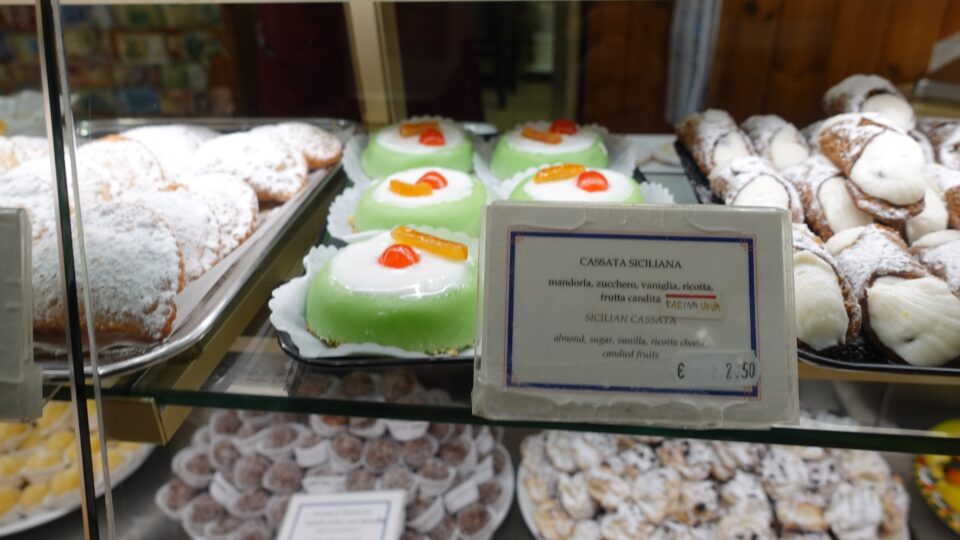
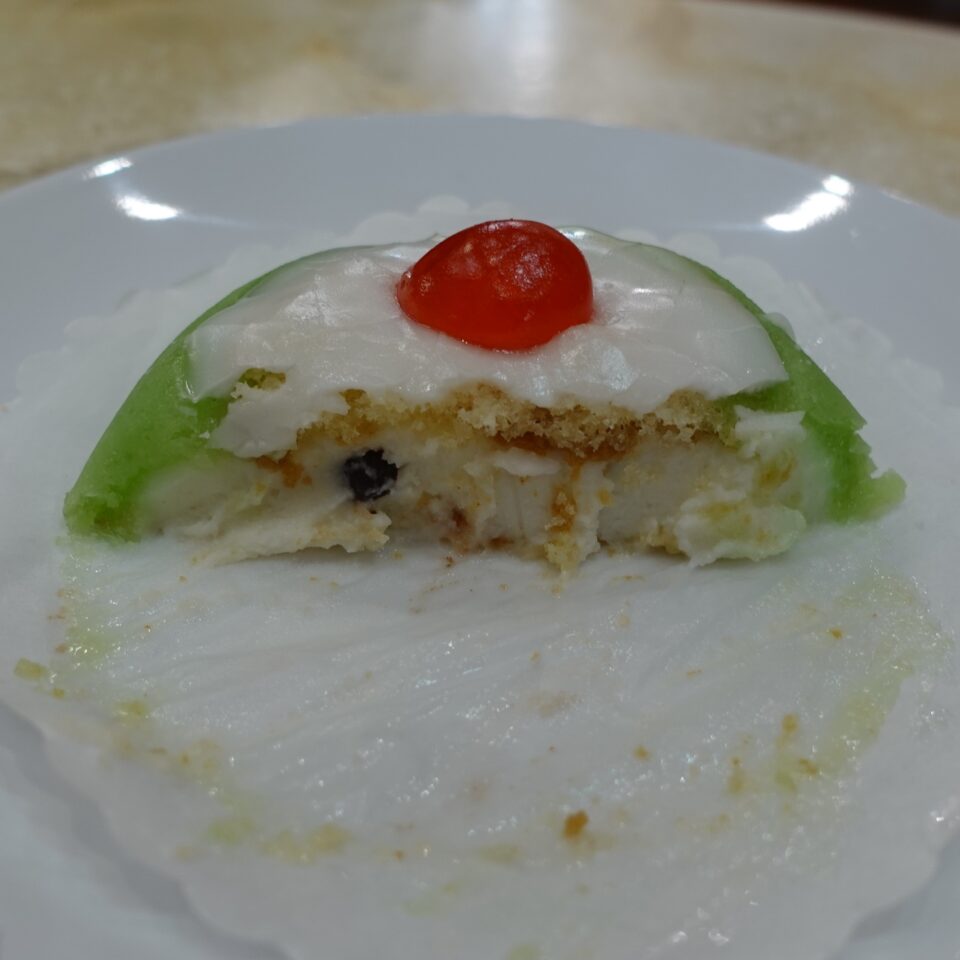
I came prepared with a list of pastries to try. It was hard to choose, but I settled on two: a hot, cream-filled genovese, and a cassata made with almond paste. Both were delicious! I had expected the cassata to taste like marzipan, but the dominant flavor came from the ricotta filling, dotted with mini chocolate chips and candied orange peel. Just as we were leaving, Maria herself came out into the shop. I hadn’t expected to see her—it was a lovely surprise to glimpse at the woman behind the legend.
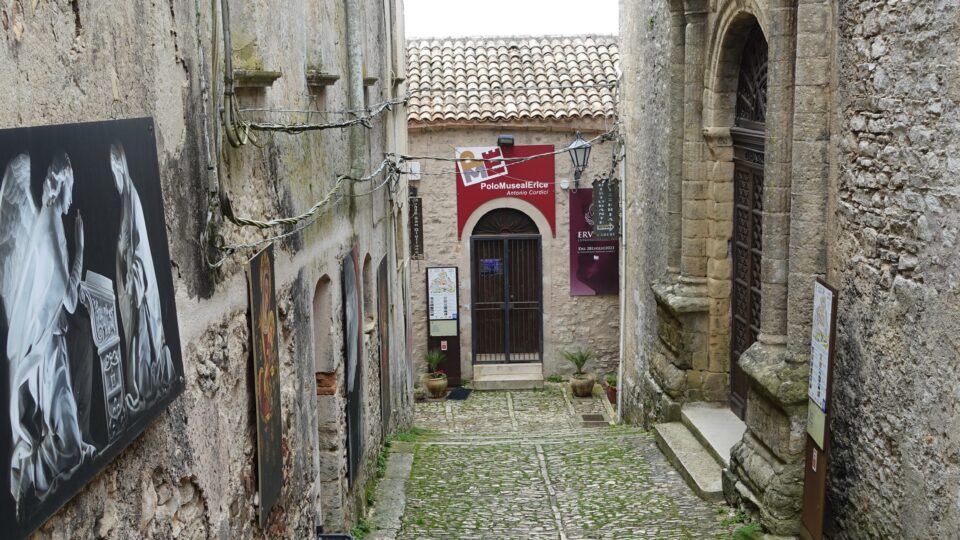
Our second destination was the Antonio Cordici Municipal Museum, home to the only known surviving Jewish tombstone from Erice’s former Jewish cemetery. The museum also displays a fragment of a Roman oil lamp engraved with a menorah. Unfortunately, when we arrived, we found a sign stating that it was closed until April 1—about two weeks away. Next door, a tourist information desk was open in the same building as the municipal library. The person at the desk didn’t speak English, but with Google Translate, we asked whether he knew anything about Jewish history in Erice. He did not.
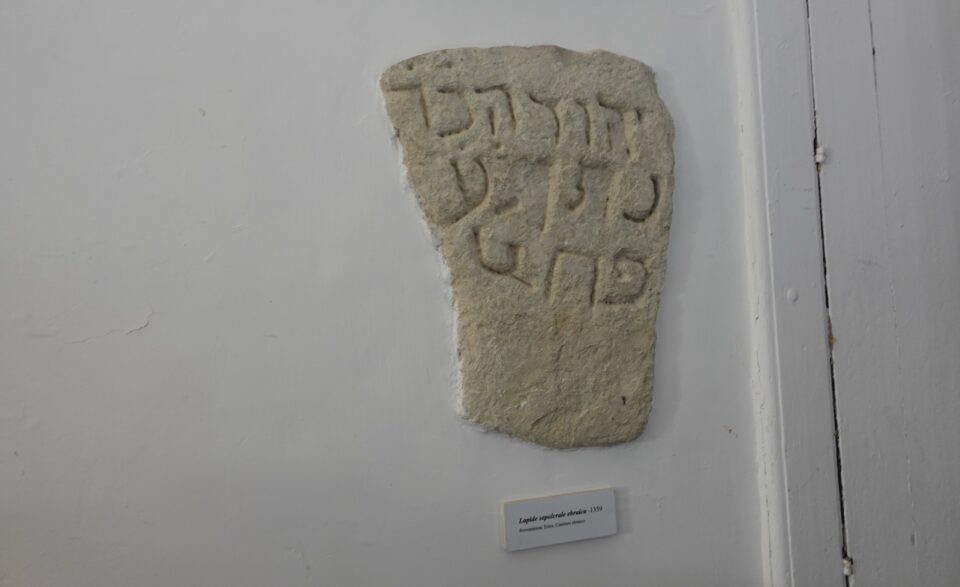
As we were turning to leave, we noticed a small stone fragment mounted on the side wall next to the door—partially hidden. It appeared to be inscribed in Hebrew. Could this be the tombstone we had hoped to see in the museum?
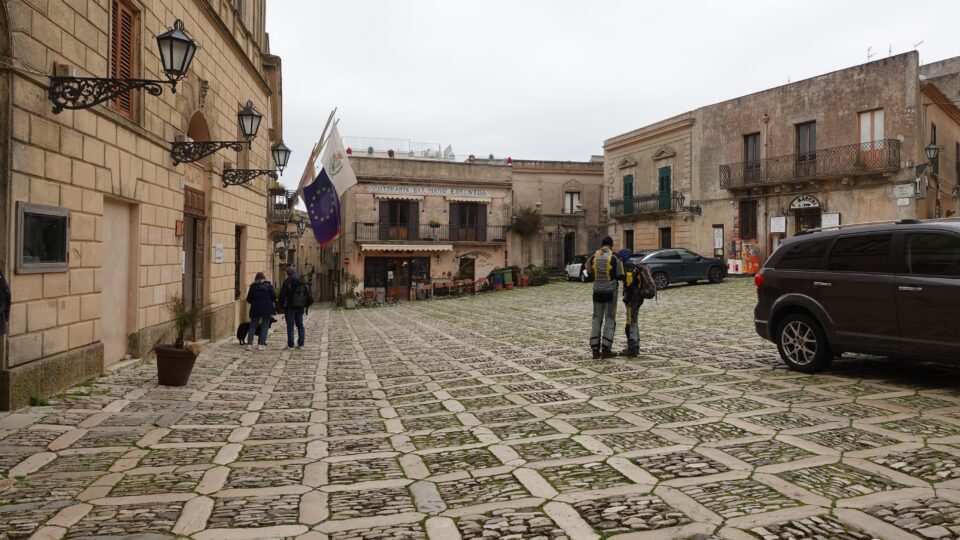
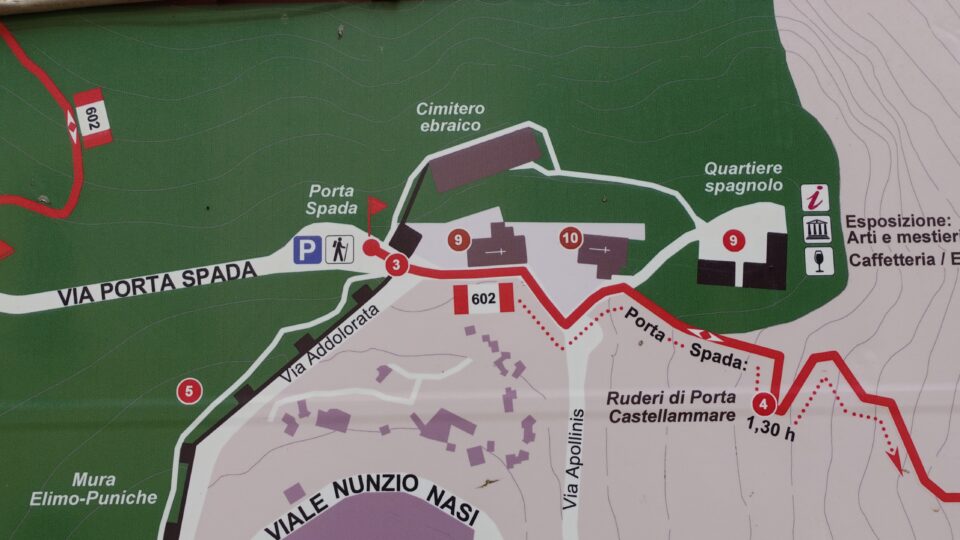
Once we exited the building, in the main square, we spotted a detailed map of the historic center. To our amazement, it included the location of the old Jewish cemetery outside the city walls, just beyond the gate closest to the Jewish quarter. Nothing we had researched so far, mentioned the location of the Jewish cemetery. Another unexpected discovery.
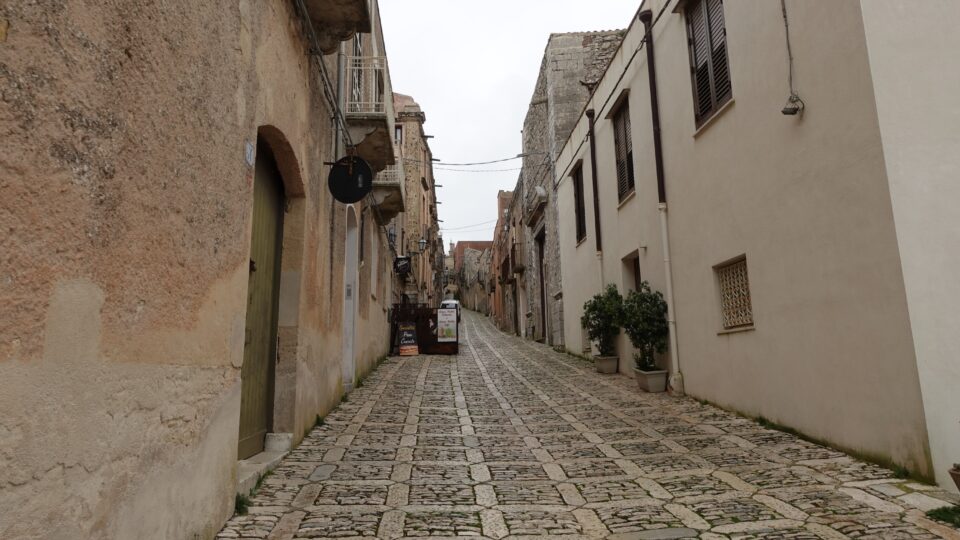
From the main square, we made our way toward Via Giudaica, winding through narrow lanes. This was not the tourist side of town — the streets were deserted and the stone-paved lanes lined with old stone houses felt like walking back in time. Just beyond Via Giudaica was Via Apolline. According to our research, the synagogue once stood somewhere along this lane, though there was no visible trace of it now.
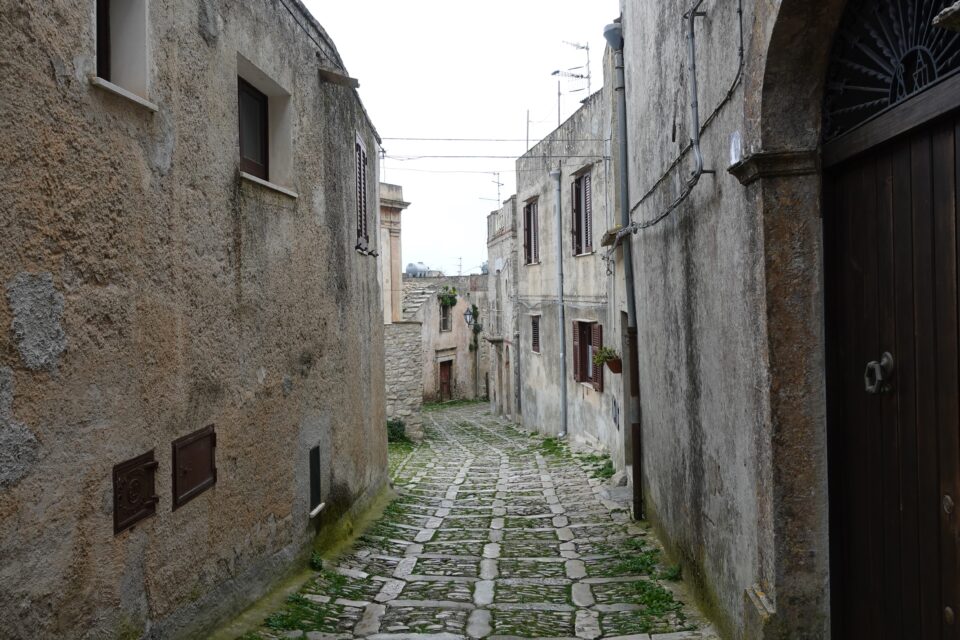
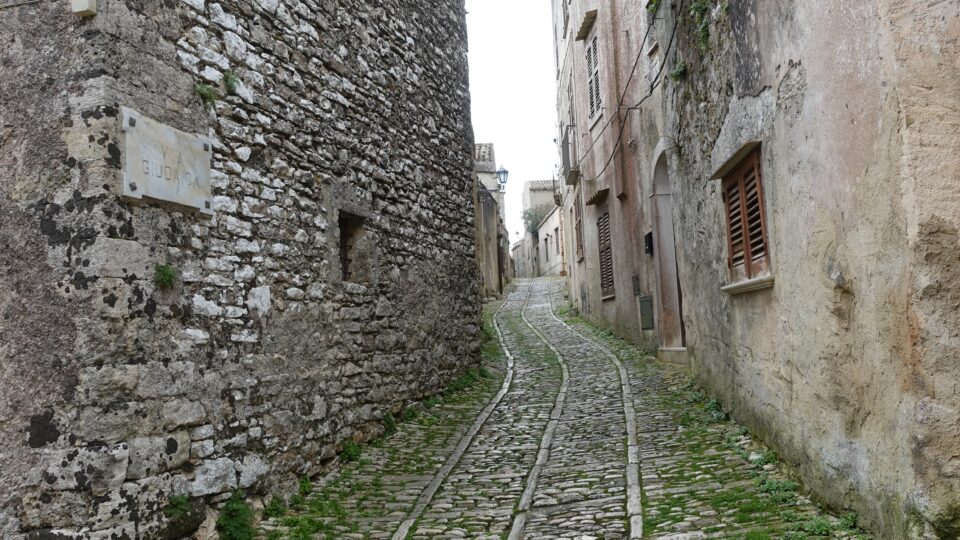
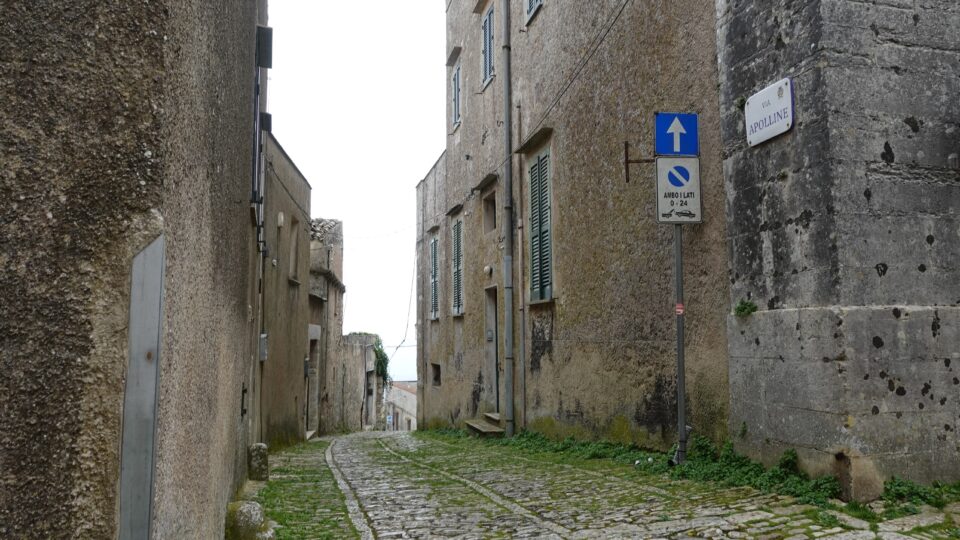
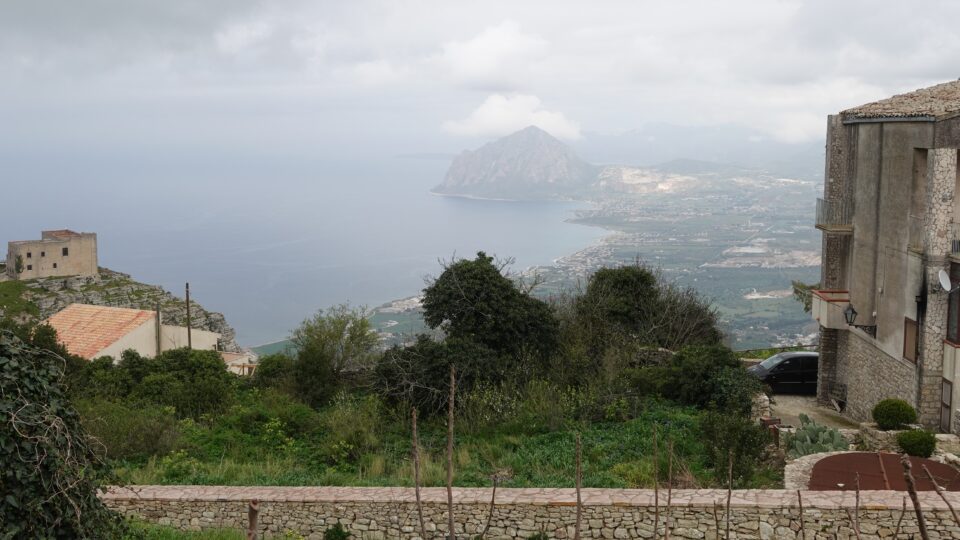
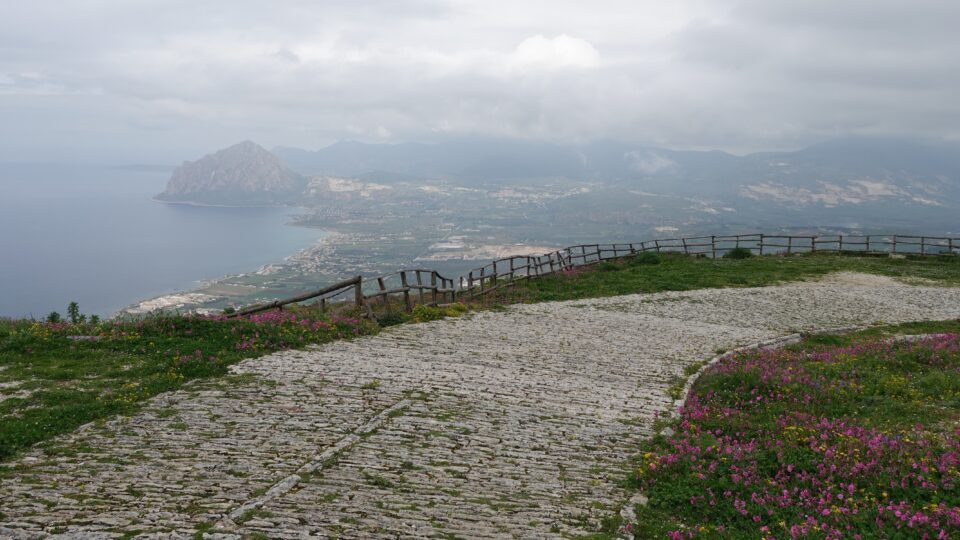
Once we had strolled through the former Jewish quarter, we reached the edge of the town and a beautiful view of the Mediterranean coastline was revealed.
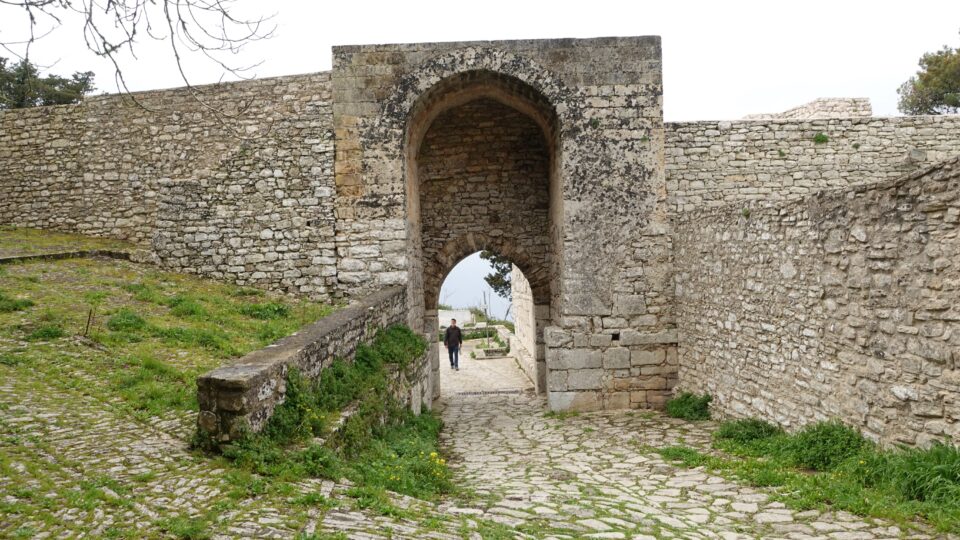
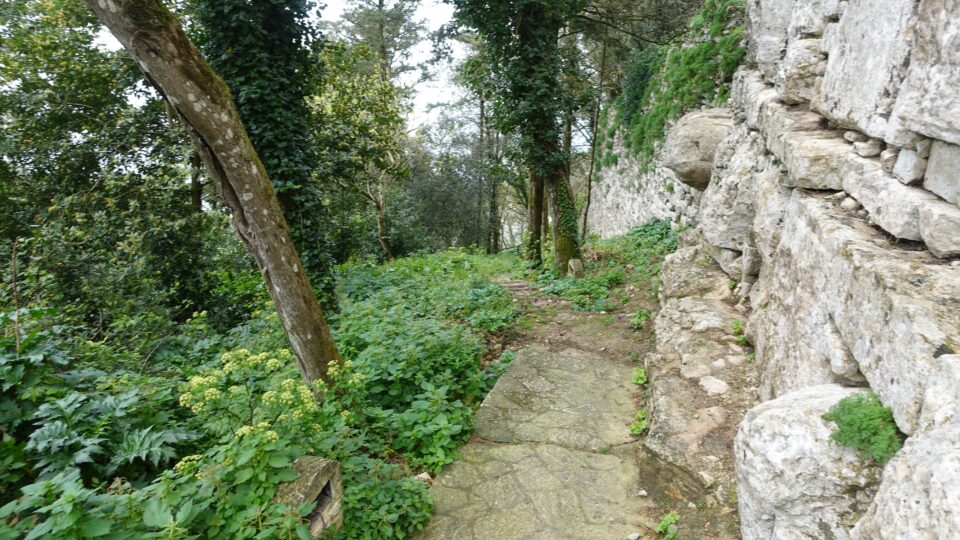
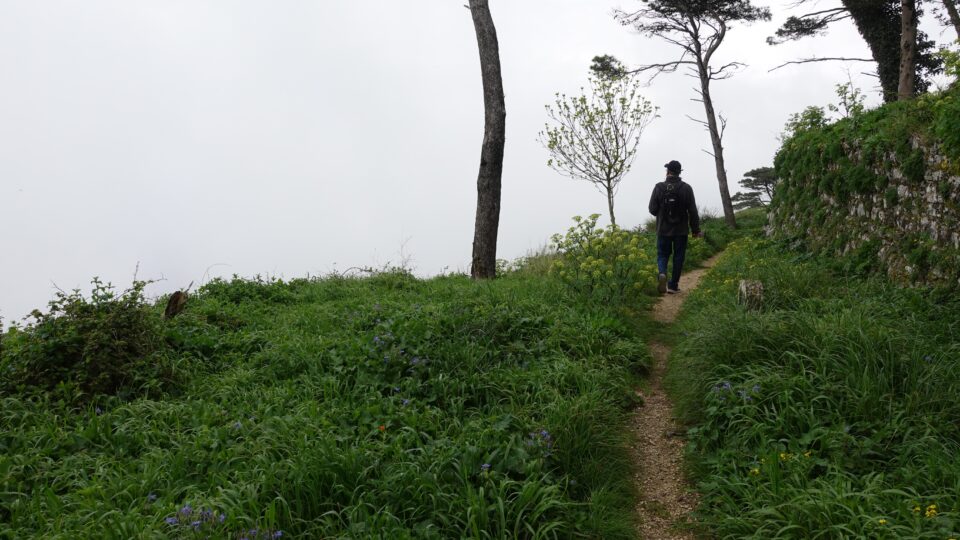
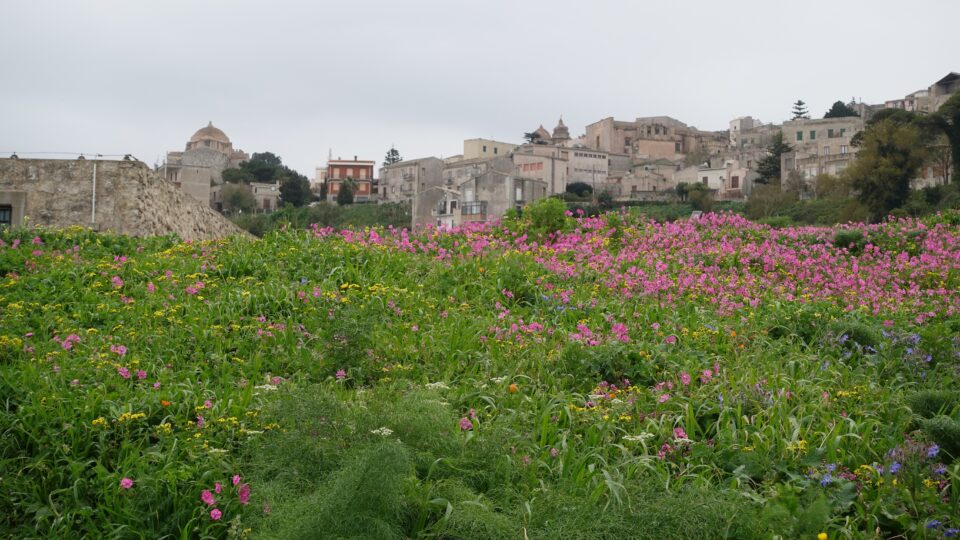
Having seen the location of the Jewish cemetery marked on the map, we decided to try and find it. We returned to the car and drove towards the gate nearest the site – Porta Spada. We parked the car and noticed that just outside the town walls, before re-entering the town, a narrow path led off into the fields. We followed it, scanning the hillsides for any sign of the old cemetery — but found none. Instead, we were rewarded with sweeping views and an abundance of wildflowers
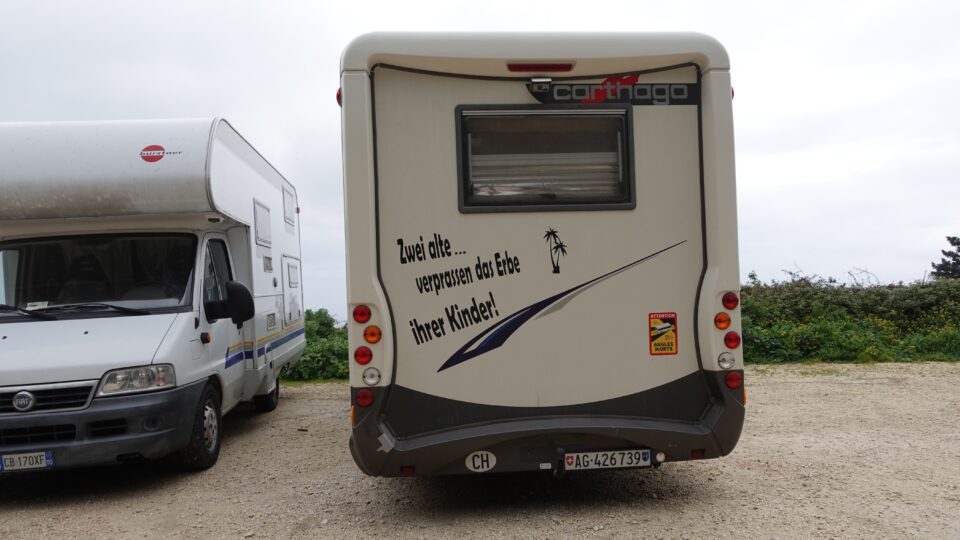
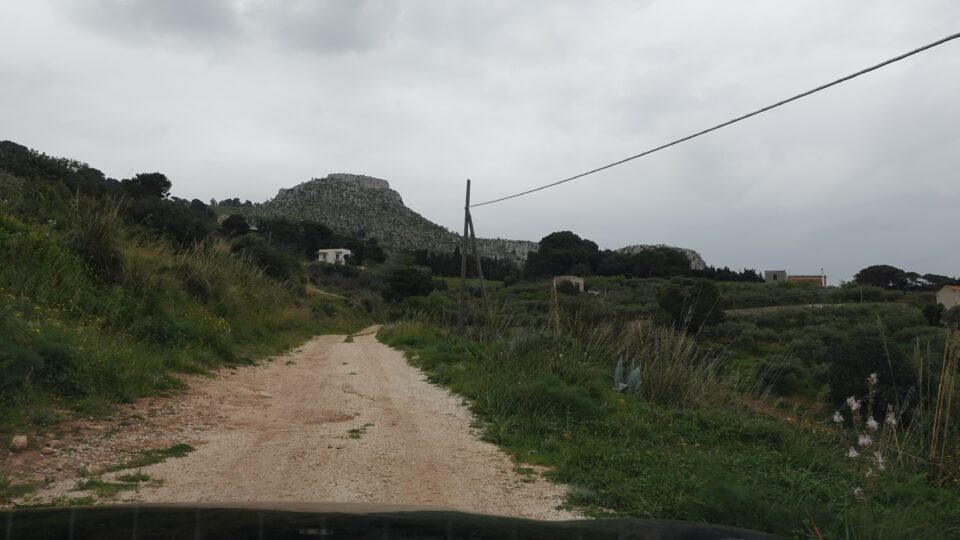
Once back in the car, we set Google Maps to guide us toward Trapani. As had happened more than once on this trip, the directions proved unreliable — sending us down narrow dirt tracks instead of the main paved roads. We passed through small villages and scattered private homes. Before long, the route began to feel risky; recent rain had left the ground soft and boggy. We decided to trust our instincts instead, turned onto the first paved road we found, and used our sense of direction to make our way back to the apartment.
Once back in the apartment, although tired, we still had the historic district of Trapani to see. The historic district sticks out into the sea – a pedestrian area about 6 large blocks long and 3 large blocks wide. Our apartment was where the historic center ends and the more modern district begins. From there we could easily walk into the historic area, and our first destination, as usual, was where the Jewish neighborhood used to be.
Like in Erice, all that’s left are street names that remind of Trapani’s Jewish past – Via Degli Ebrei and Via Giudecca.
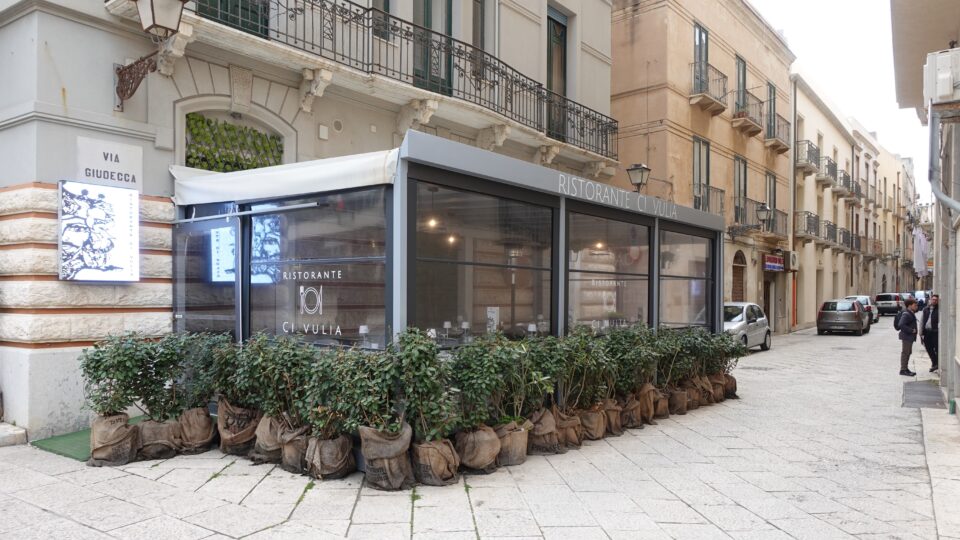
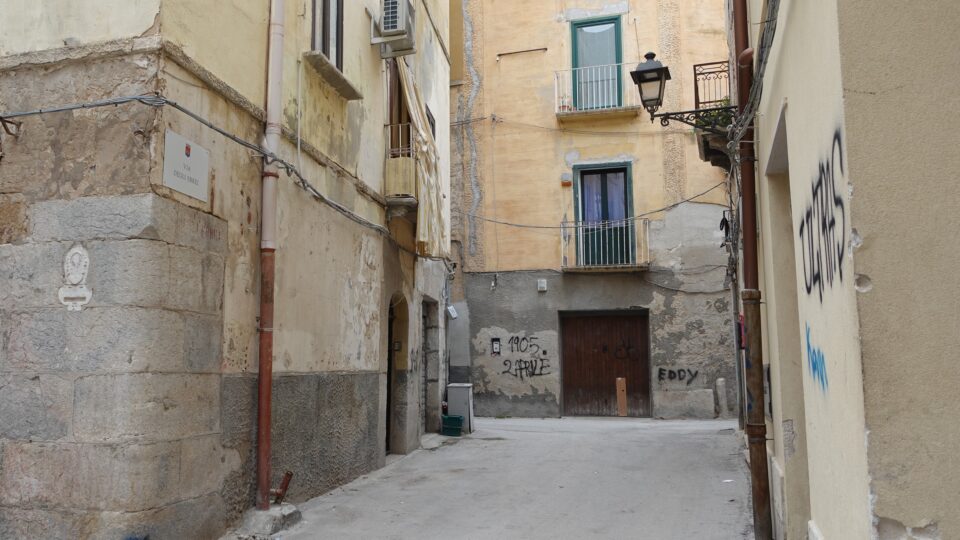
On Via Giudecca, is a stone castle called Palazzo Ciambra-Giudecca that was built in the sixteenth century. It is called “of the Guidecca” because it was built in the previous Jewish ghetto after the expulsion of the Jewish community in 1492. Some sources claim it is built on the site of what was once a school of Talmudic studies.
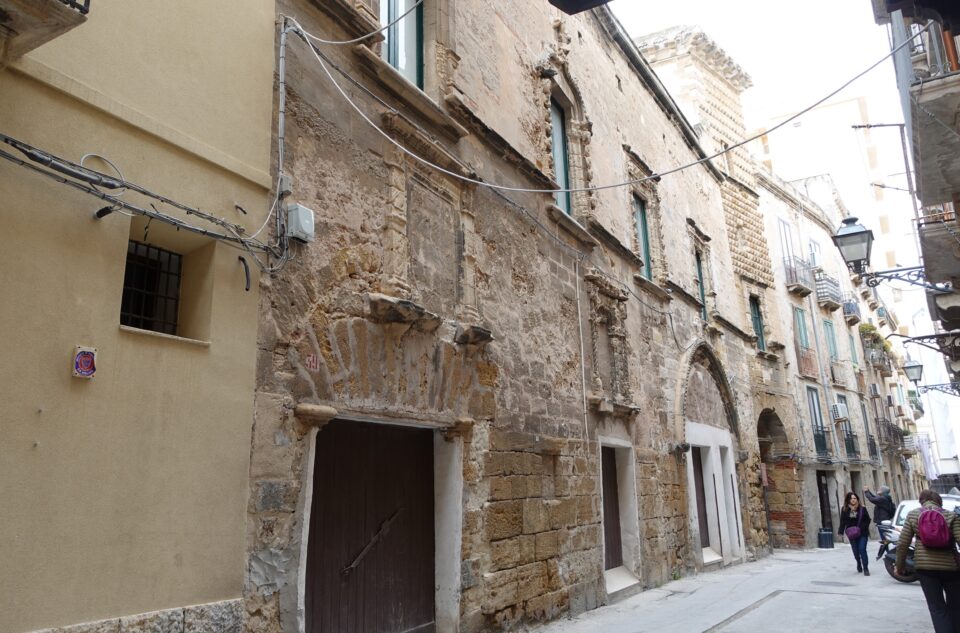
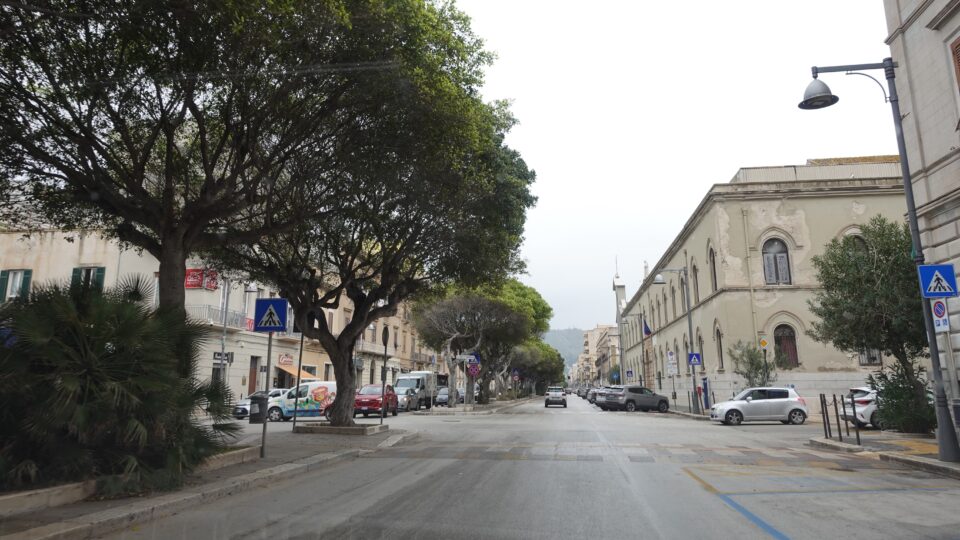
After walking through what was once the Jewish neighborhood, we reached the heart of historic Trapani. Here we had another surprise — the city was far more beautiful than I had imagined. The wide, paved main street was lined with buildings reflecting centuries of history — from medieval stone houses and Renaissance façades to grand Baroque palazzi and graceful early-20th-century Art Nouveau designs. All interesting to look at. People were out shopping and strolling, yet it never felt crowded. Unlike Taormina, the shops here were not aimed at tourists but at locals going about their day. Everything was remarkably clean and well kept — quite a contrast to Palermo. Trapani turned out to be an unexpectedly nice and livable city.
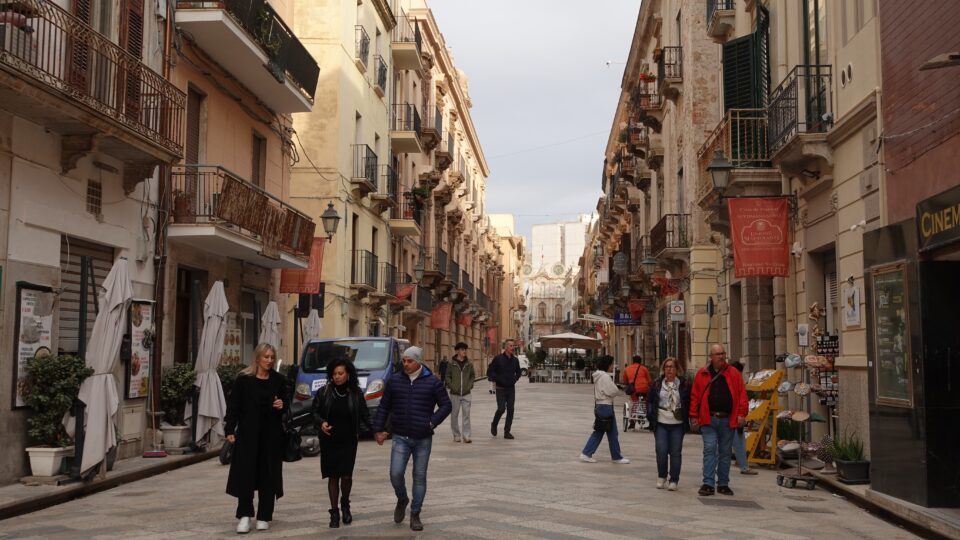
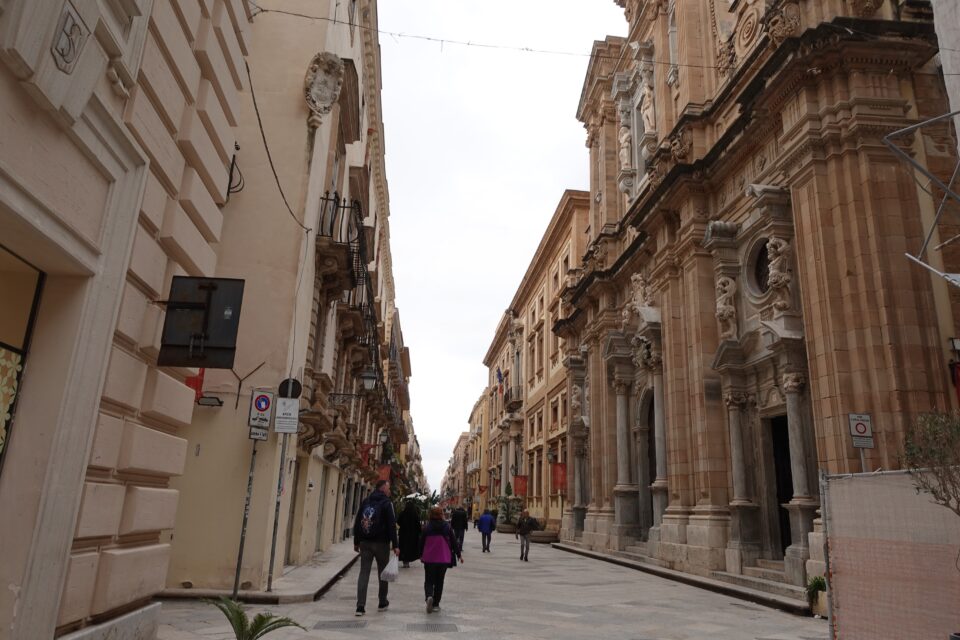
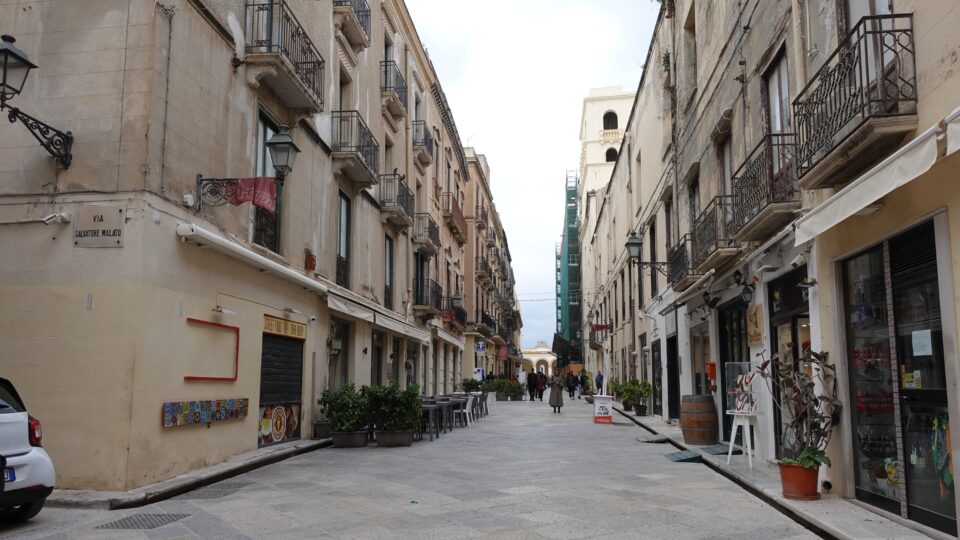
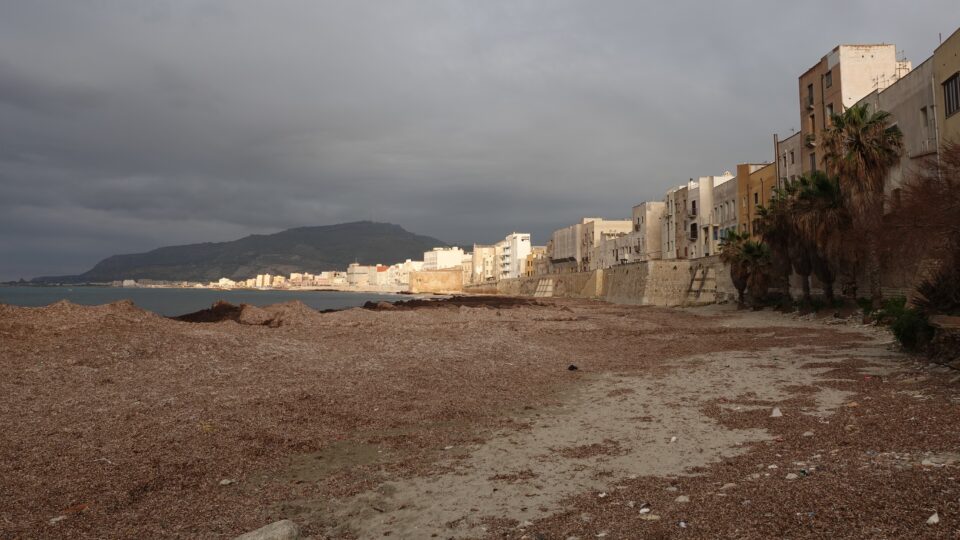
Being near the water, the smell of the sea was always in the air. At one point, there was a gate that led out to the water. After seeing the beautiful view of the city from the waterfront, we returned to the pedestian zone and discovered our biggest surprise of the day.
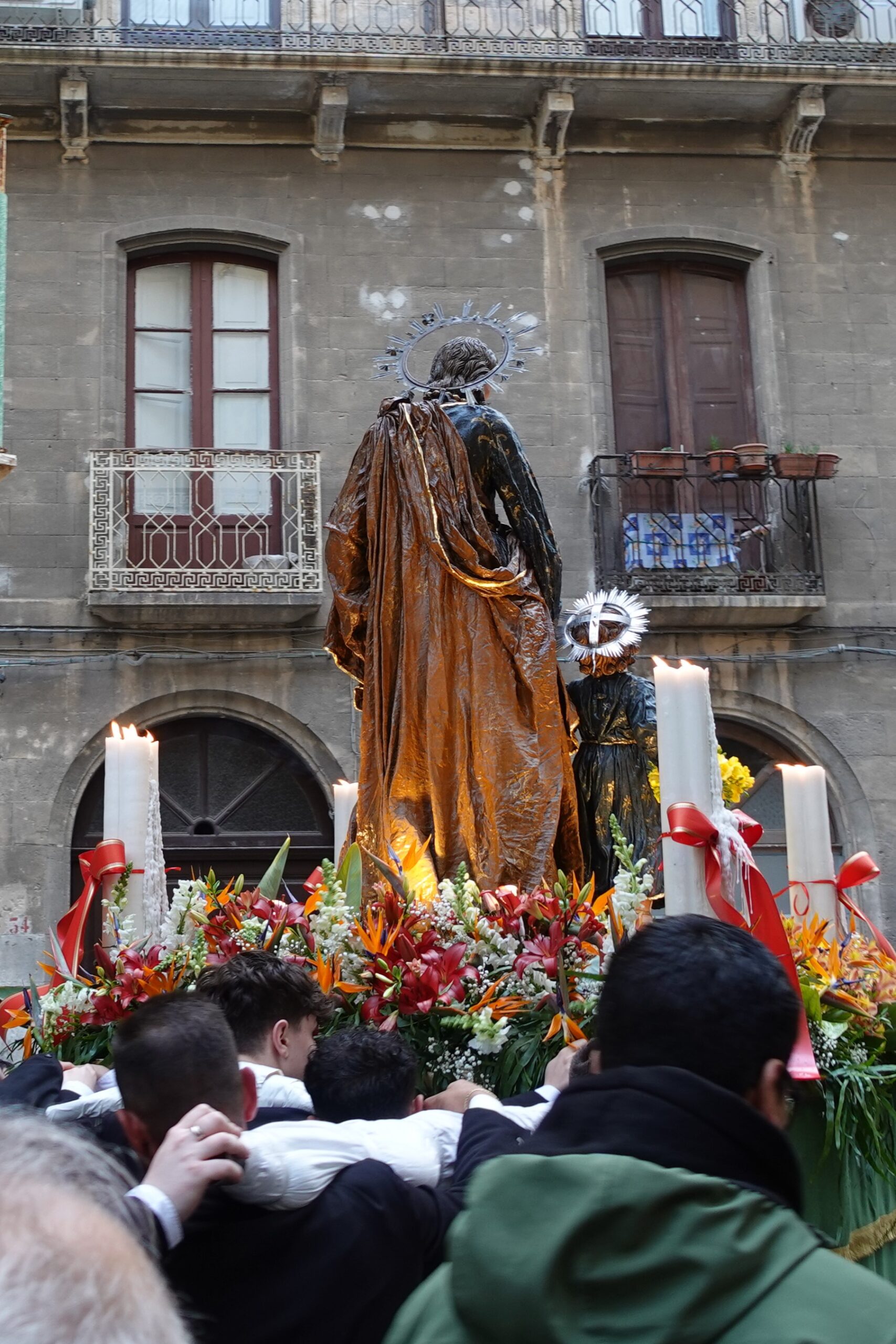
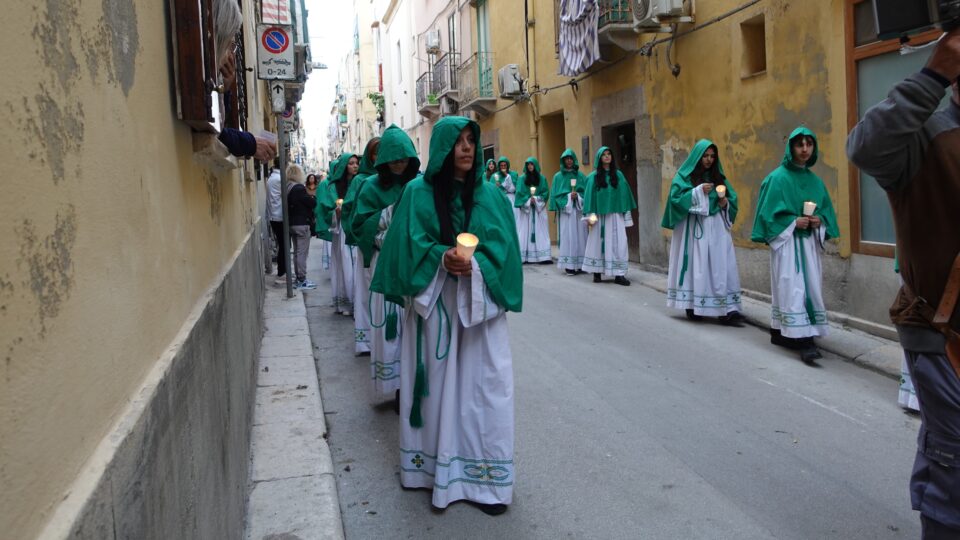
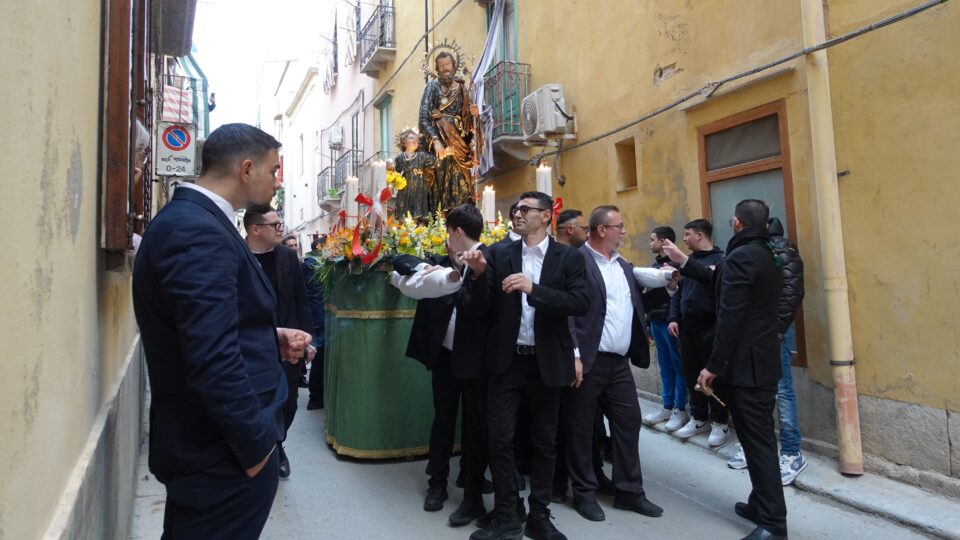
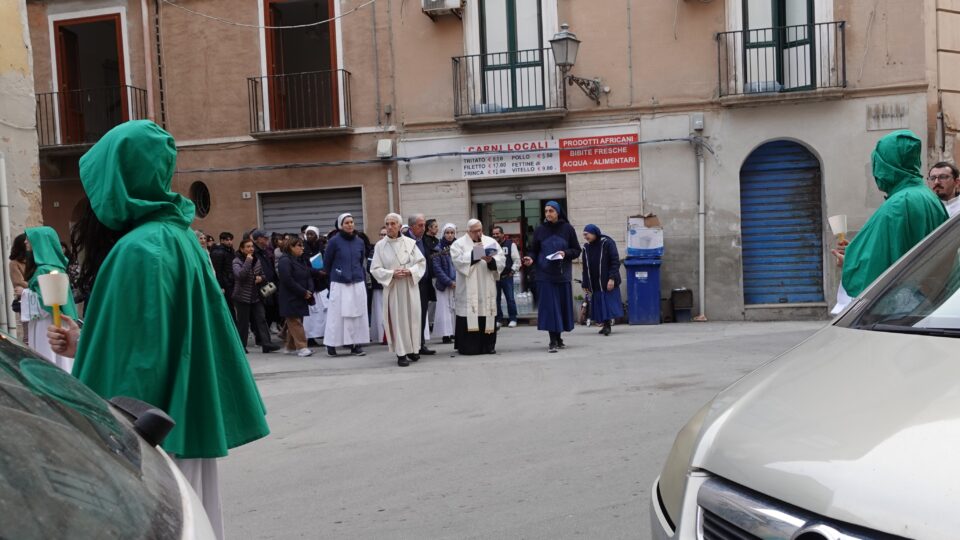
As we reentered the pedestrian zone, the sound of music and distant voices drew our attention. Curious, we followed the noise until we reached the source. It turned out to be St. Joseph’s Day (Festa di San Giuseppe) — celebrated here with a large procession winding through the historic district. At its heart was the statue of Saint Joseph, carried through the streets and followed by many locals dressed in traditional costumes, singing songs and chanting prayers.
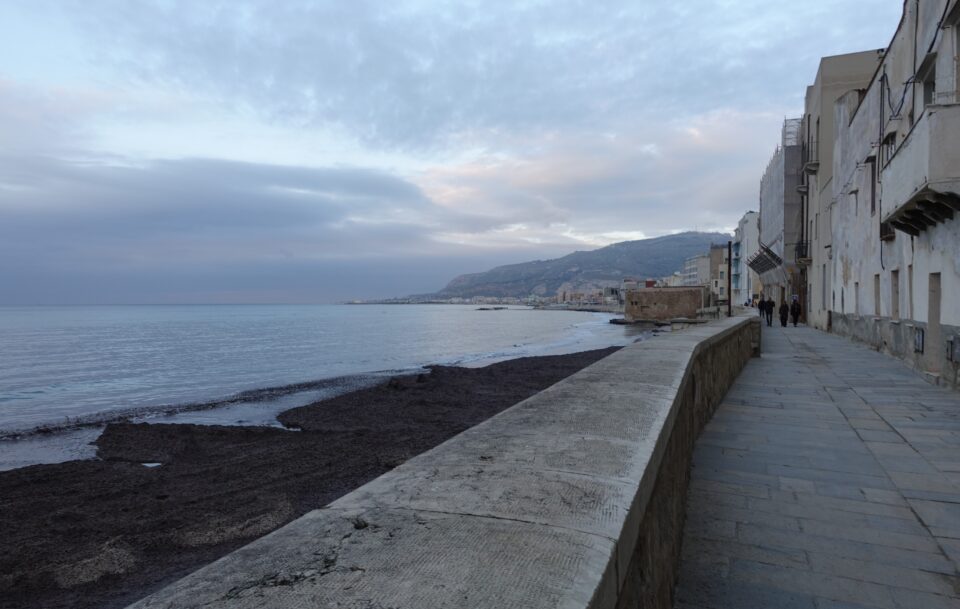
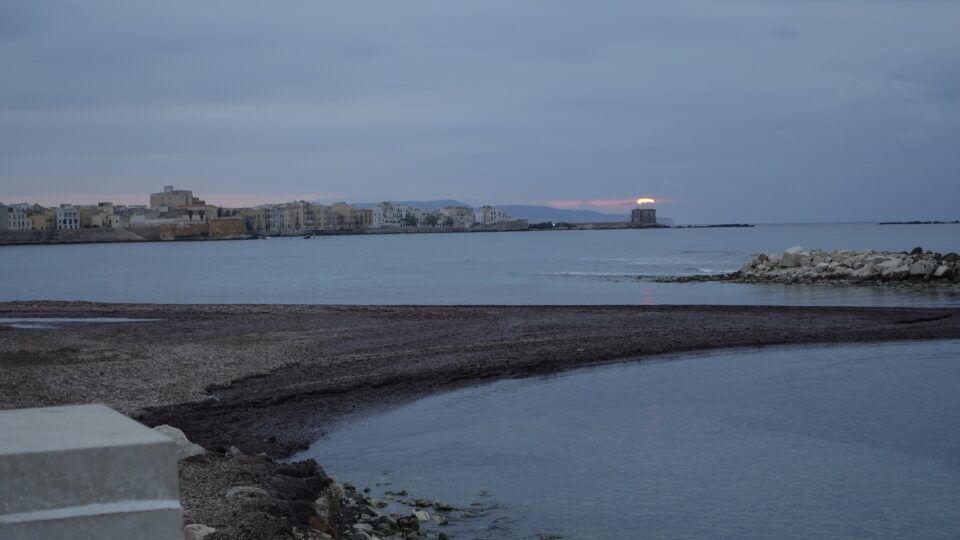
After the excitement of the procession, we walked along the elevated walkway on the north shore of the peninsula. It is supposed to be the best place in town to catch the sunset. Unfortunately, the cloudy weather made the sunset barely visible.
What started as a day with low expectations, turned out to be a day full of surprises. Trapani gets a thumbs up from me.