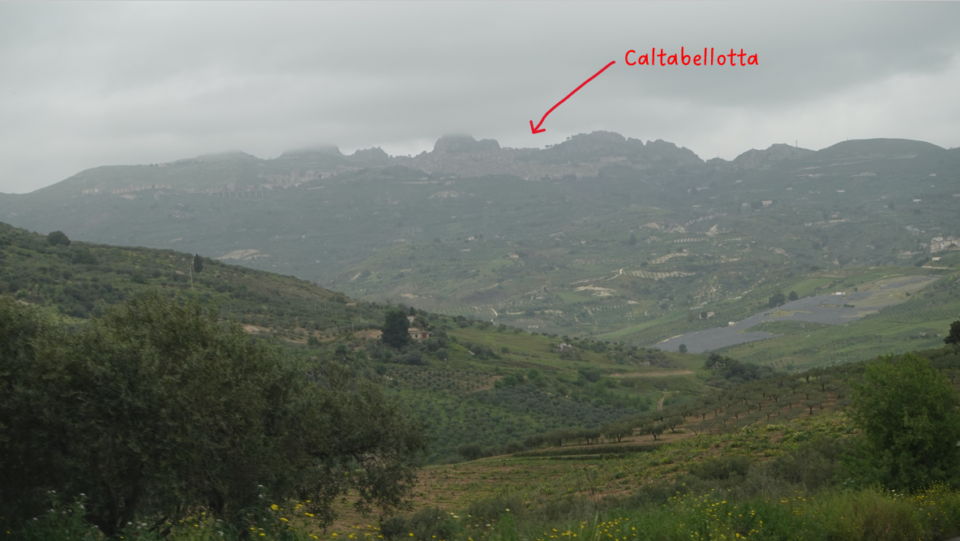
MARCH 25, 2025: Today was a day I had been looking forward to. Our first destination was Caltabellotta, a very off-the-beaten-path hilltop town perched on a craggy mountain in southwestern Sicily. From there I had expected to see sweeping views of the lush, green, agriculture-filled hills stretching all the way to the Mediterranean.
We were going to Caltabellotta because in researching Jewish Sicily, I had come across a YouTube video about the Jewish Quarter in Caltabellotta. The video showed a few sites, including the synagogue, the rabbi’s house, the Jewish school and mikveh. There were a few subtitles in the video, and there was no narrative – it only had background music. Further research didn’t reveal much – I found Caltabellotta on a list of towns that once had medium-sized Jewish communities (ranging from 350-1500 individuals). Another article about interesting facts in Sicily, mentioned a Hebrew gravestone embedded into the façade of a building in Caltabellotta. What was considered interesting, is that the stone is placed upside down. Luckily, this article gave the address of the building. It also mentioned that the synagogue had been most likely nearby.
So arriving at the town, all we would have was an address of an upside-down Hebrew tombstone, and images from a video about the Jewish quarter. Since the address of the tombstone was theoretically by the synagogue, we assumed once we found the stone, we would be in the Jewish Quarter, and then we could search for the buildings that look like the ones we saw in the video. A bit far-fetched, but that was the plan.
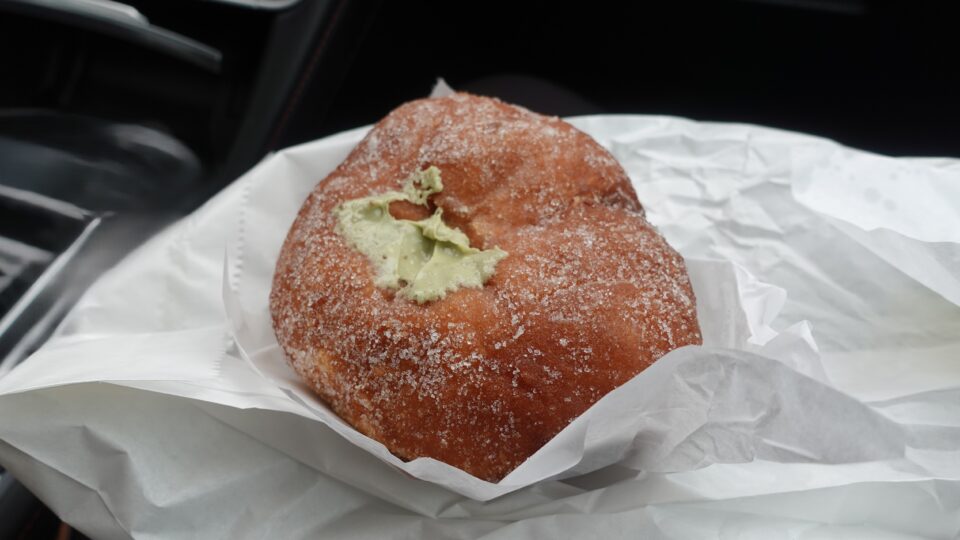
We checked out of our apartment in Agrigento and schlepped our many suitcases up the steep hill to our parking spot—not easy. From there we set out for Caltabellotta, about an hour’s drive northeast. Our first stop was a gas station. While Mark was filling up, I took the opportunity to visit the bakery next door. I returned with the Italian version of a doughnut—a bombolone. It’s much closer to an Israeli sufganiya than to the American ring-style donut— deep-fried dough coated in sugar and filled with cream, in my case pistachio. In Sicilian bakeries, pistachio cream is everywhere—stuffed into cannoli, bomboloni, croissants, cakes, and more—a local staple thanks to the prized pistachios grown in the volcanic soil of Mount Etna, known for their rich flavor and vivid color. Delicious.
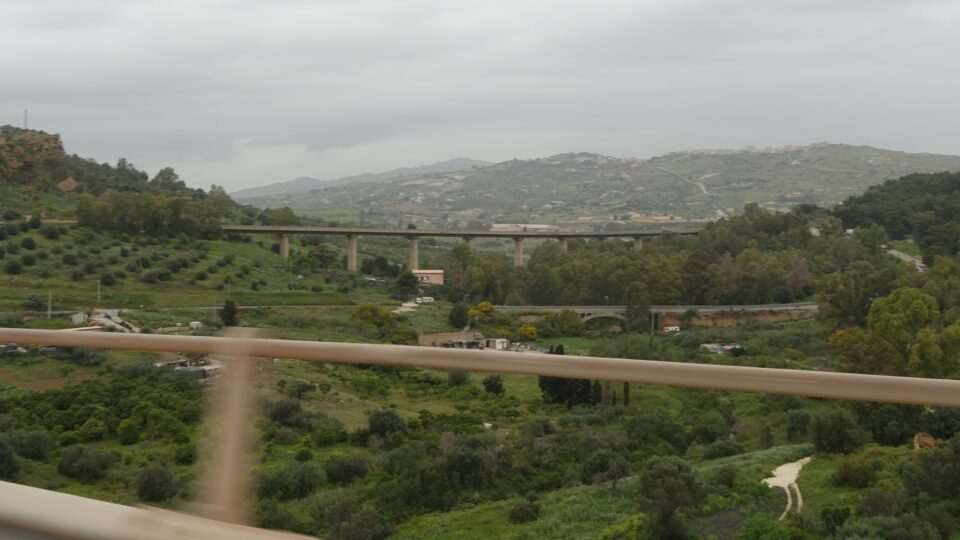
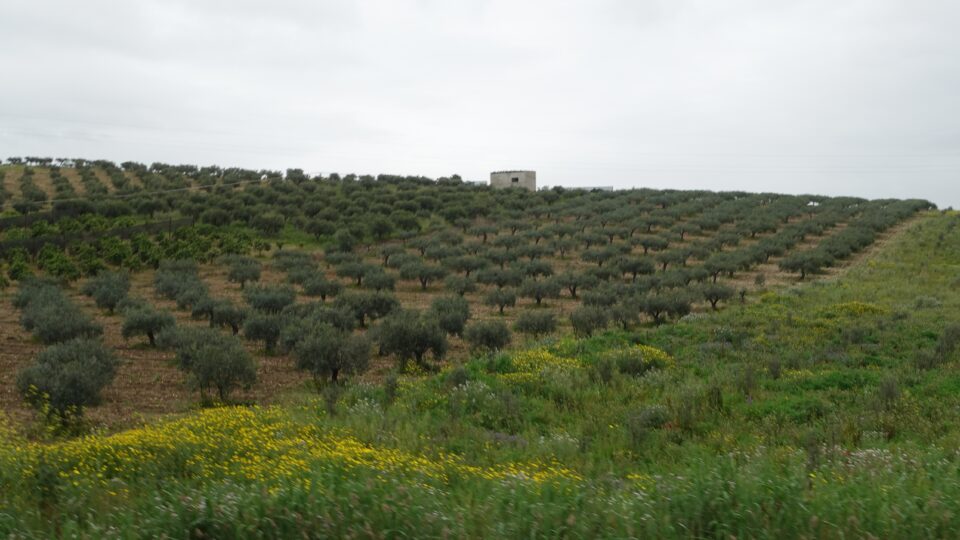
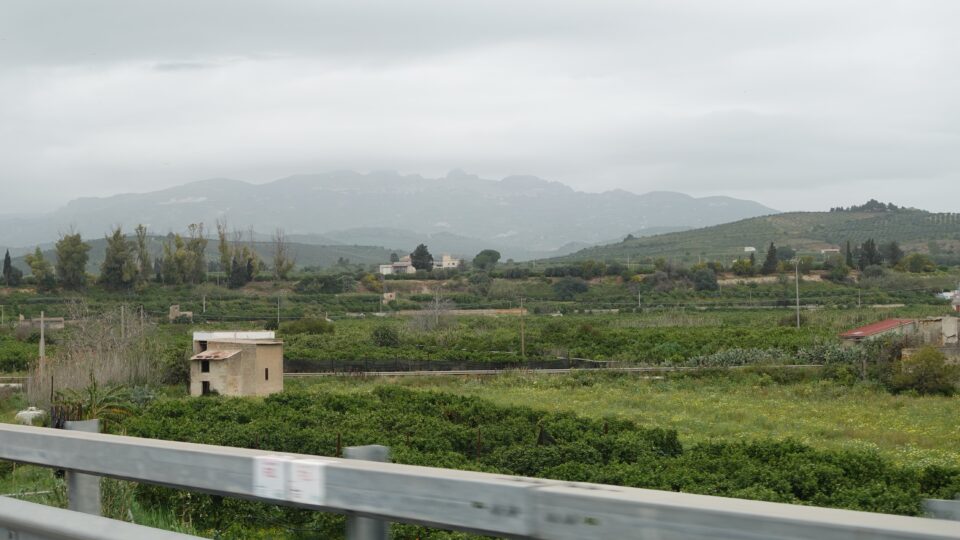
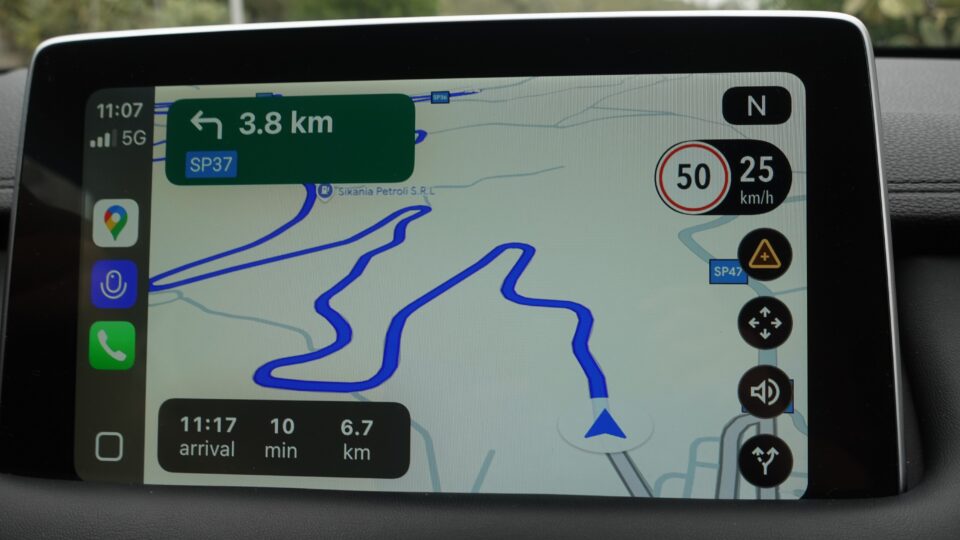
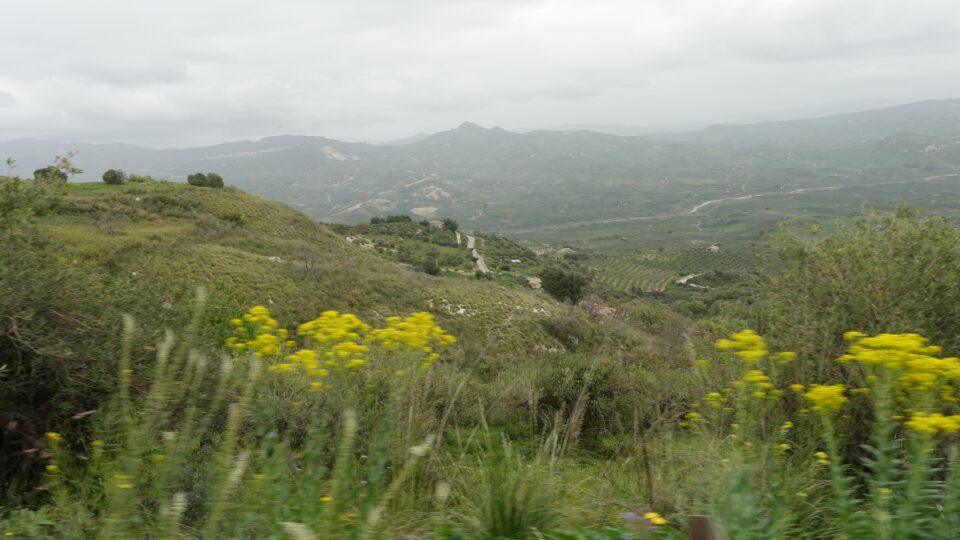
We continued toward Caltabellotta and unfortunately, the weather did not cooperate. Visibility was poor, with thick, cloud-covered skies that clearly foreshadowed rain. Once we left the highway, we climbed higher and higher along winding roads through endless fields dotted with olive trees. Even through the mist, we could sense how spectacular the setting must be on a clear day.
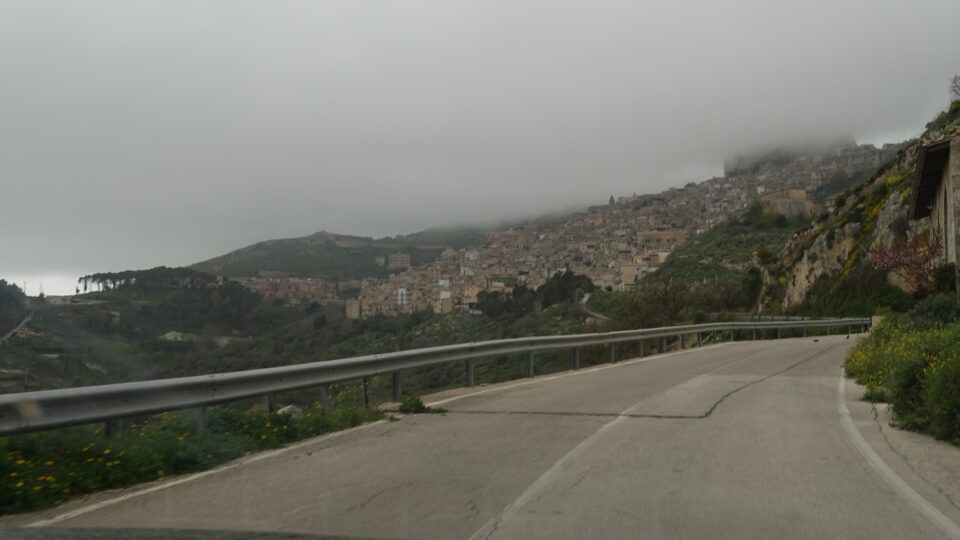
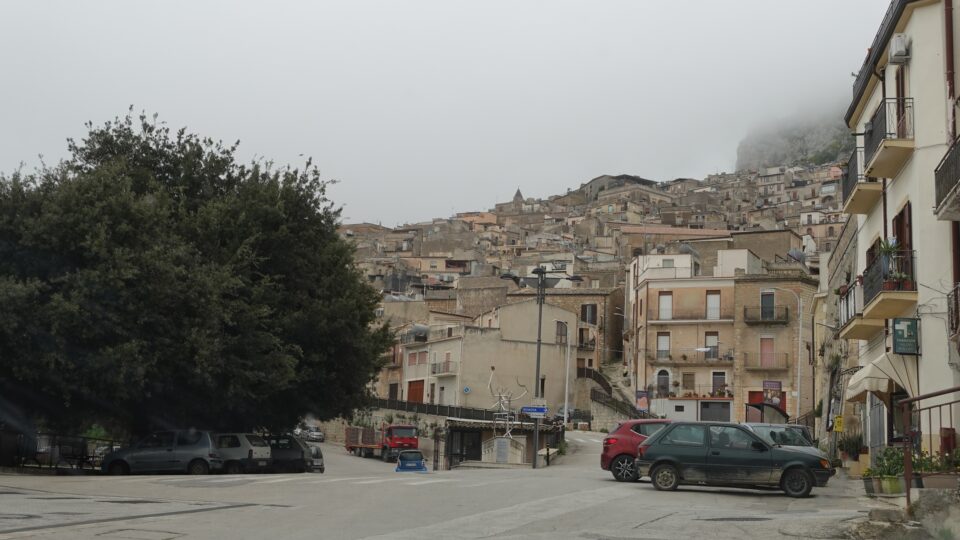
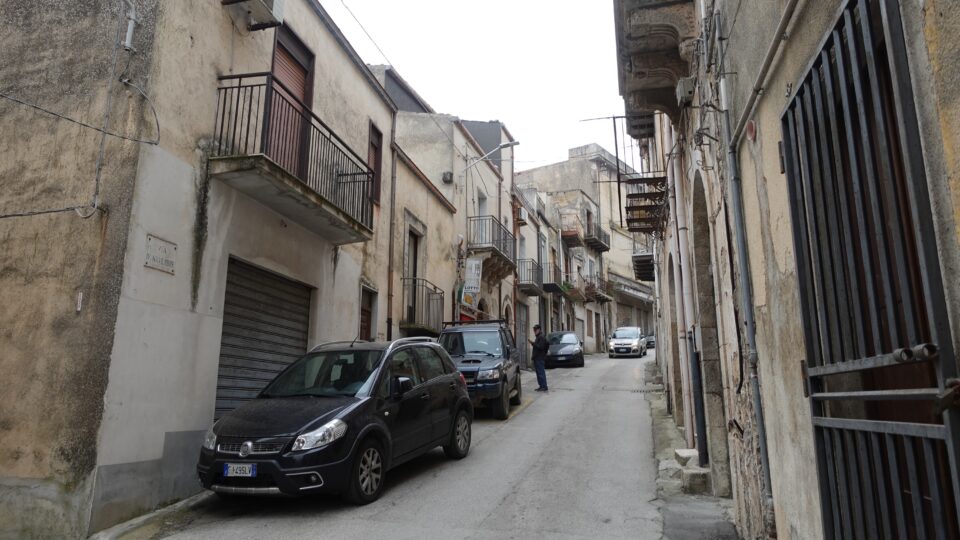
We reached the hilltop town, parked at the entrance, and began the long climb—66 meters up, the equivalent of 22 flights of stairs—to reach the address of the upside-down Hebrew tombstone. The address led us to a convenience store, with no sign of the stone. Only after searching the neighboring buildings did we finally find it, perched above an entrance door and much smaller than we had anticipated.
The article where we first learned about the stone says the Hebrew inscription reads: “O God, keep him, have mercy on him. Isaac left the world in the year 1479.” It was hard to imagine fitting all that into such a small tombstone. Since the article was wrong about the address, I wondered whether it might also be wrong about the inscription.
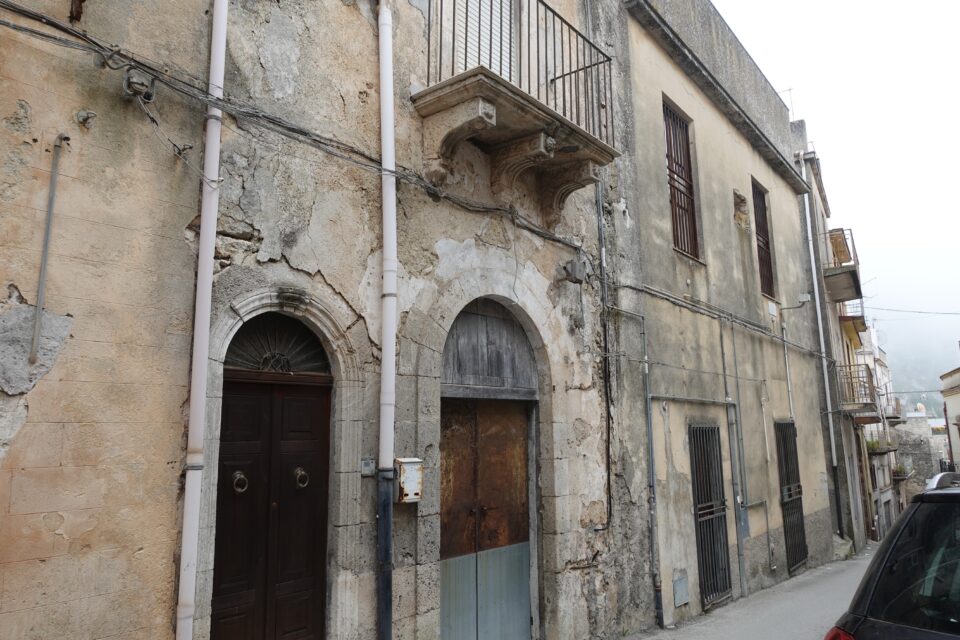
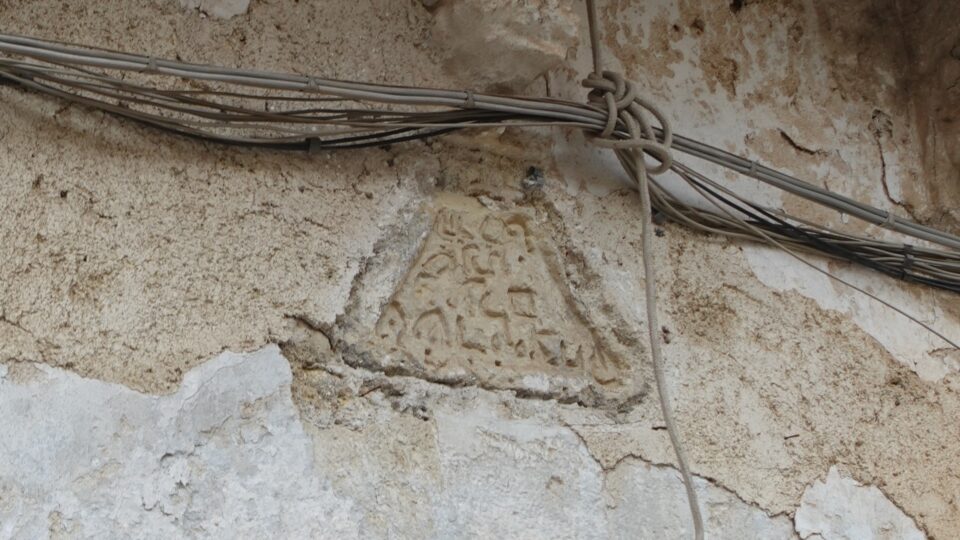
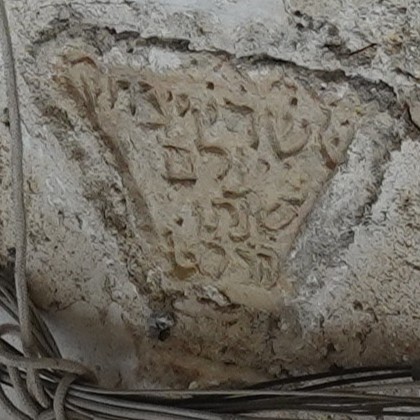
When we got home, we took our photos of the stone, rotated and enlarged them, and tried to decipher the text ourselves. The bottom four letters—הרלט—indicate the year 5239 in the Hebrew calendar, corresponding to 1479, and the first line clearly includes the name יצחק (Isaac). So despite my skepticism, it turns out the article was at least partially correct.
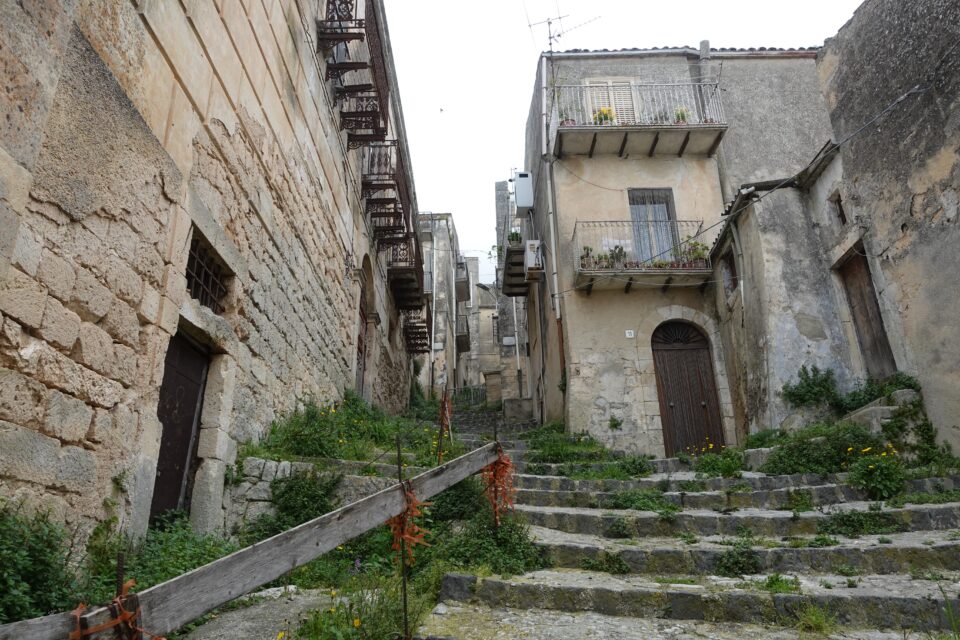
Then using clues from the video—the color of the buildings, door decorations, even the shape of the cobblestones—we located what is believed to be the rabbi’s house (locked, though we viewed it from both front and back), as well as the street of the former school.
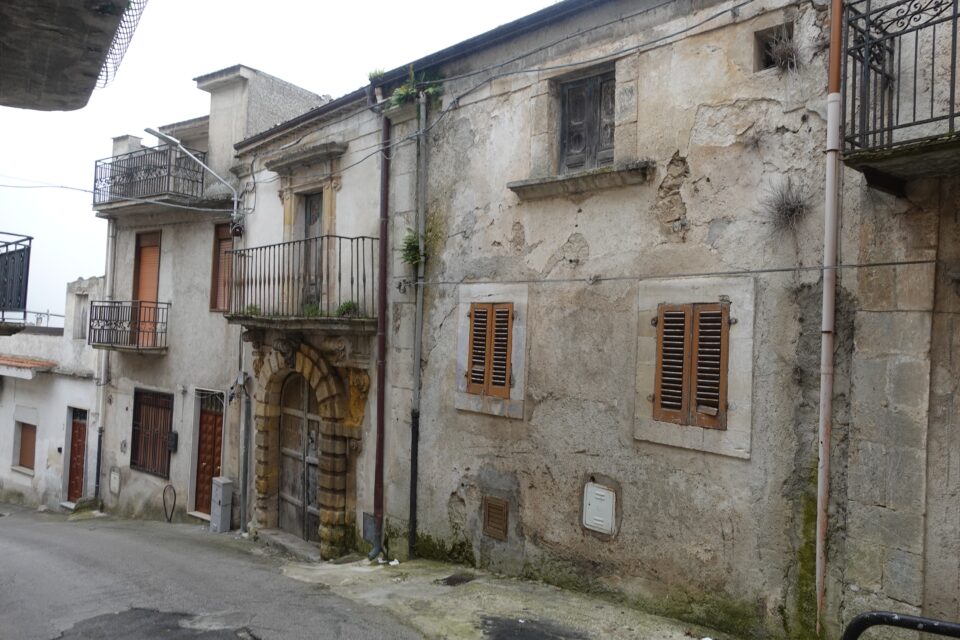
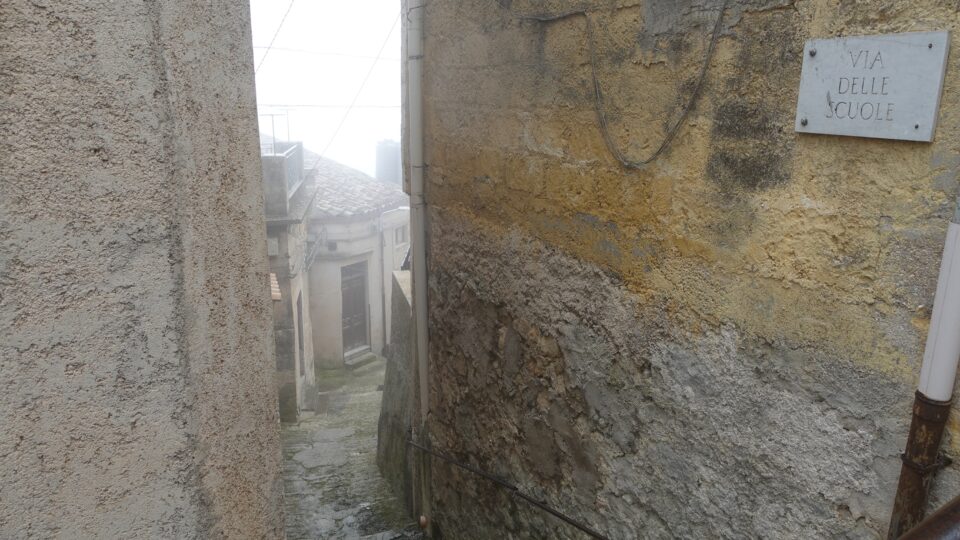
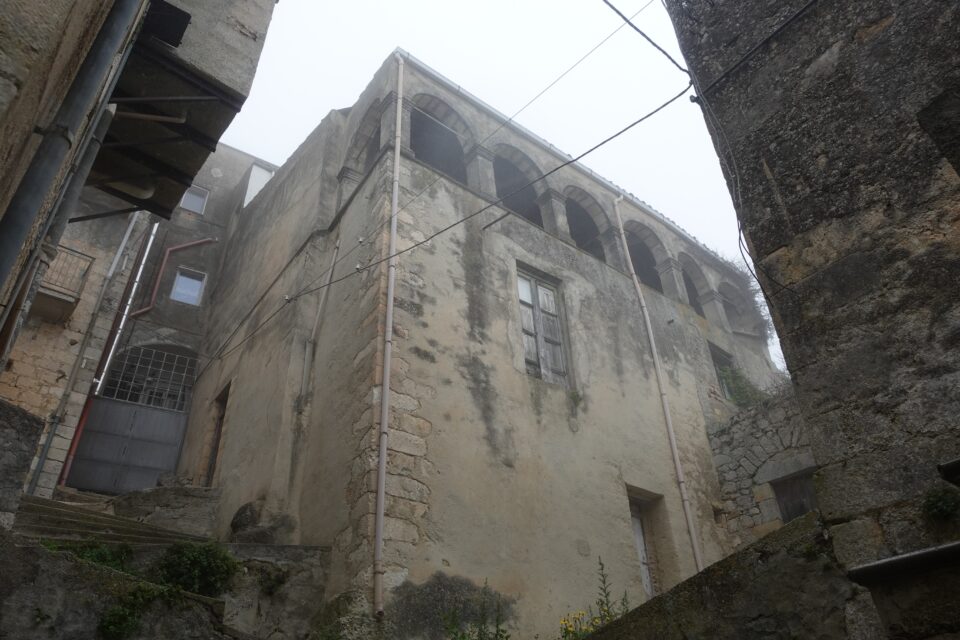
As we searched, the rain began—and quickly turned into a heavy downpour. By the time we made our way back down to the car, we were completely soaked. Driving down the mountain slowly, visibility dropped to almost nothing. Not exactly how I had imagined today’s adventure.
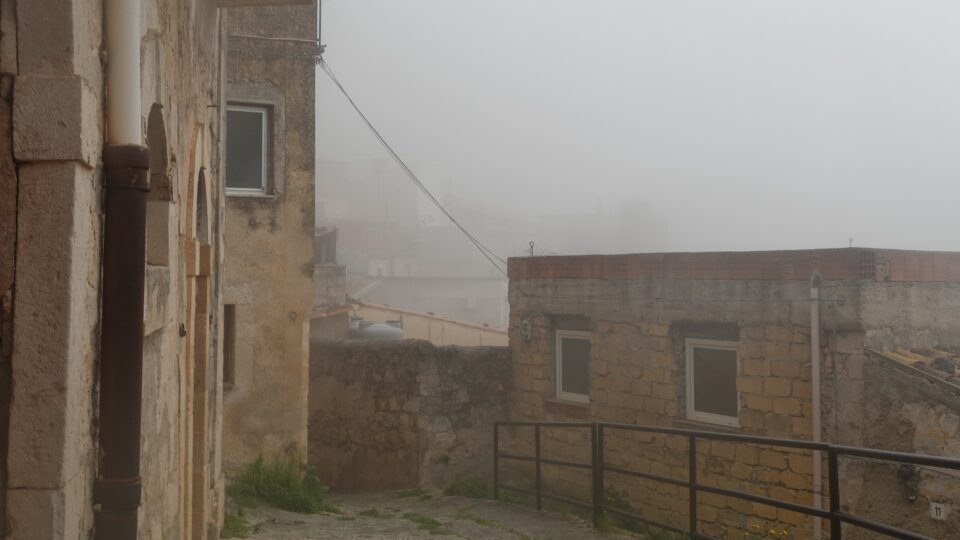
Our next destination was Sciacca, a large town on Sicily’s southern coast. Built on a hillside overlooking the sea, it is known for its colorful fishing harbor and thermal baths.
Sciacca had a significant Jewish community from at least the 14th century until the 1492 expulsion, largely centered in the Giudecca, though not exclusively. At its height, the community numbered about 1,000 out of a total population of about 10,000 inhabitants. They engaged in commercial activities such as the sale of grain, leather, and fabrics.
The Museo Diffuso dei 5 Sensi di Sciacca – an open-air “living museum” that uses the town itself as its exhibit – offers a free, English podcast that leads visitors to five sites connected to the town’s Jewish history. Our goal was to follow this self-guided route.
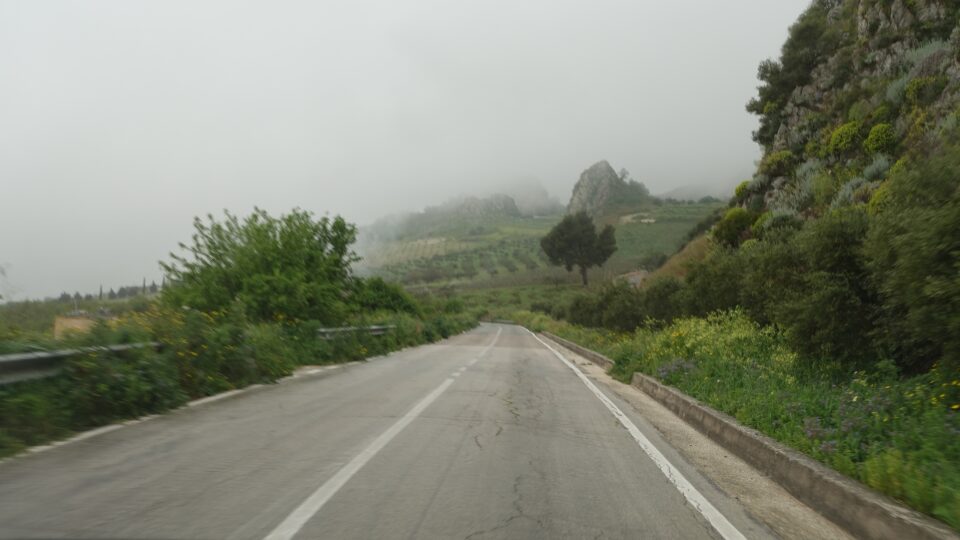
It was still pouring when we arrived in Sciacca, so we stopped on the outskirts of town at a large grocery store to do some shopping while we waited for the rain to ease. By the time we finished buying our food supplies, the rain had turned into a light drizzle, and we were able to continue on to the town’s historic district.
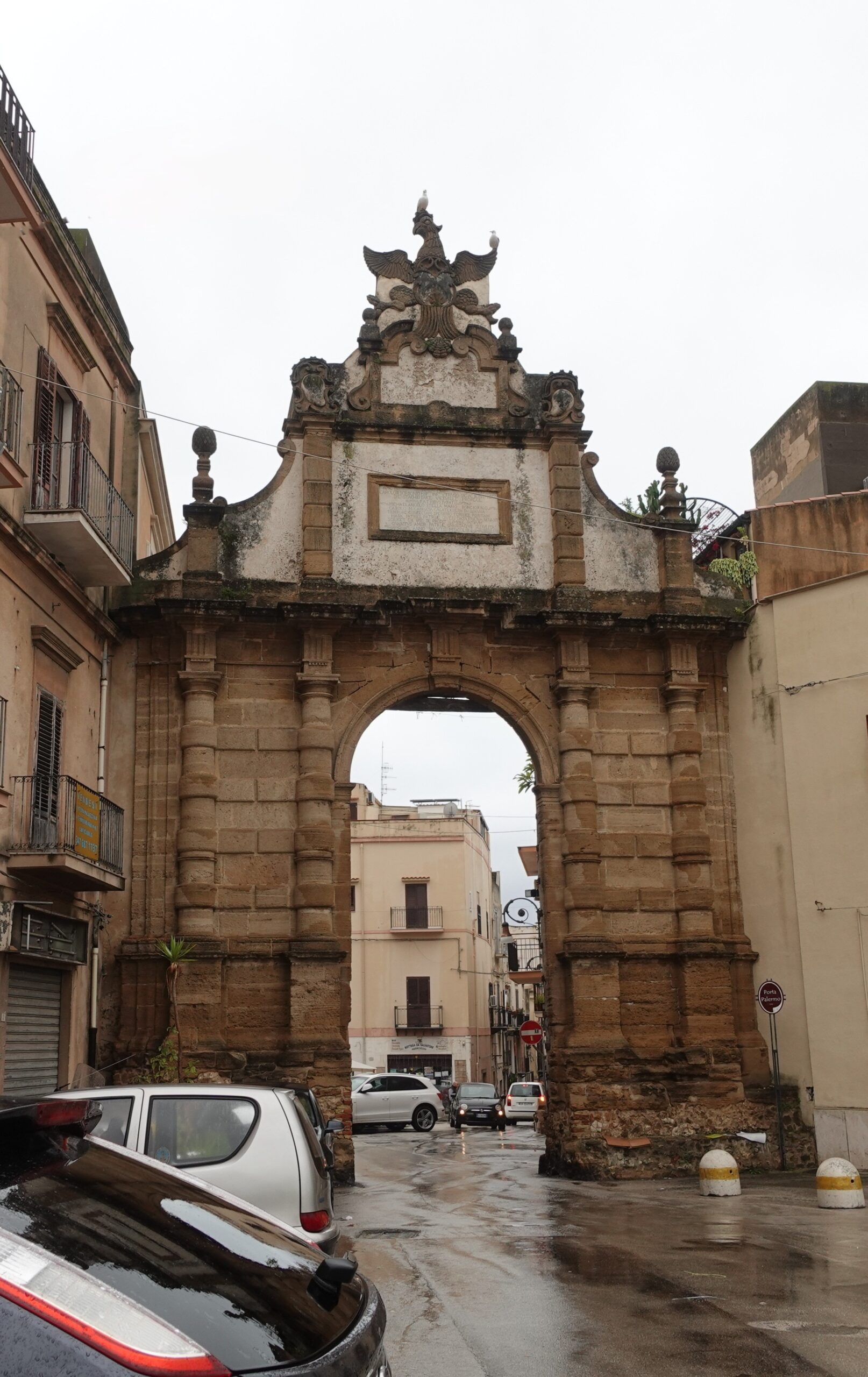
During the short drive to the town center, it started raining buckets once again. We waited in the car for it to stop—an opportunity to call our kids—and finally, after about half an hour, we felt we could begin. Our first stop was Porta Palermo, one of Sciacca’s historic city gates. It marks the northern entrance to the old town and one of the boundaries of the medieval Jewish quarter, near the site of a former synagogue of which no visible trace remains.
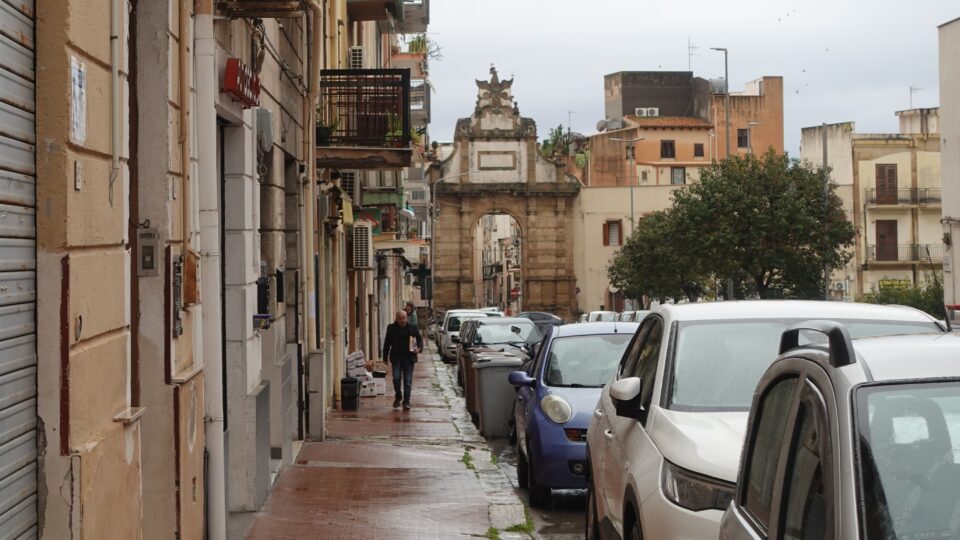
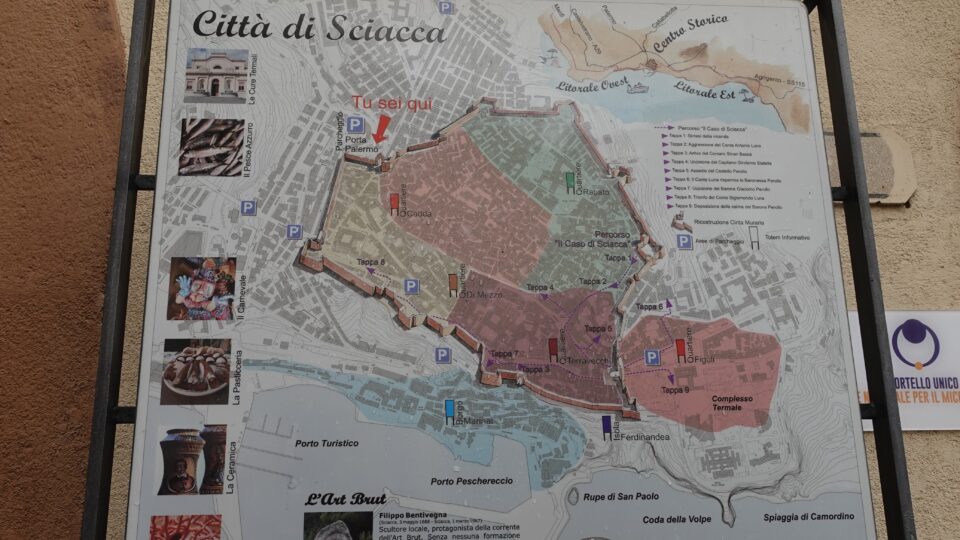
Scholars have identified several locations of synagogues in Sciacca, though they did not all exist at the same time. The one previously near the city gate is referred to as the former Second Synagogue. From there, we wound our way through the narrow lanes of the Jewish quarter to the Third Synagogue. The building still stands and is clearly labeled as a synagogue.
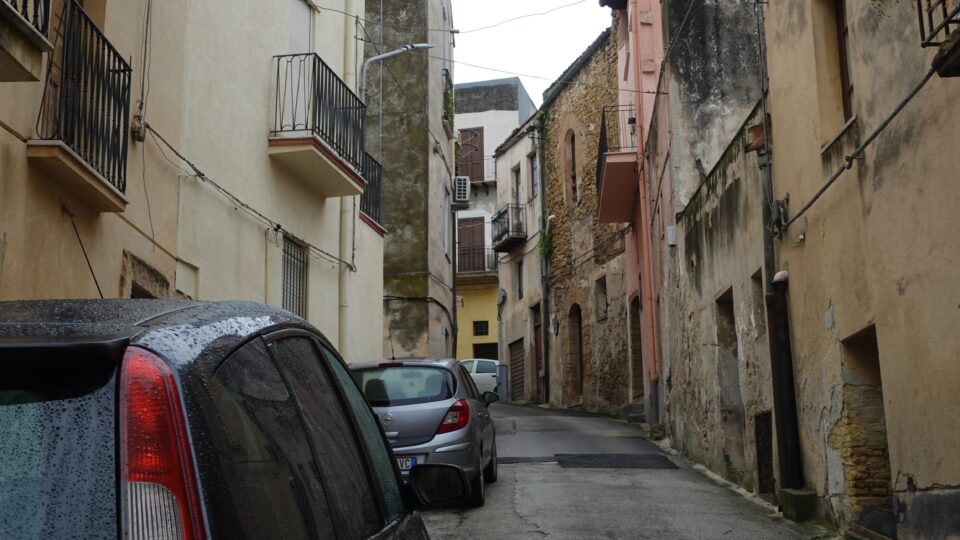
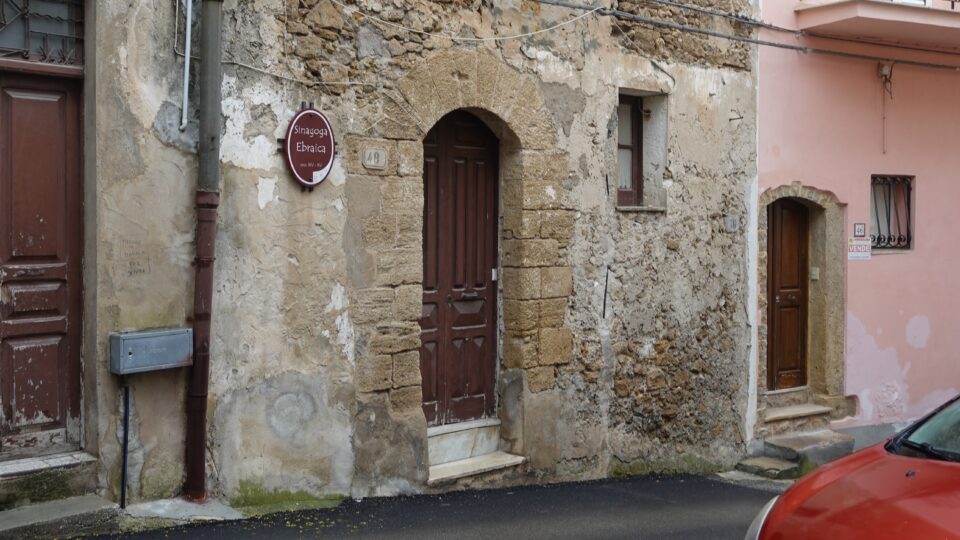
The next stop on the tour was the Church of San Leonardo. As the Jewish community grew, a new synagogue was built in its vicinity.
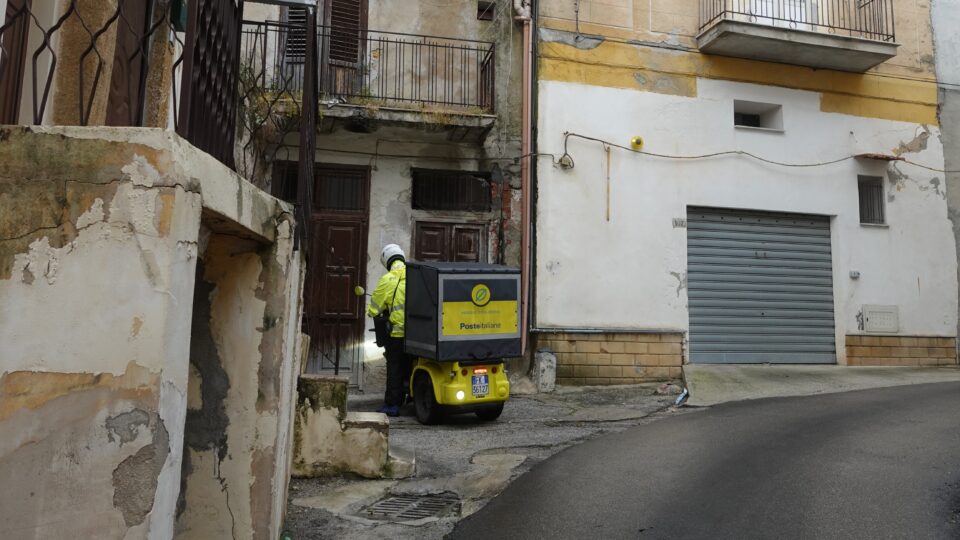
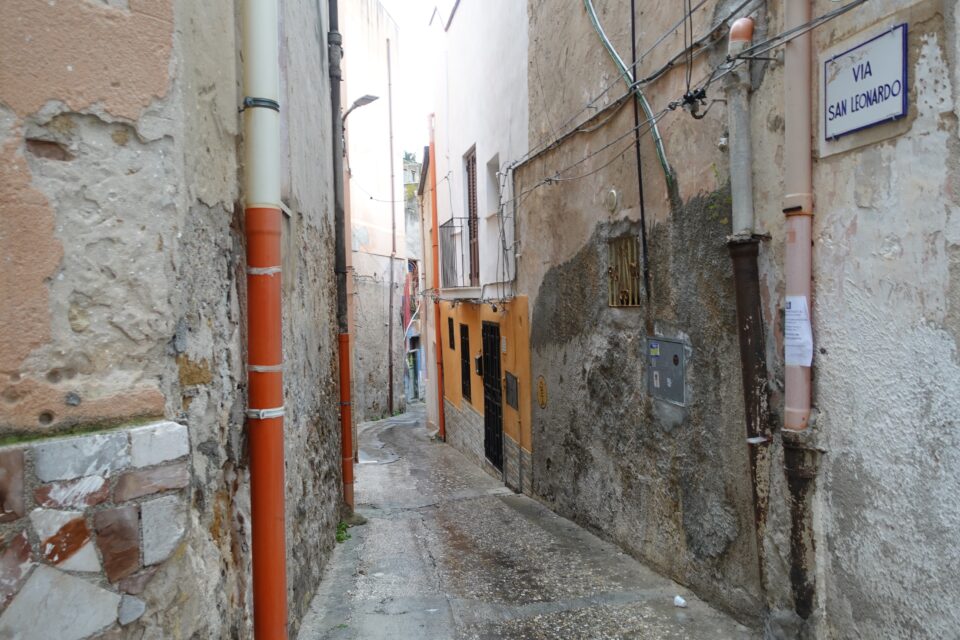
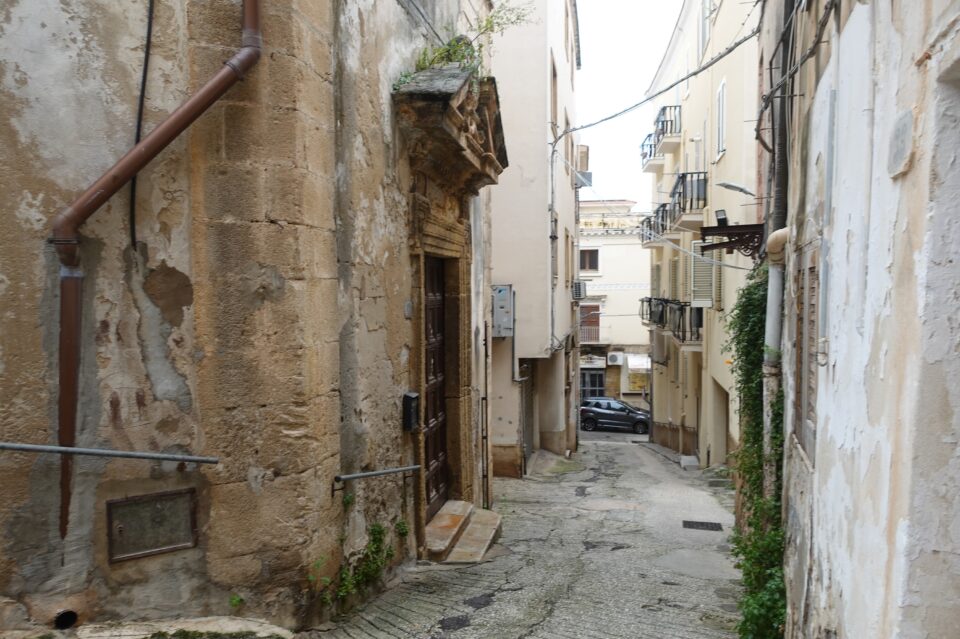
From there, the route led us to the home of the wealthy merchant David de Minacherini, who founded a yeshivah in 1447, making the town a center of learning where Hebrew-Arabic scholarship flourished. The community was highly educated—likely with little illiteracy—and played an important role in preserving Jewish culture, language, and intellectual life in Sicily.
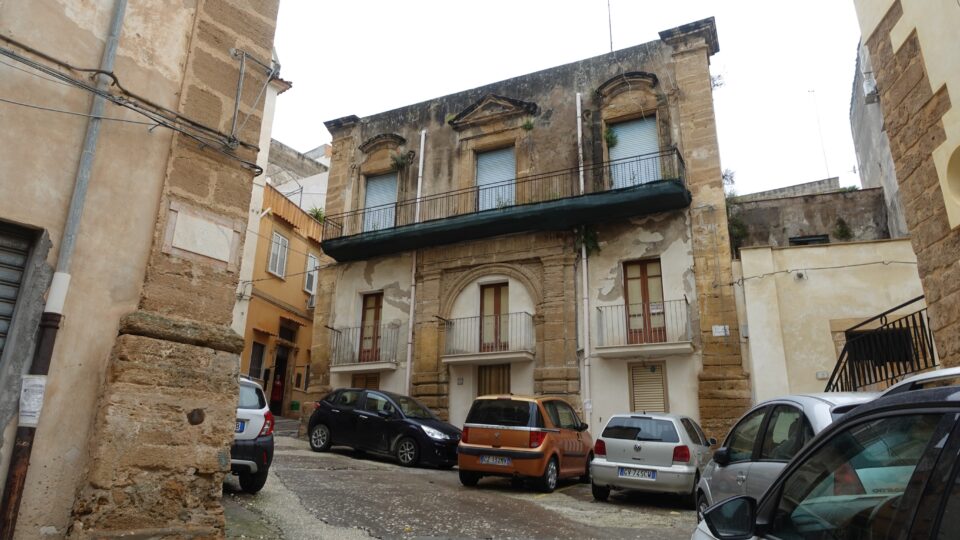
The last stop on the route was the Jewish cemetery. A document from 1492 indicates that it was originally located on the cliff of San Paolo overlooking the sea, near the rock known as Sant’Elmo, and later reduced in size for harbor construction. Today, we could not find any trace of it.
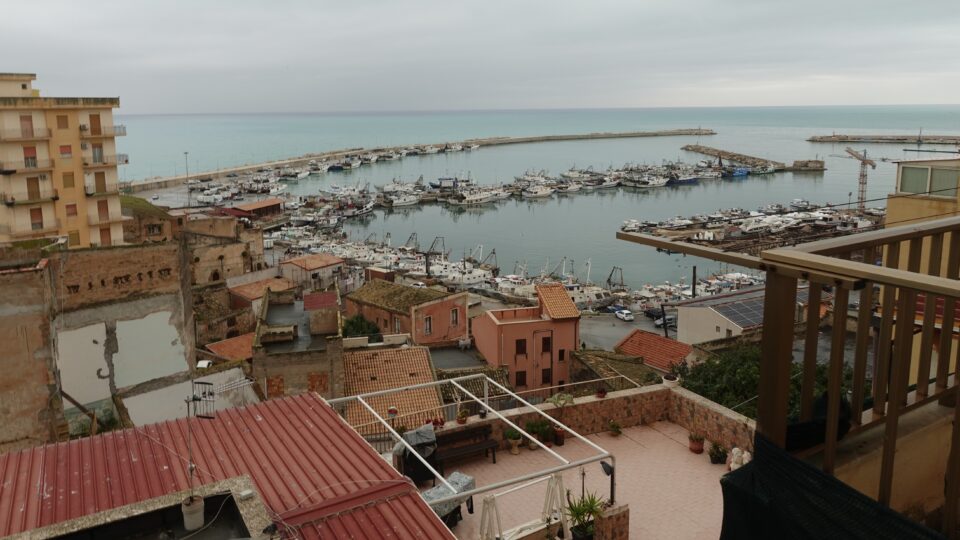
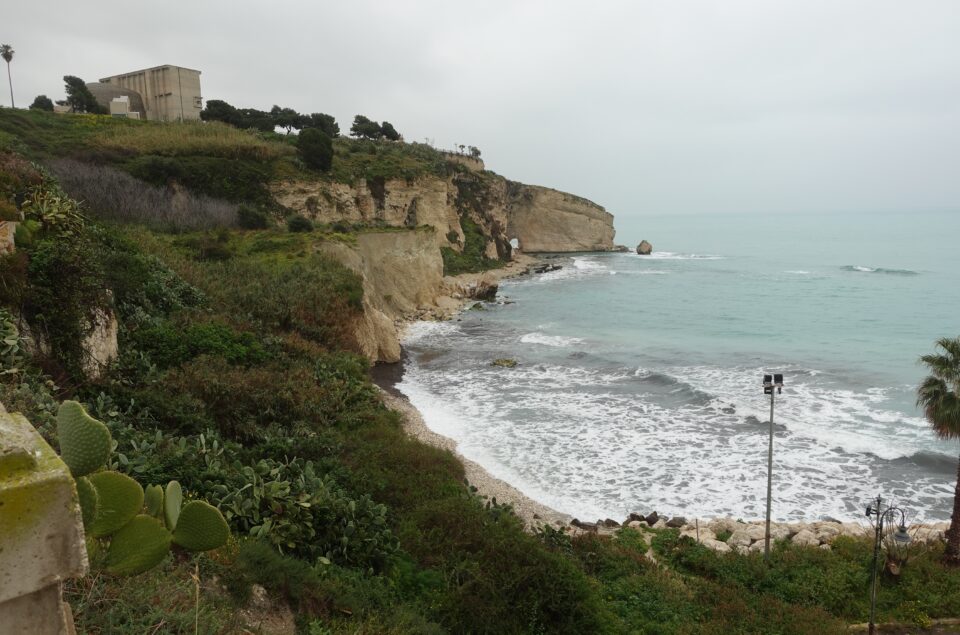
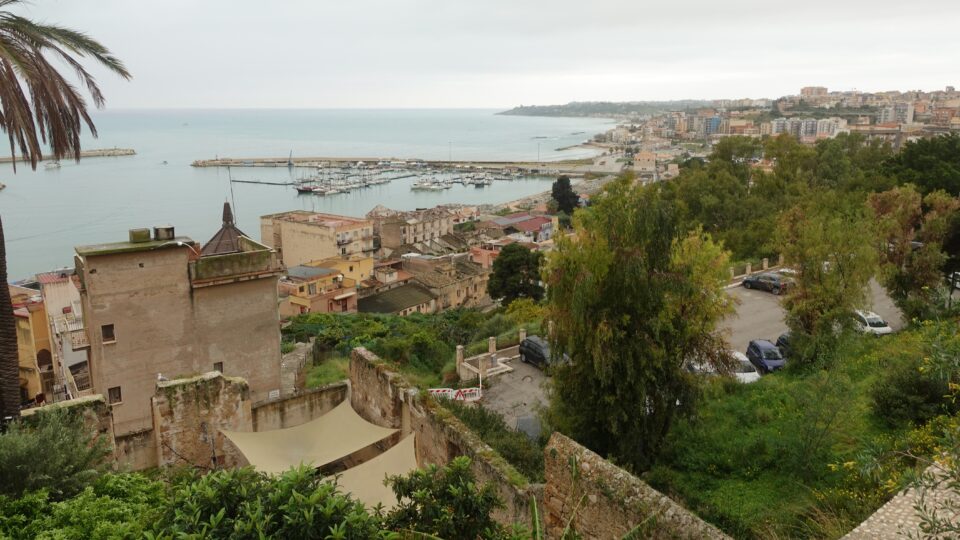
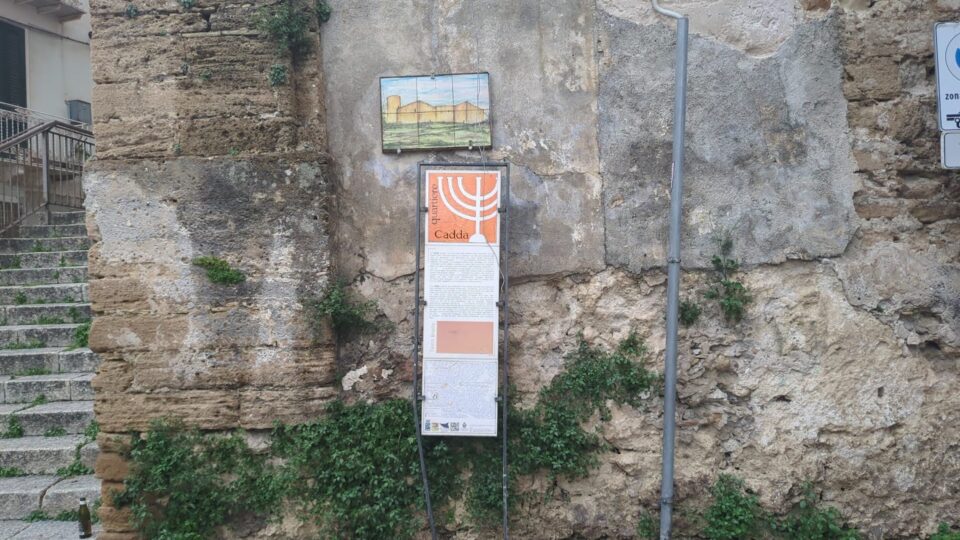
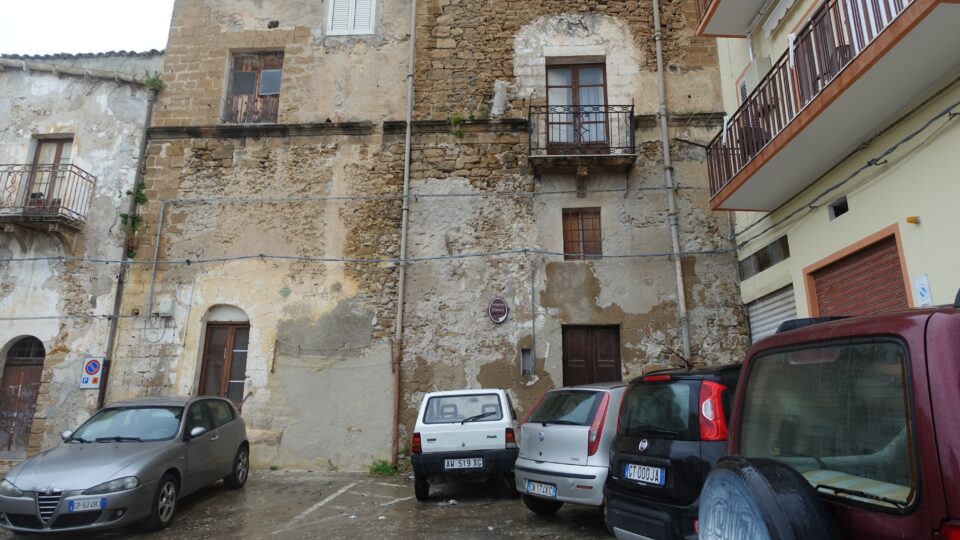
Walking back to the car, we came across signage for the Jewish Quarter, written in Italian, English, and Braille. It explained that the Cadda quarter was the center of Sciacca’s Jewish community, organized around the synagogue, which served as a hub for religious, social, and commercial life. It also pointed the way to the synagogue courtyard. We followed the directions and arrived at the same stone building we had seen earlier—this time from the back.
By then, the weather had turned miserable again. We drove to our Airbnb for the night—a second-floor apartment overlooking the beach—but could barely see the shoreline through the rain. We made dinner and called it an early night. Not quite the day I had looked forward to.
Super sleuthing!
At least you got to see the head stone and read some of it. Kol Hakavod!
It’s like an escape room!
It was pretty amazing that we found the Rabbi’s house and other buildings from the video as they were not really near the tombstone. Sabta is really a sleuth extraordinaire.