SEPTEMBER 1, 2024 : After checking out of our Airbnb and saying goodbyes to our kids, Mark and I drove to a parking garage closer to the Jewish Quarter of Zaragoza. There were a few things we missed yesterday that we still wanted to see before we left the city this morning.
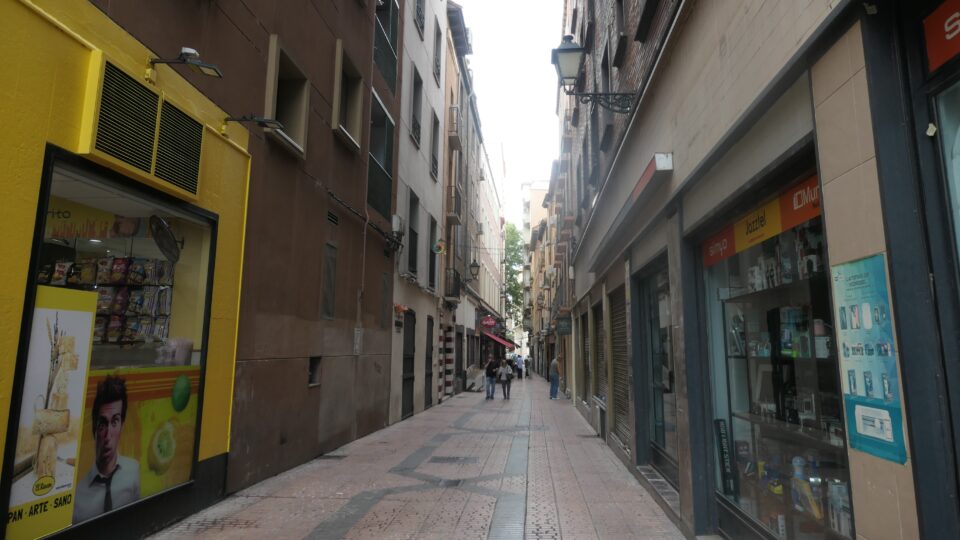
Being early on a Sunday morning, the streets were quiet. A few people were out and walking about, businesses were still closed – a very tranquil atmosphere. We strolled through the narrow lanes between Coso and San Miguel streets that were developed in the 13th century into the New Jewish Quarter.
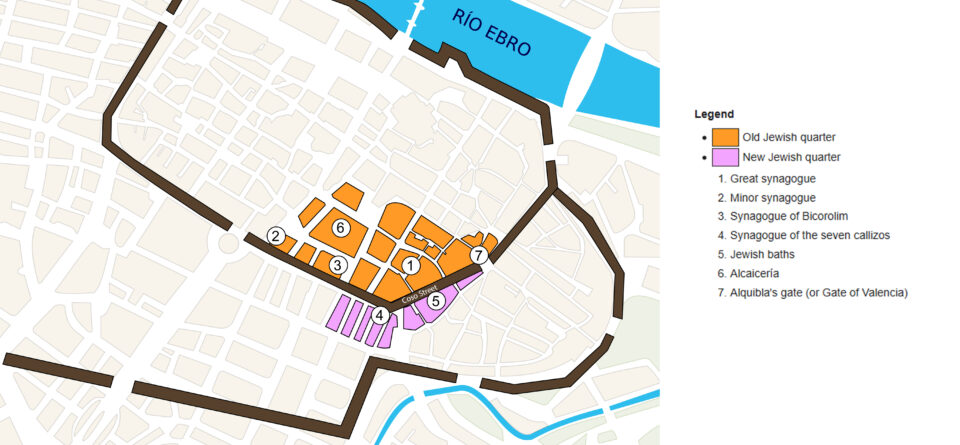
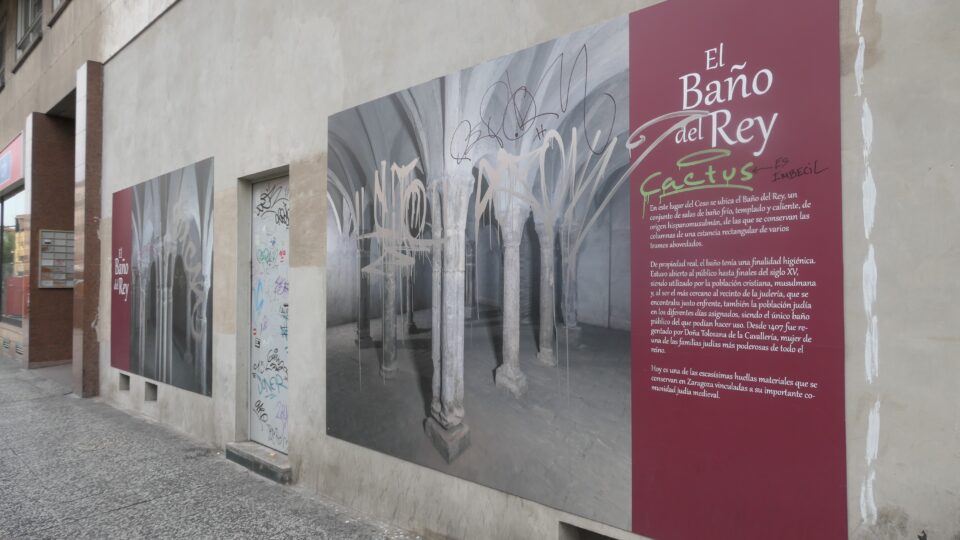
Our first destination was the Jewish baths (mikveh) discovered in 1980 beneath a building in the city’s old Jewish quarter. These underground ritual baths date back to the 13th century. Currently, there is a large poster on the building, as though they intend to turn the mikveh into a tourist attraction.
The site of the mikveh was recognized by UNESCO as a World Heritage Site in 2001. The city then purchased the baths as well as an adjacent property where they were going to build a lift to provide access. It was scheduled to open to the public in 2019. The project was never completed, and it was even removed from the city budget in 2022. So now, in 2024, all there is to see of the mikveh is the picture on the poster.
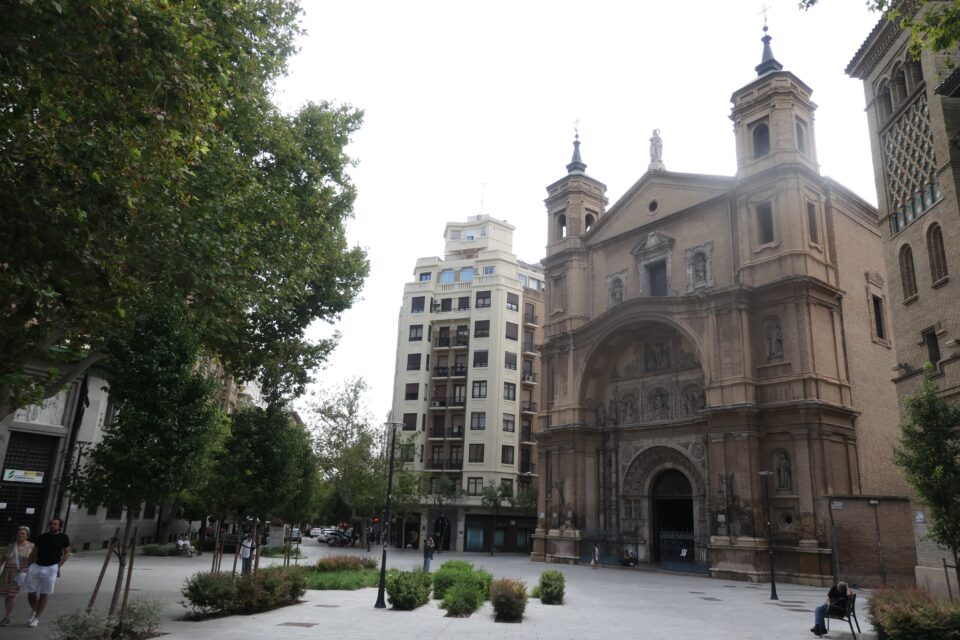
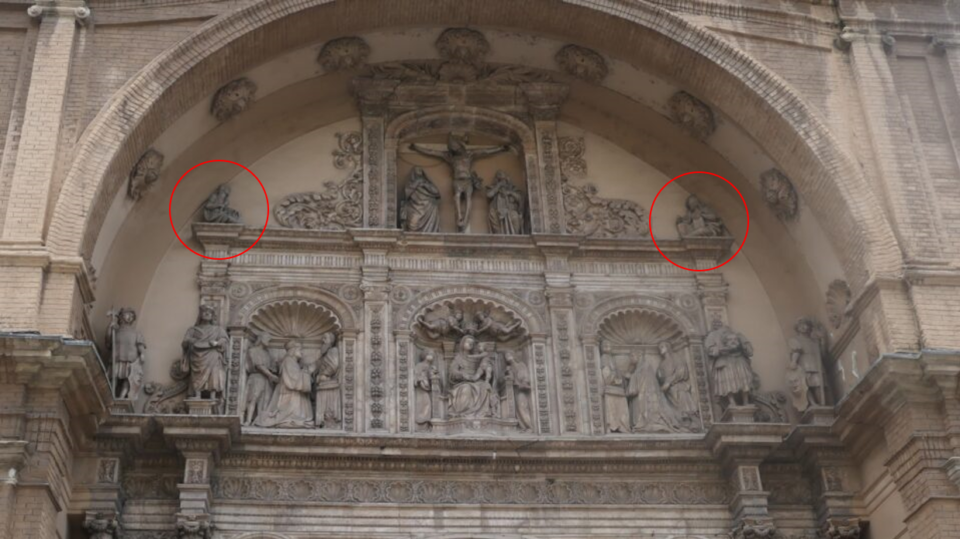
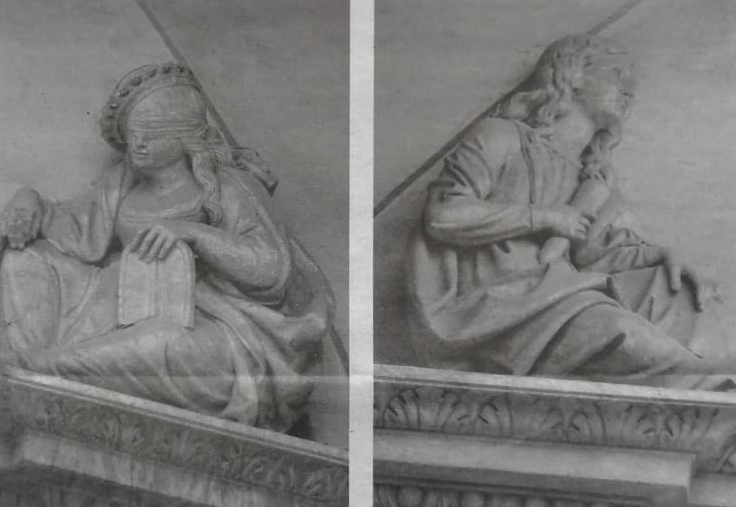
From there, we walked to the Basilica of Santa Engracia. This could be considered another one of the far-fetched Jewish heritage sites in Zaragoza. On the facade of this church are two statues that depict how 16th-century Spain saw the differences between the Jewish synagogues and Catholic churches. In this allegory, the synagogue figure is shown blindfolded and defeated, symbolizing the rejection of Jesus and blindness to Christian truths, while the church figure appears triumphant, representing victory and clarity of the Catholic faith.
Zaragoza is also known as the home of Solomon Ibn Gabirol, a Jewish poet and philosopher who has a major throughfare in Tel Aviv named after him. Ibn Gabirol was born in Málaga, Spain, around 1021. After becoming an orphan at a young age, he moved to Zaragoza, which was a significant center of Jewish culture at the time. In Zaragoza, he immersed himself studying Talmud, grammar, geometry, astronomy, and philosophy, and produced his notable works. Some attribute Ibn Gabirol to be the author of Adon Olam, which is sung at Shabbat services until today, but this attribution lacks solid evidence.
One last interesting fact about Zaragoza, is that according to documents, Zaragoza might have had the first female rabbi. Ceti, a Jewish woman in 14th-century Saragossa, held an office in the Zaragoza rabbinate for 20 years, overseeing female members of the synagogue. She corresponded with the Prince of Aragon complaining about a Jewish man who opposed and sought to evict her. A letter from the Prince supported her continued service.
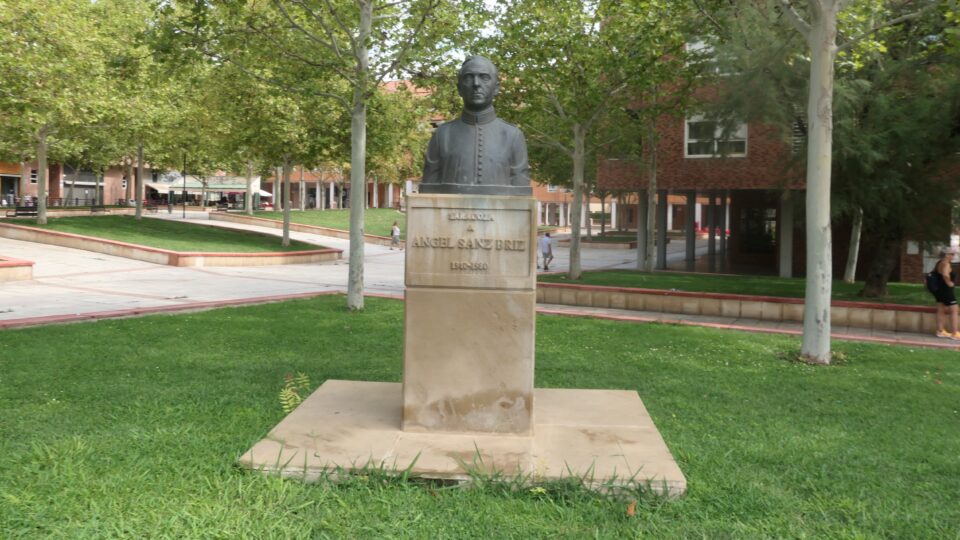
Before leaving the city, we drove to the outskirts to see the memorial for Ángel Sanz Briz, the “Angel of Budapest” or the “Spanish Schindler”. Born in Zaragoza, Ángel Sanz Briz (1910–1980) was a Spanish diplomat recognized for his heroic efforts during World War II. In 1944, while serving at the Spanish Legation in Budapest, Hungary, he took extraordinary measures to save Hungarian Jews from Nazi persecution by providing Spanish passports and sheltering them in safe houses. He saved as many as 5,000 Jews from deportation to Auschwitz.
We had now seen all that we wanted to see in Zaragoza, and we left the city driving northwest toward Tarazona. At one point we took a wrong turn and ended up on a back way to Tarazona. As we passed through one of the small towns, we noticed that some of the streets were closed. Everyone we saw was wearing white clothes and a red scarf.
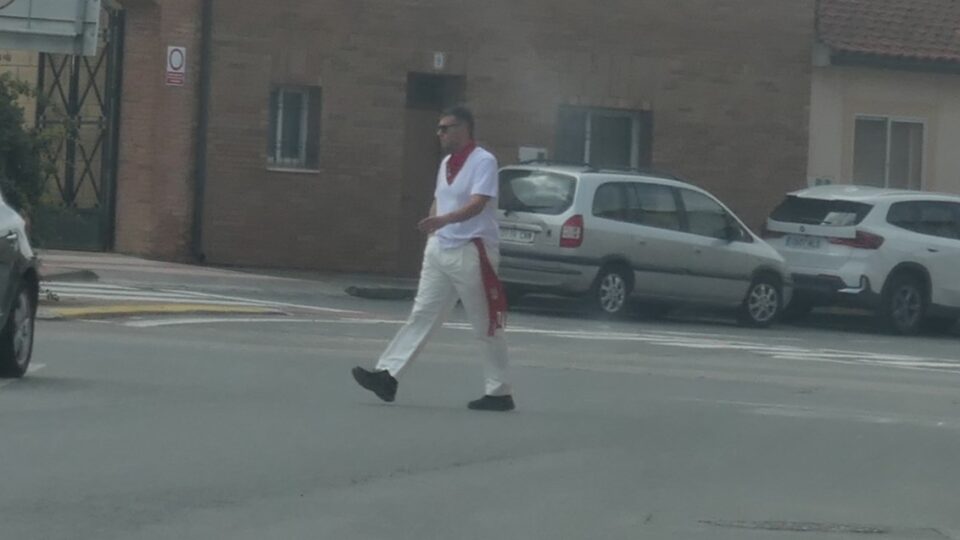
We then reached Tarazona and saw a similar scene – here everyone was wearing white clothes and blue scarves. The city was full of people, and parking was difficult to find. Unknowingly, we had arrived during the last day of the festival of the Cipotegato.
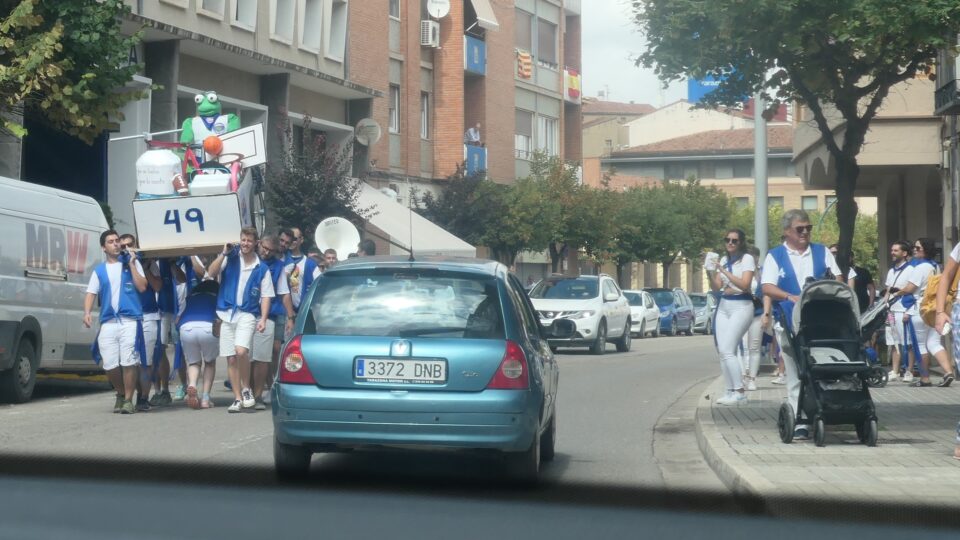
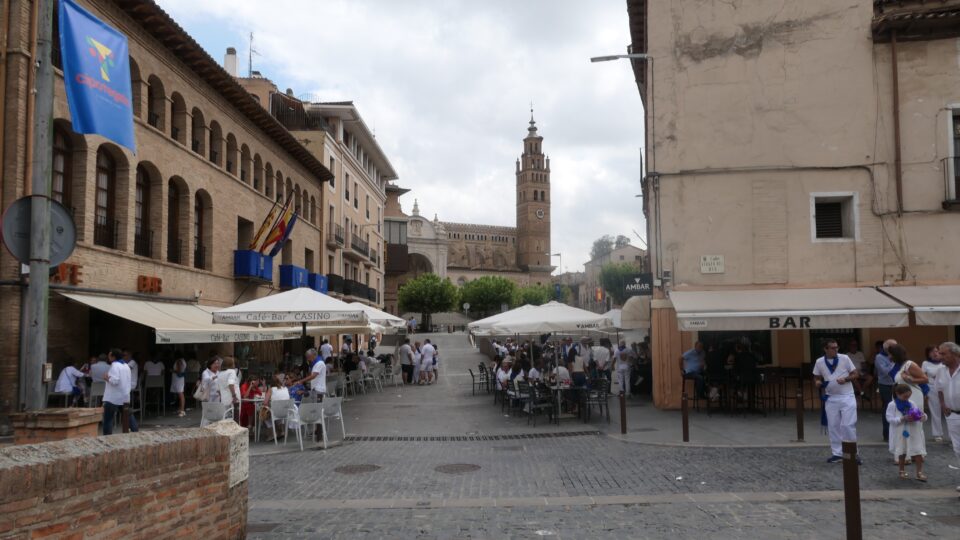
The Festival of the Cipotegato is an annual event celebrated in Tarazona at the end of August. The first day of the festival features a figure dressed as the “Cipotegato,” a masked character wearing the outfit of a jester, who runs through the streets while being pelted with tomatoes by the crowd. While throwing tomatoes at him, and inevitably, at each other, the event turns into a huge tomato fight. Only the Cipotegato knows the route he will take, but it always starts and finishes in Plaza de España. Once he reaches the finish line, he is lifted up onto a statue and he ties a scarf on the monument. This marks the start of a week of celebration that includes outdoor dances, bullfighting, musical parades, folk dances, etc. Unfortunately, we missed the tomato throwing by just a few days.
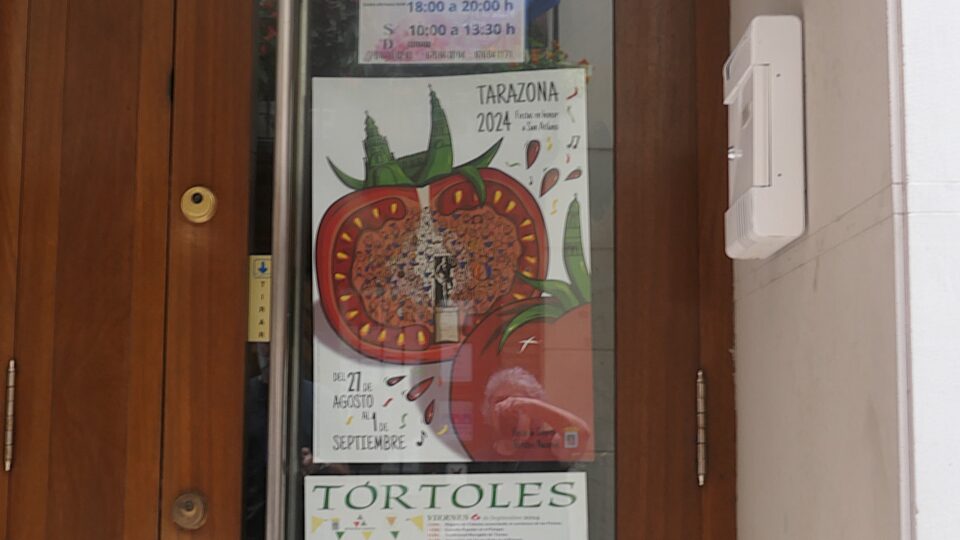
After finally finding a parking space, we walked to the Jewish quarter of the town. The people celebrating Cipotegato were not in this part of the city, and unlike the crowded town center, here the streets were deserted. Tarazona was the first town we visited that belongs to the Network of Jewish Quarters in Spain (Red de Juderías de España), a group of 21 towns that once had significant Jewish communities in the Middle Ages and today work to preserve and promote that heritage. Membership in the network reflects a commitment to protecting historic Jewish quarters, synagogues, cemeteries, and other remnants of Jewish life.
This is a list of towns that belong to the network, according to their website:
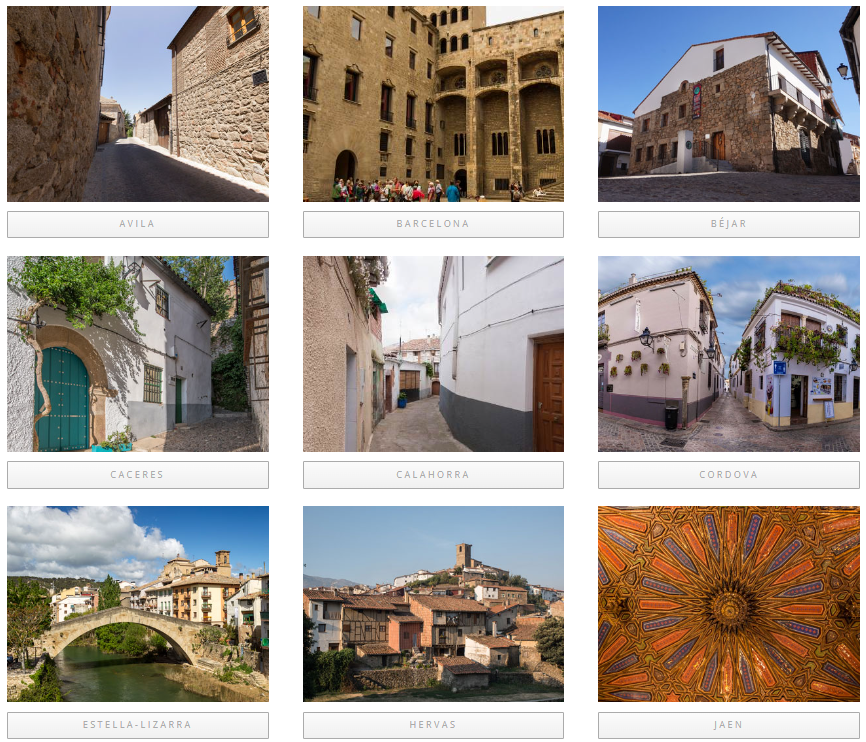
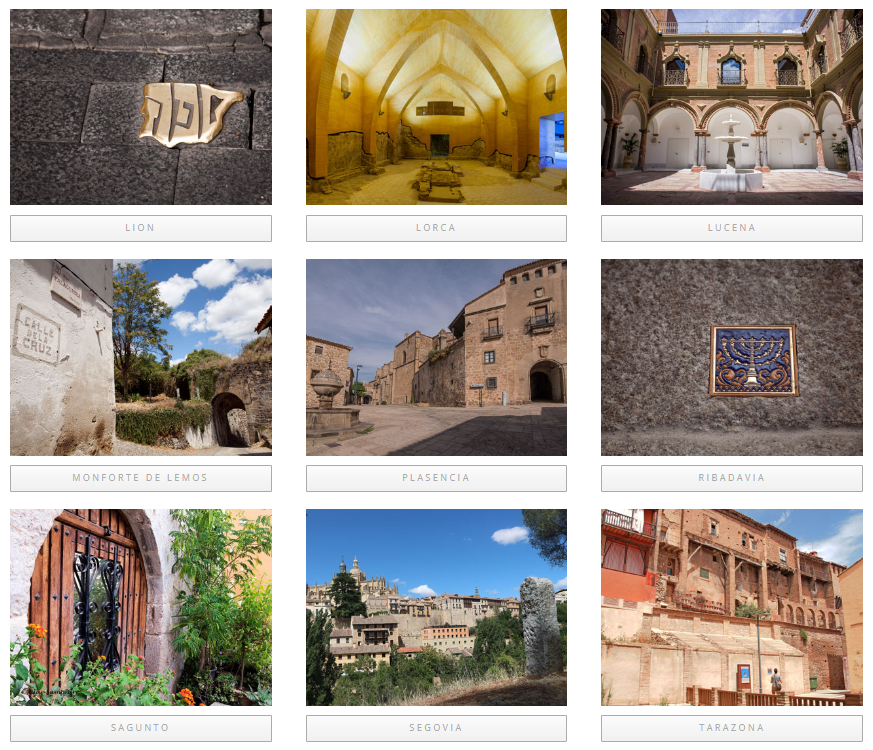
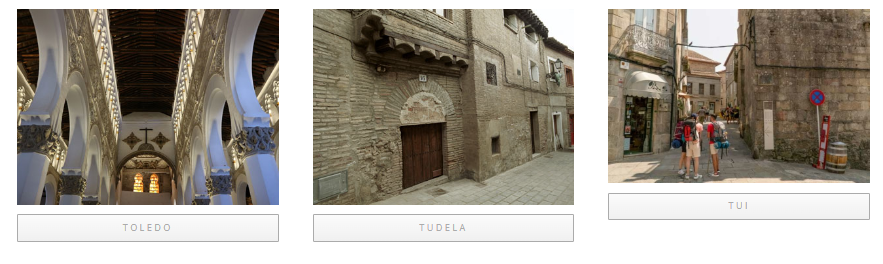
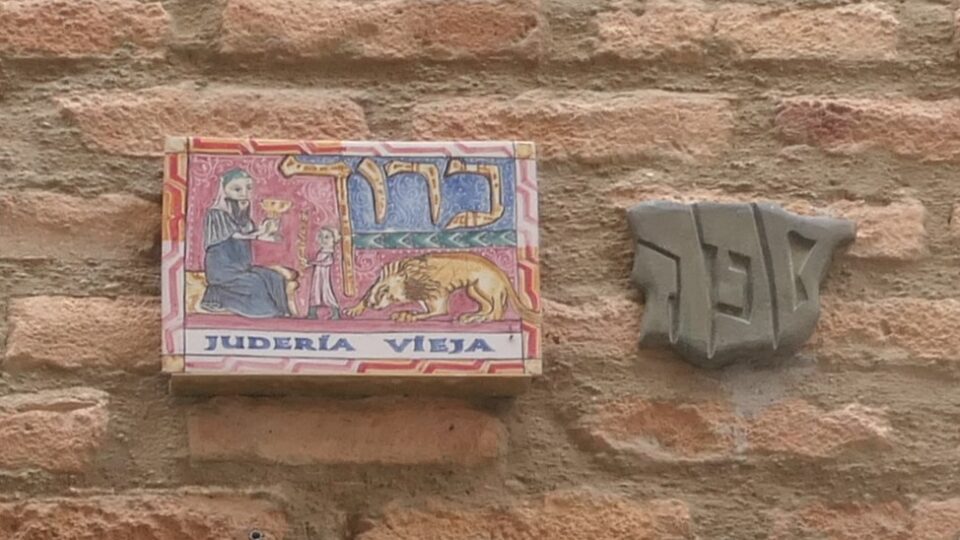
Towns that belong to the network put the Sefrad symbol at the places of Jewish interest. The symbol is made of the Hebrew letters of the word Sefrad put together in the shape of the Iberian Peninsula. The spacing between the letters, creates the Hebrew word זכּוֹר – Remember.
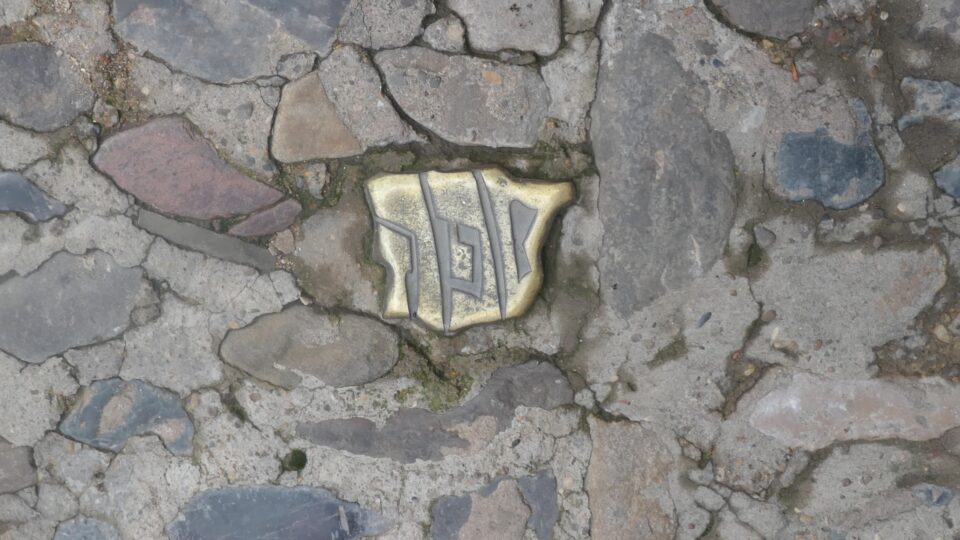
During this trip, we plan to visit 16 of the 21 towns that are currently on the list. Most of the ones we will miss are in southern Spain, and during our few weeks here, we will only be in the north. The list of towns belonging to the organization is always changing – membership seems to come and go. For example, in Girona and Besalú, we saw the Sefrad symbol placed in several locations, but both these towns are currently not on the list of cities in the network.
Cities that belong to the network, have a downloadable PDF that is available online, with a map of Jewish Heritage sites to visit, and an explanation of each site. Using this PDF, we had high hopes to easily find the Jewish places in Tarazona, and expected to see signage of the route, and explanations of what we were seeing. We quickly learned that belonging to the network does not ensure that Jewish Heritage sites would be any easier to find. Some cities in the network do a good job, while others do not. The same can be said for towns not in the network – some highlighted their Jewish past much better than others.
The Jewish community of Tarazona was one of the most important in the kingdom of Aragon, dating back to at least the 12th century. The community thrived due to the town’s strategic location near the border of the kingdoms of Castile and Navarre, offering its inhabitants extensive commercial opportunities. Tarazona had two Jewish quarters, each with its own synagogue.
The Jewish community experienced periods of prosperity and were unaffected by the pogroms in 1391, due to protection given by the crown. However, after the Disputation of Tortosa (1413–14) many of its members abandoned the Jewish faith. The Disputation of Tortosa was a religious debate between Christian and Jewish leaders in Spain that took place in Tortosa, Catalonia. The debate was meant to challenge Jewish beliefs, with the goal of converting Jews to Christianity.
While the Jewish participants attempted to defend their faith, the debates were manipulated, and the Christians claimed victory. After the disputation, the Pope issued decrees that increased anti-Jewish sentiment and placed heavy restrictions on Jewish practices. This led to a wave of conversions throughout Spain, including those in Tarazona. The few Jews that remained in Tarazona in 1492, left the town with the expulsion of all the Jews from Spain.
In trying to write about what we saw in Tarazona, it is confusing – the same way we were confused when we were there. The PDF from the Network of Jewish Quarters has a list of sites to see, but these did not at all correspond to the Jewish Route of Tarazona (Ruta de la Juderia de Tarazona) – signs placed by the municipality. At the end, we just walked up and down the streets in the neighborhood, playing detective to find what we could.
We first reached Plaza de España, previously known as Market square. Besides being the starting and ending point of the jester’s run in the Cipotegato, this plaza marks the outer limit of the Jewish Quarter. The plaza was the meeting place between the three cultures – Christian, Muslim, Jewish – who lived side by side in Tarazona for centuries. The large building with the arches is now the City Hall.
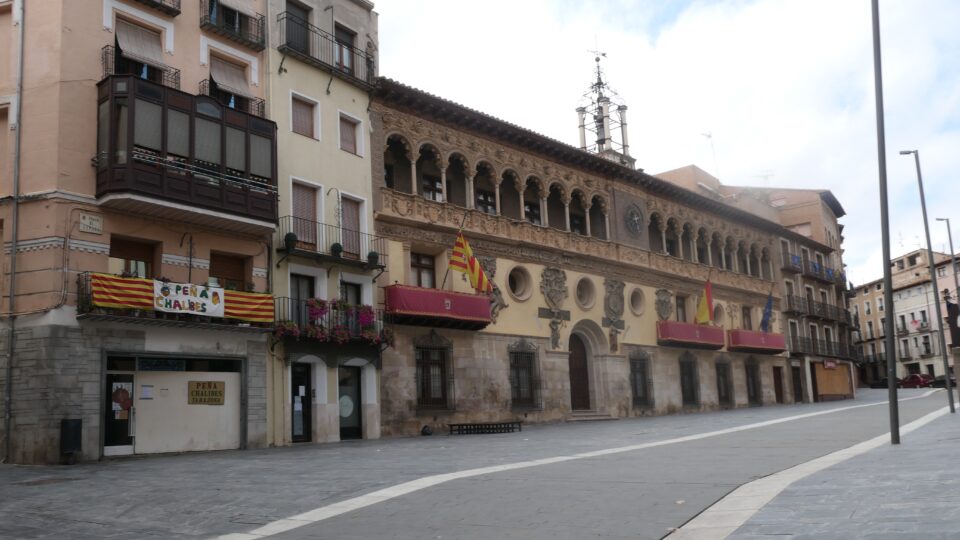
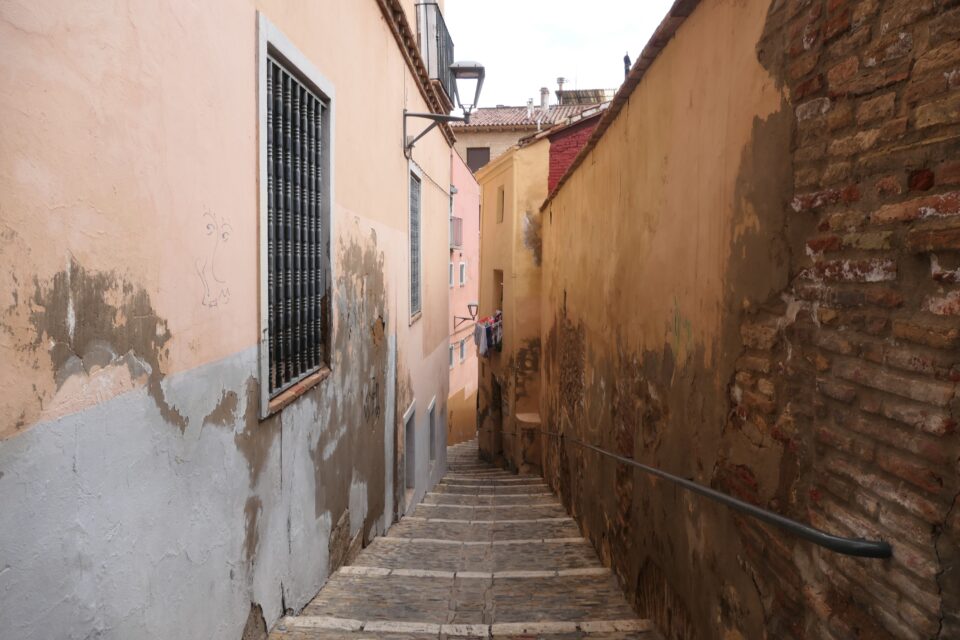
From Plaza de España, we started wandering the narrow lanes. The houses were colorful, but looked worn and run down. We could easily tell we were in the Jewish Quarter from the street signs that had a Jewish star.
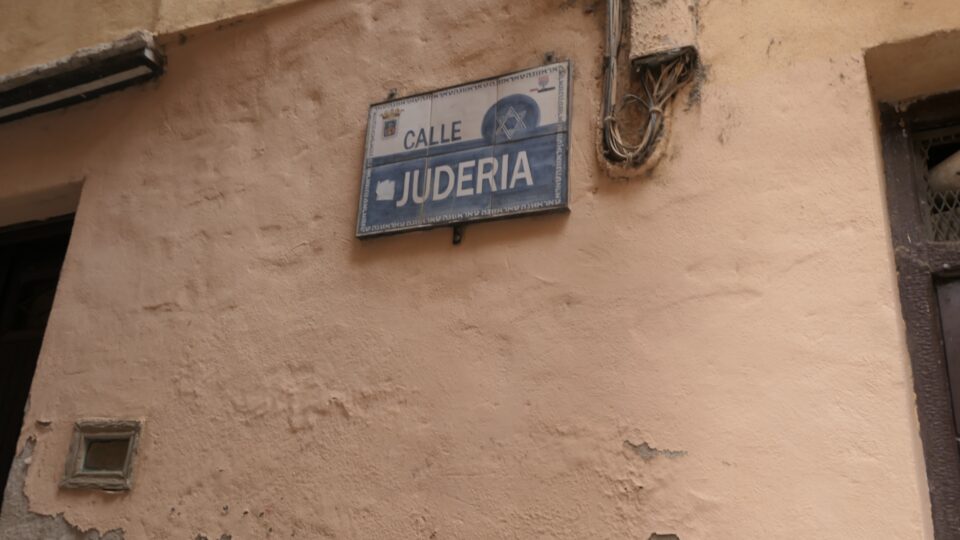
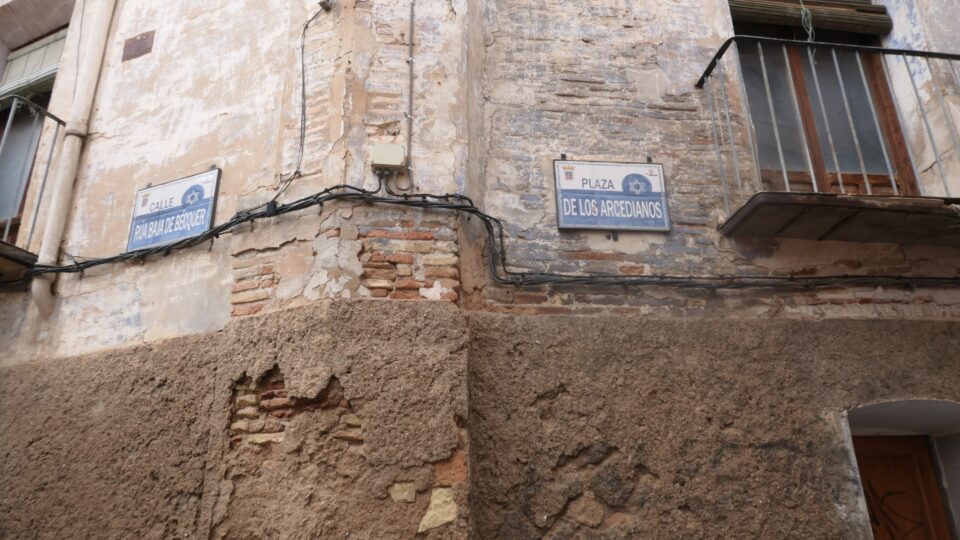
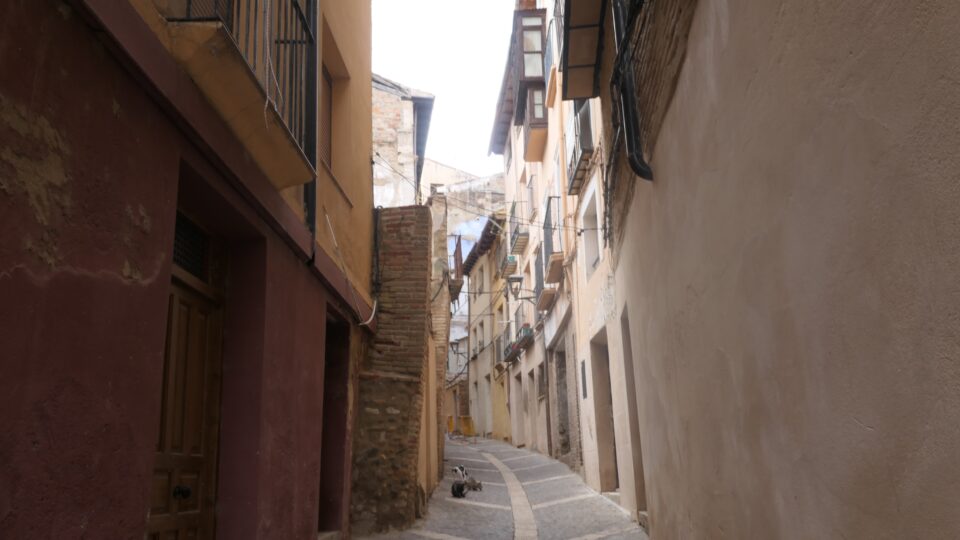
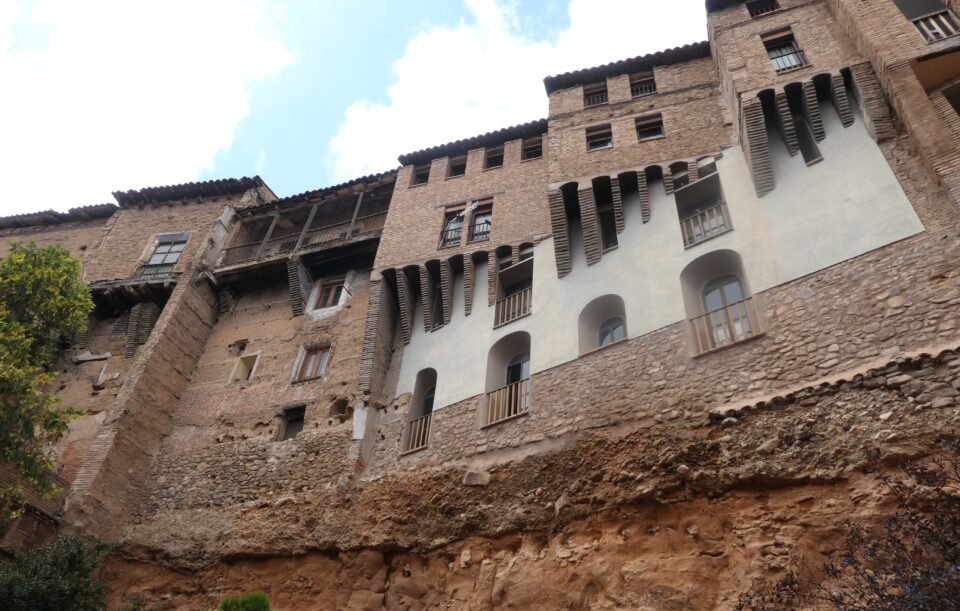
The northern edge of the Old Jewish Quarter is marked by a fortified wall. On this wall is a row of overhanging buildings known as the “Hanging Houses.” They are built in saledizo, a construction style where the upper floors jut out over the street below, supported by beams or built into a wall. In the Middle Ages, these housed members of the Christian nobility. In Spain hanging house are only found in Cuenca and Tarazona.
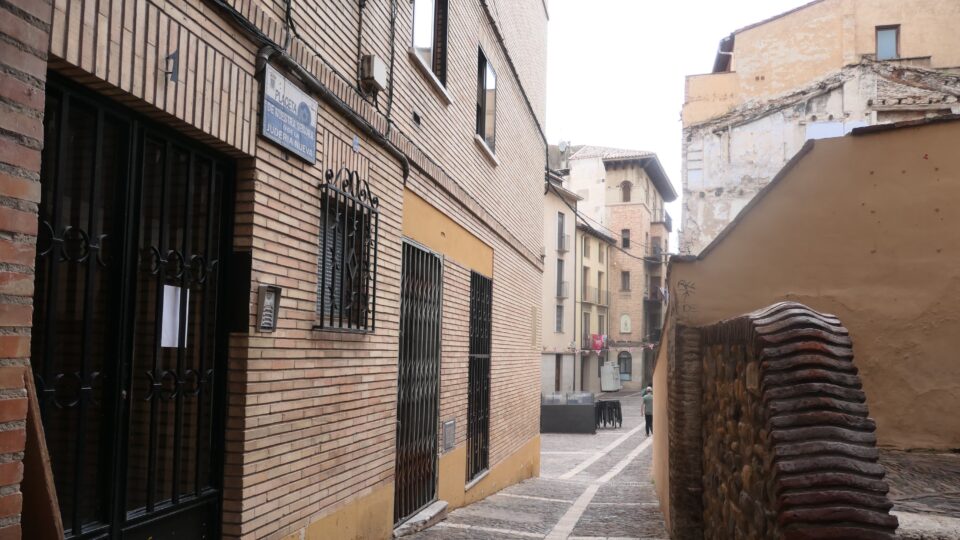
Like in many of the larger towns, the Jewry had two adjacent neighborhoods: the old Jewish Quarter, and a later extension or New Jewish Quarter. Today the New Jewish Quarter is still known as Barrio Nuevo.
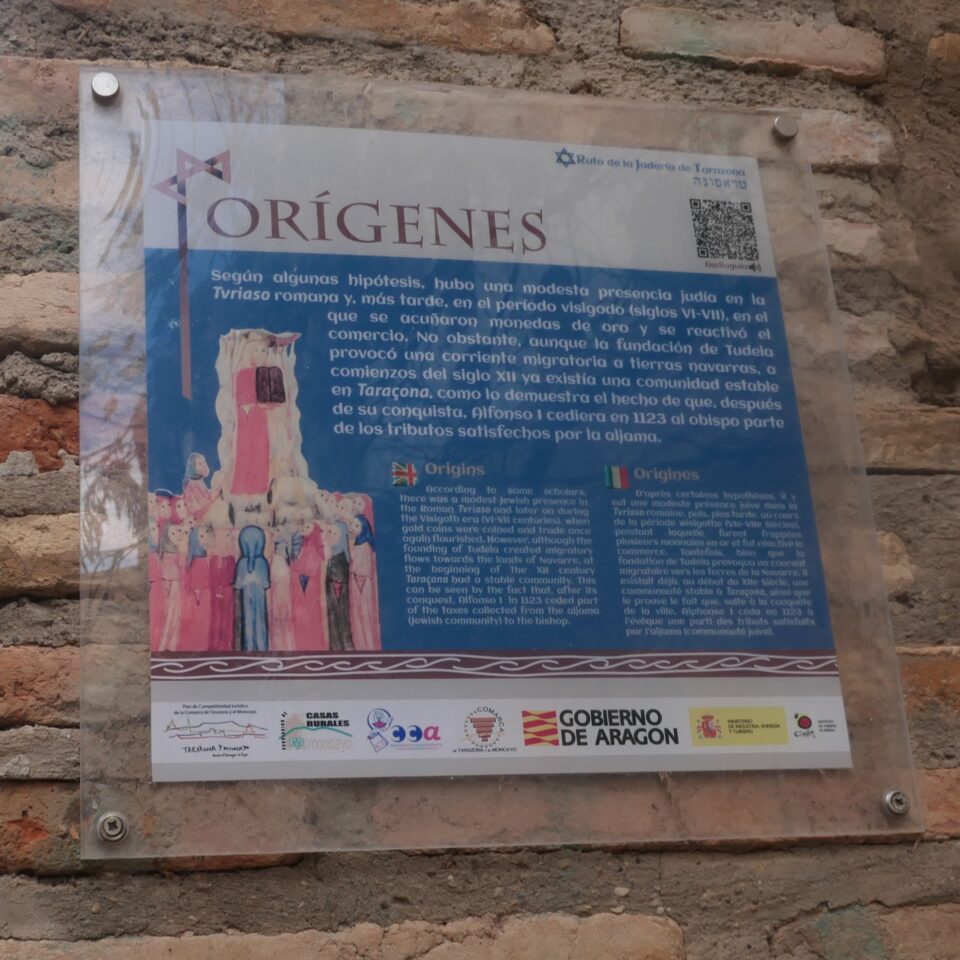
The municipality hung signs scattered through both Jewish Quarters that explained about Jewish life in the middle ages. For example, there was a sign about Merchants (The Jewry had an active mercantile class, focusing their interests in the bakery and fur industry, as well as wheat and wool traffic.), and about Artisans (The majority of the working population was made up of artisans, who were mainly engaged in textile manufacturing (weavers) and leather) Other signs explained about the Jewish moneylenders and the interest they were allowed to take, and about the taxes the community needed to pay, and about the three corner-stone festivals of the Jewish Religion – the Sabbath, Yom Kippur and Passover.
Even Jewish food is mentioned (One of the most characteristic dishes was the hamín or Jewish stew, typical of Saturday and prepared the day before – since during that holy day it was forbidden to cook -, based on chickpeas, greens, vegetables, hard-boiled eggs and beef or mutton.)
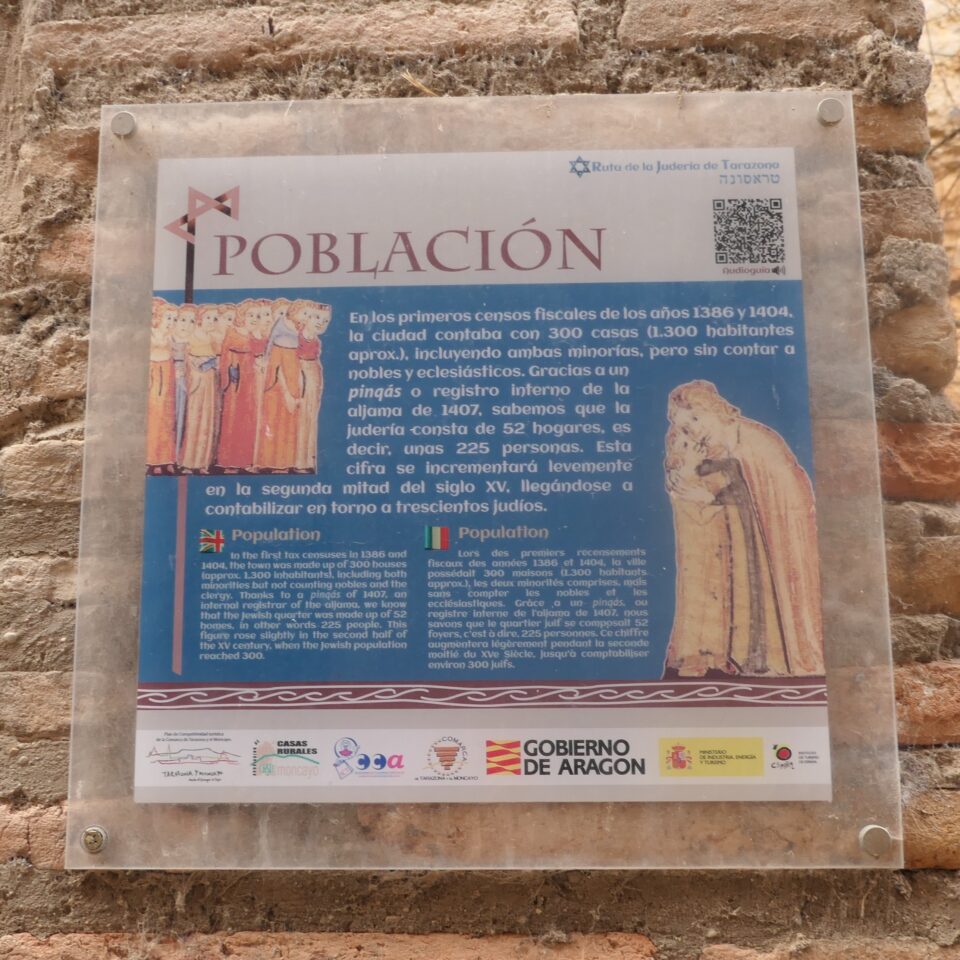
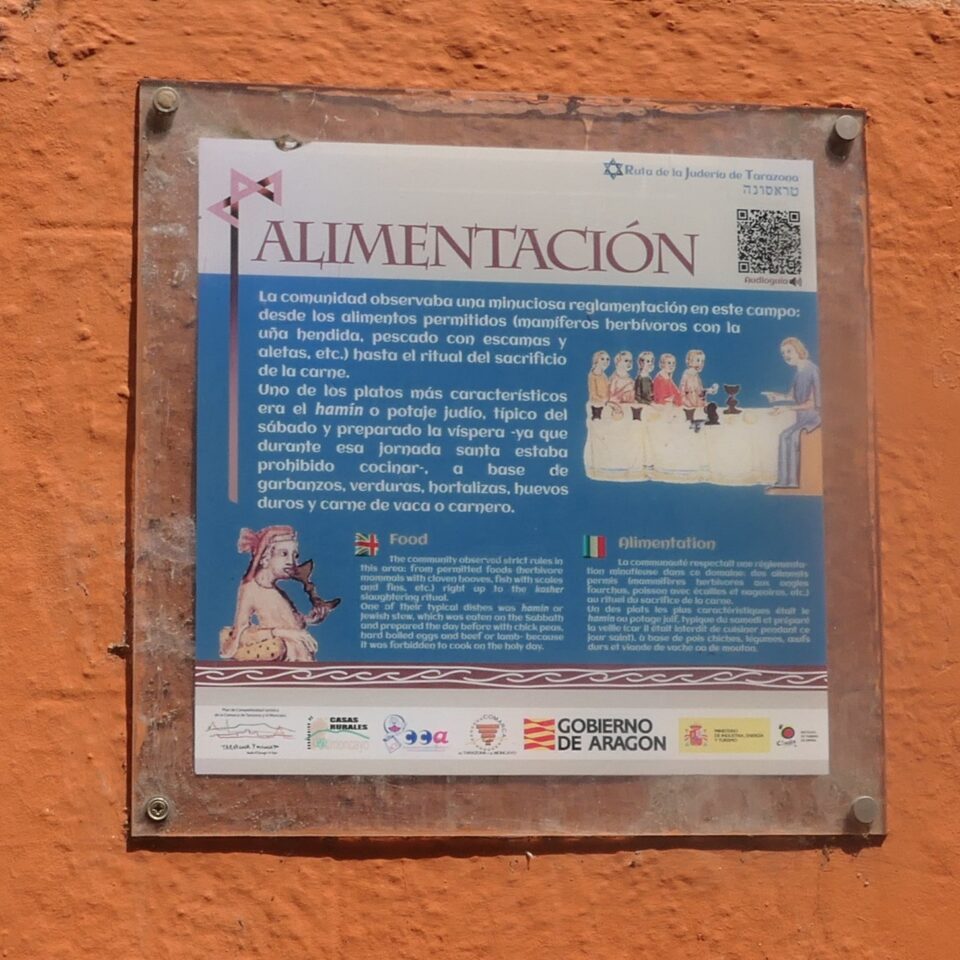
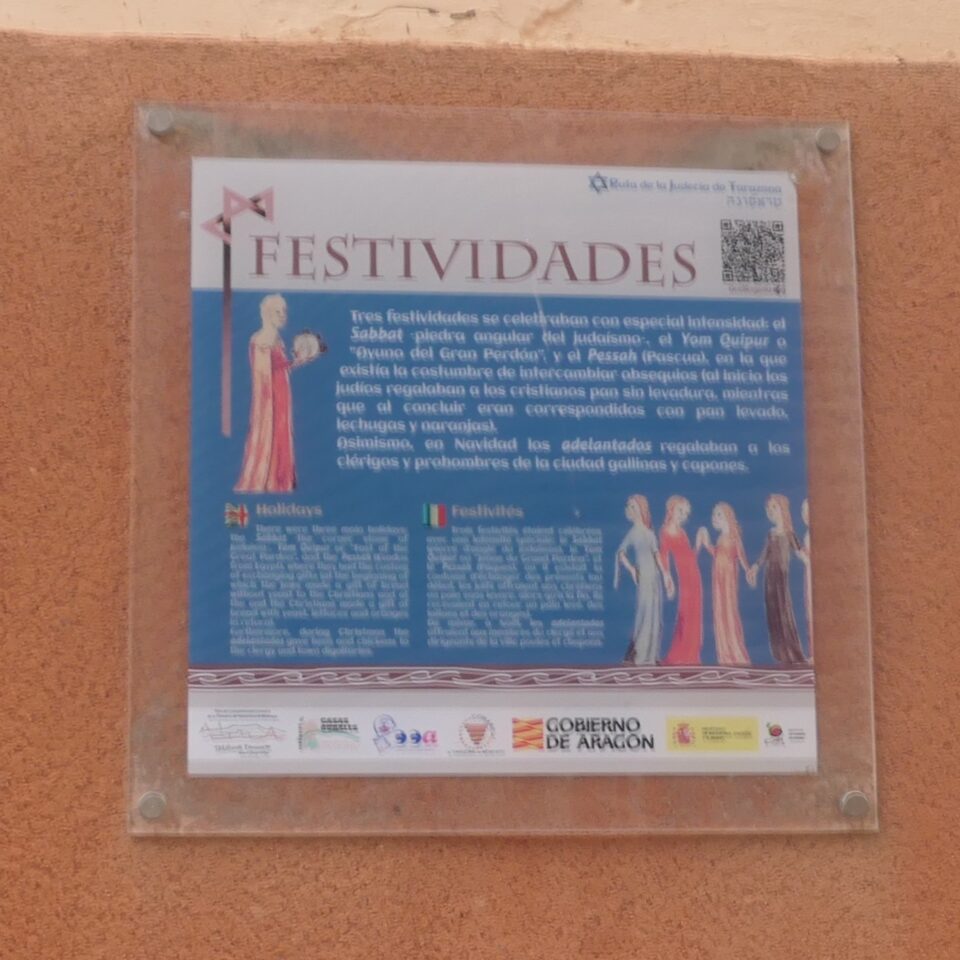
In general, Tarazona feels like a fascinating city—one with far more to explore than we had time for. It’s a mix of old and very old, and feels lived-in and authentic.
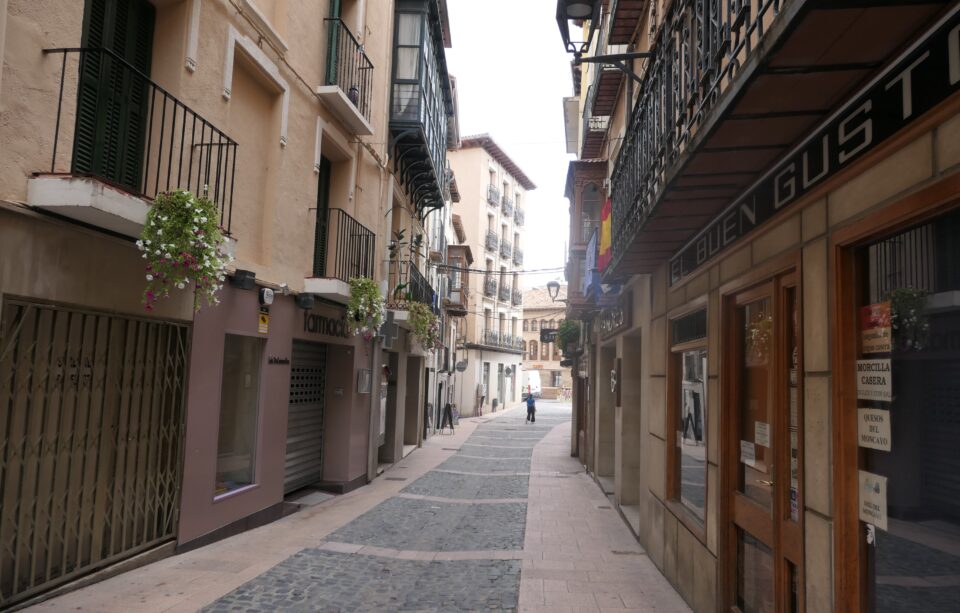
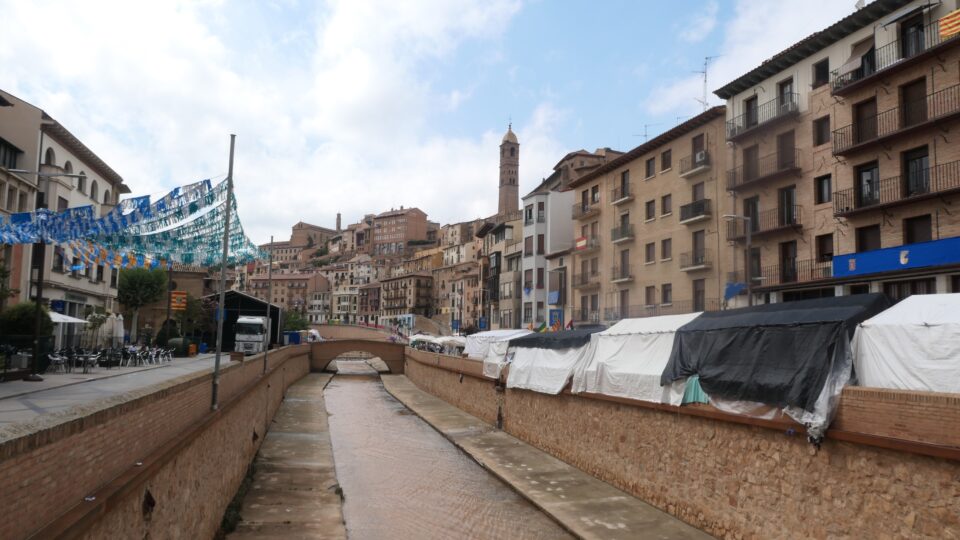
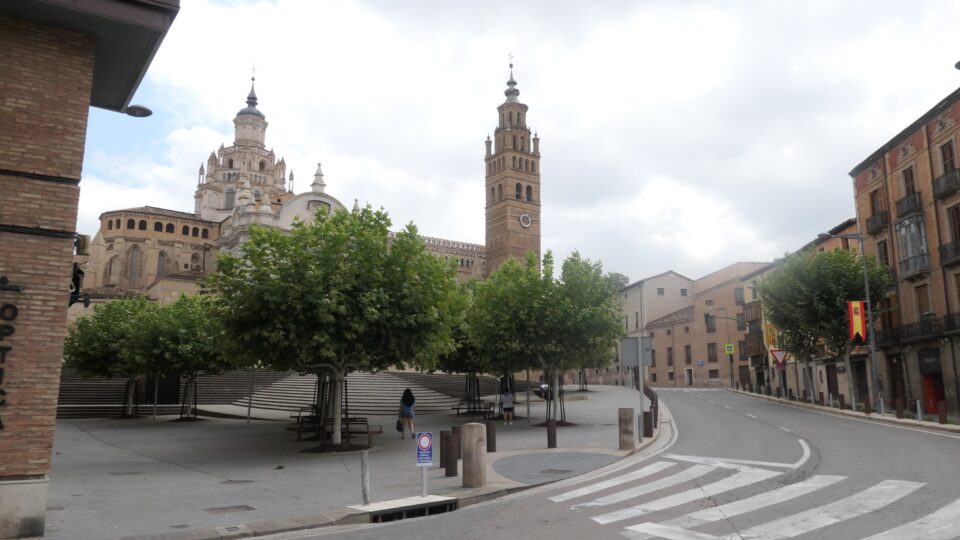
Once we finished our allotted time in Tarazona, we had a 30-minute drive northeast towards Tudela. During this short ride, we passed four small towns, each typically with a very large church situated in a prominent position, surrounded by small red-tiles houses. To me, these grand, ever-present churches, even in the poorest of towns, reflect the Church’s historical power and the communities’ dedication to their faith.
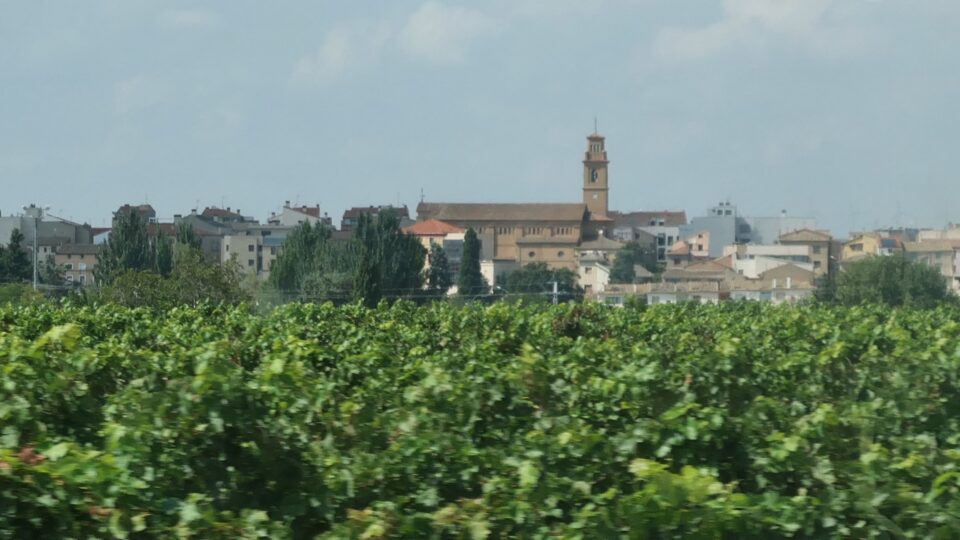
Tudela, in the autonomous community of Navarre, has a population of about 35,000. It was the home of the famous traveler, Benjamin of Tudela. He was a 12th-century Jewish scholar that embarked on an extensive journey across Europe, Asia, and Africa, visiting around 190 cities. Travelling between 1159 and 1173 (100 years before Marco Polo), he documented the Jewish communities of the regions he visited. His writings offer a rare glimpse into the medieval world from a Jewish perspective.
Some say Tudela is also the birthplace of Yehuda Ha’Levi, a prominent Jewish poet, philosopher, and physician during the medieval period in Spain.
The Jewish community of Tudela thrived from the 9th century until the 1492 expulsion, contributing to the city’s economic, cultural, and intellectual life. Under Muslim rule, they prospered as merchants, scholars, and physicians, and their influence continued after the Christian conquest in 1119. The Jewish Quarter was divided into two sections: the Old Jewish Quarter (Judería Vieja), the original settlement, and the New Jewish Quarter (Judería Nueva), established in the 13th century to accommodate a growing population.
Like Tarazona, Tudela also belongs to the Network of Jewish Quarters. In their PDF brochure, they mention 10 stops related to the Jewish history of the city. We now went to find them. Being Sunday and considering that Tudela is not a major tourist attraction, almost everything was closed. Only restaurants were open and had a few people.
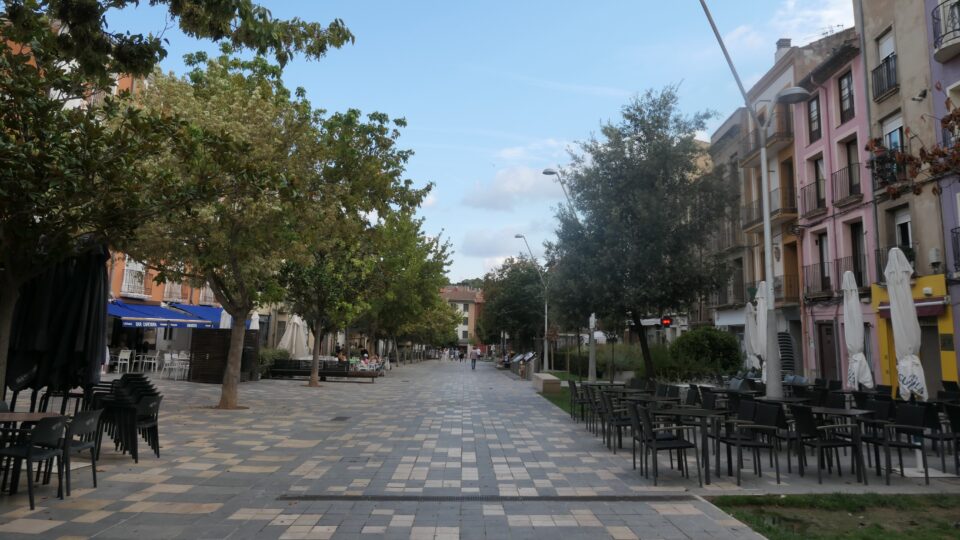
We reached the narrow, winding streets of the old Jewish Quarter. At each intersection, the buildings had ceramic signs indicating that we were in the Judería Vieja.
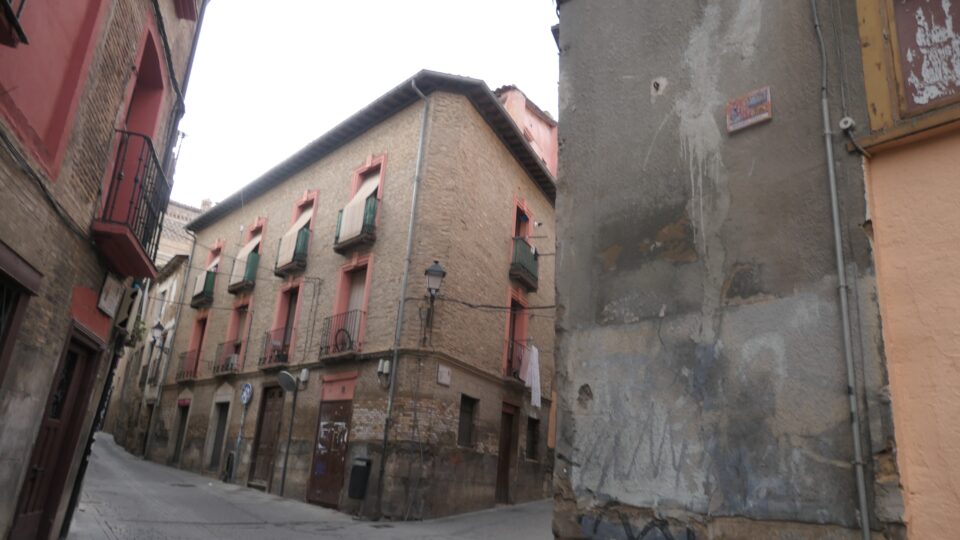
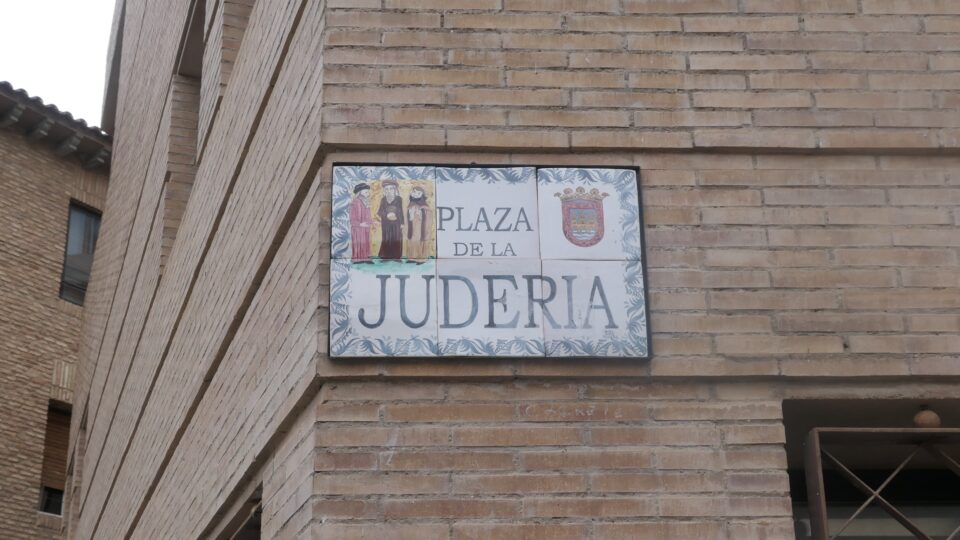
A narrow alley led to an open plaza, Plaza de la Judería (Juderia Square).
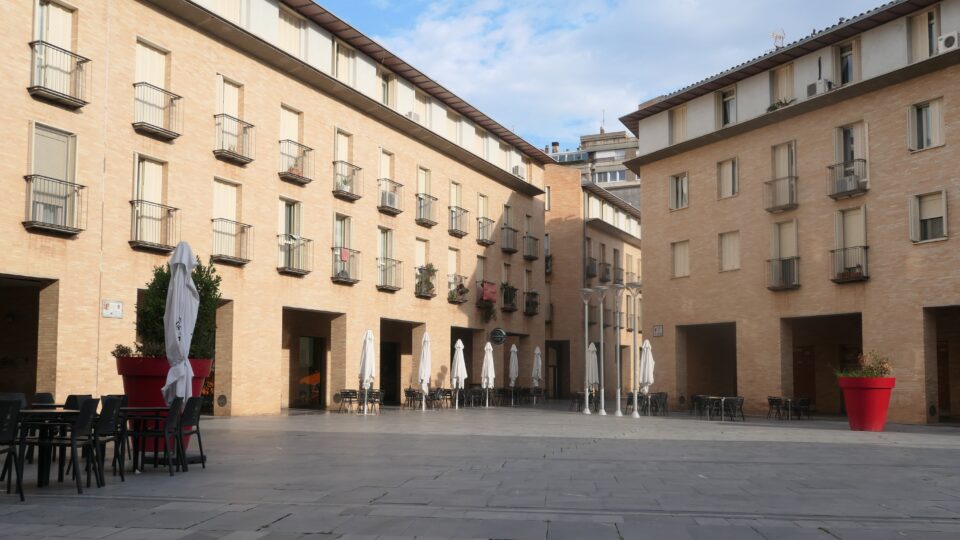
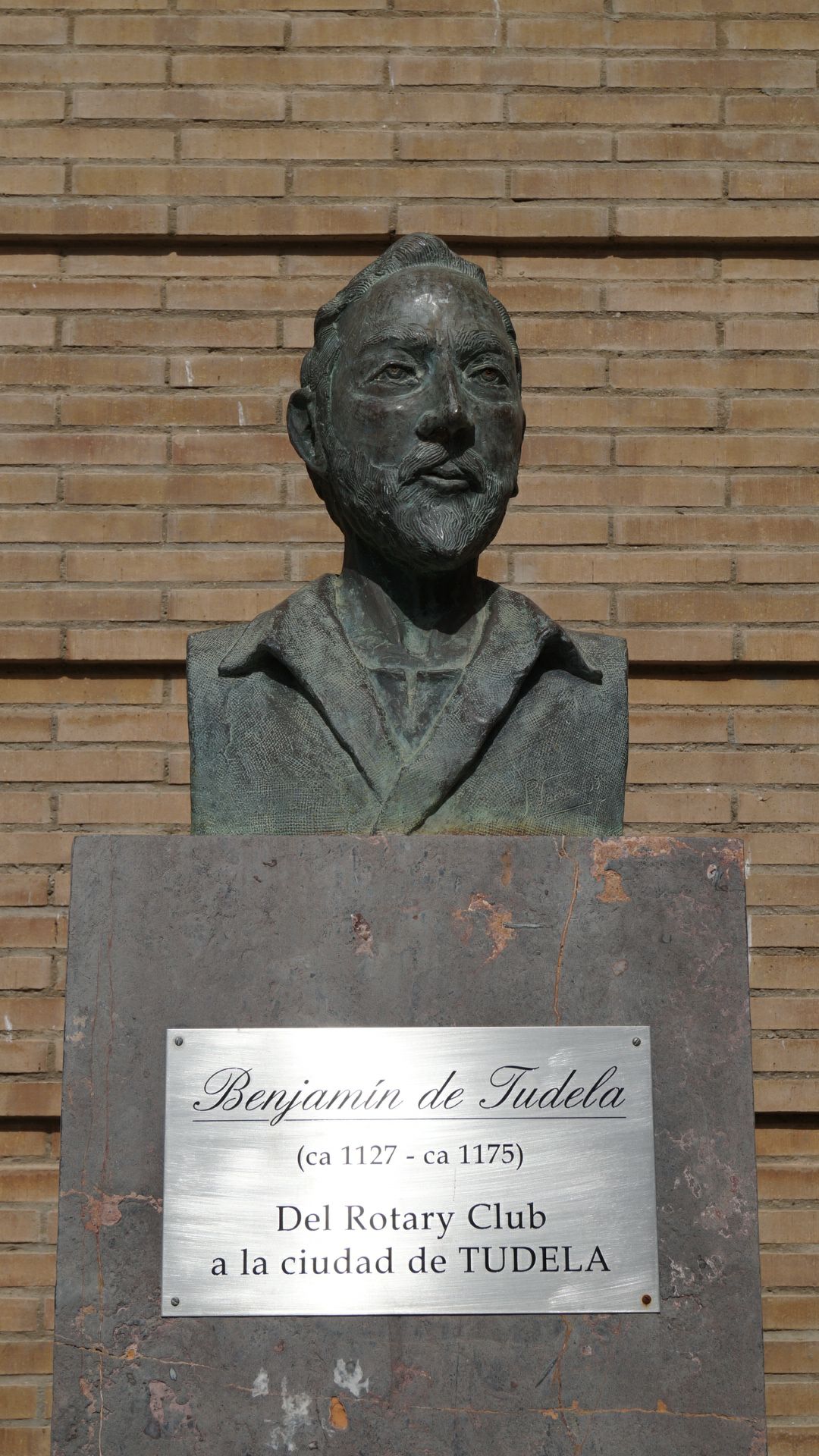
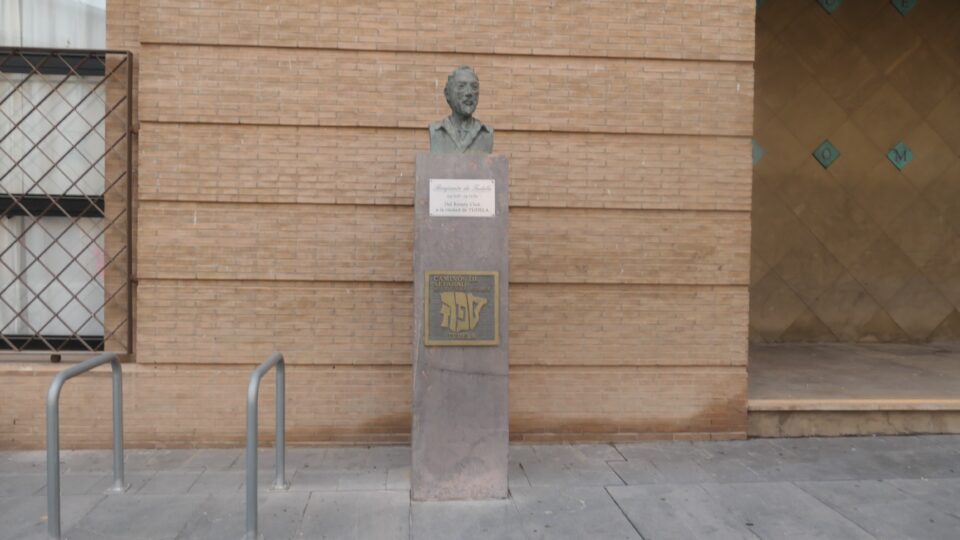
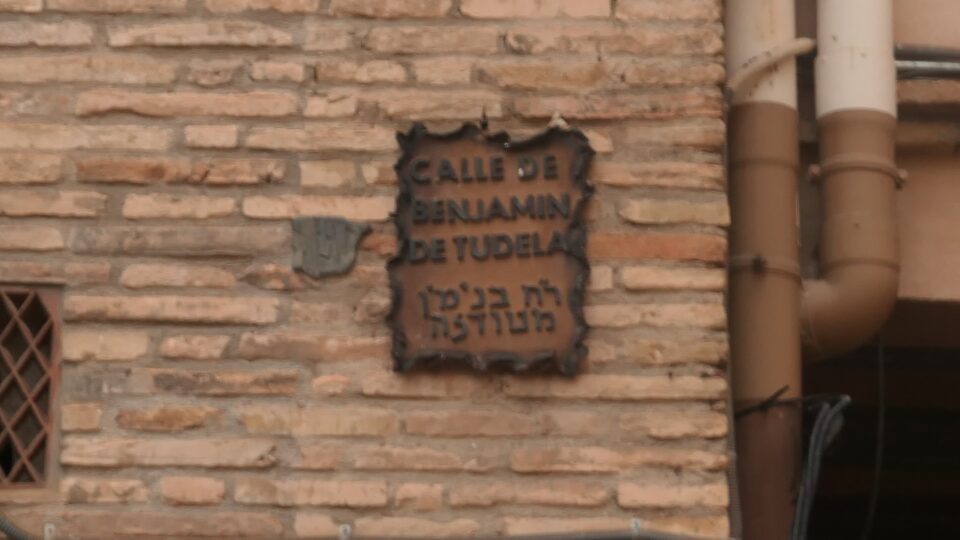
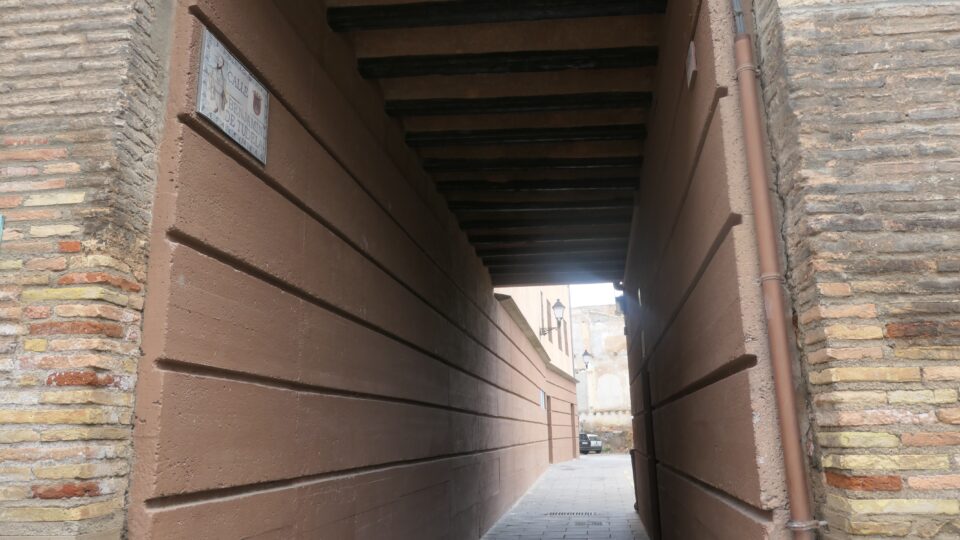
Alongside one wall of the plaza, is a monument dedicated to Benjamín de Tudela. Nearby is also a small street that bears his name.
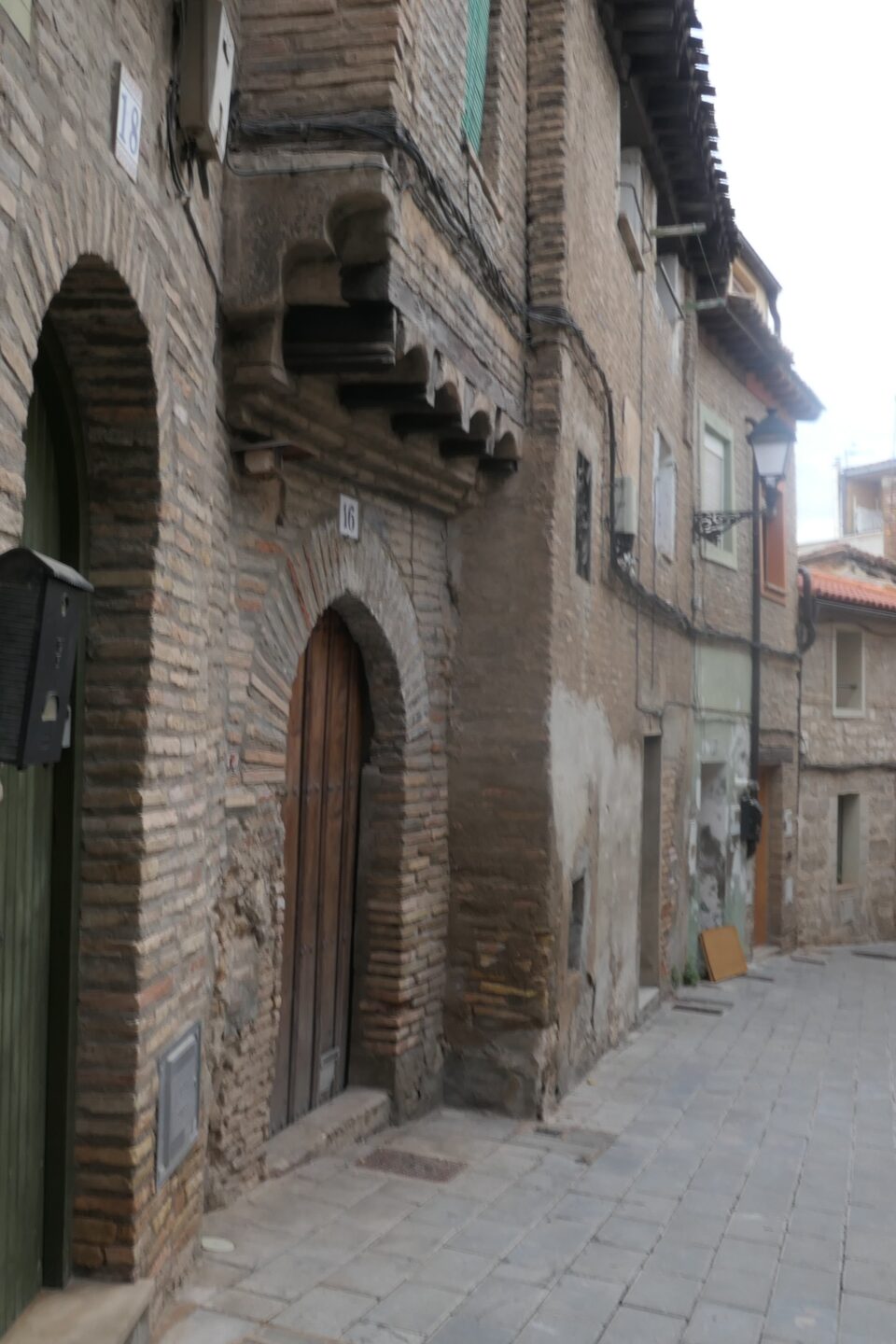
Continuing our exploration from the Old Jewish Quarter to the New Jewish Quarter, we referred to the PDF guide from the Network of Jewish Quarters, which recommended a visit to Dombriz 16.
Here we saw a tall, narrow medieval house, characteristic of 15th-century architecture, with an upper floor that protrudes just over half a meter beyond the facade of the door. Such structural designs were typical of the period and considering that this area was in the Jewish Quarter, suggests that the house could have belonged to a Jewish family.
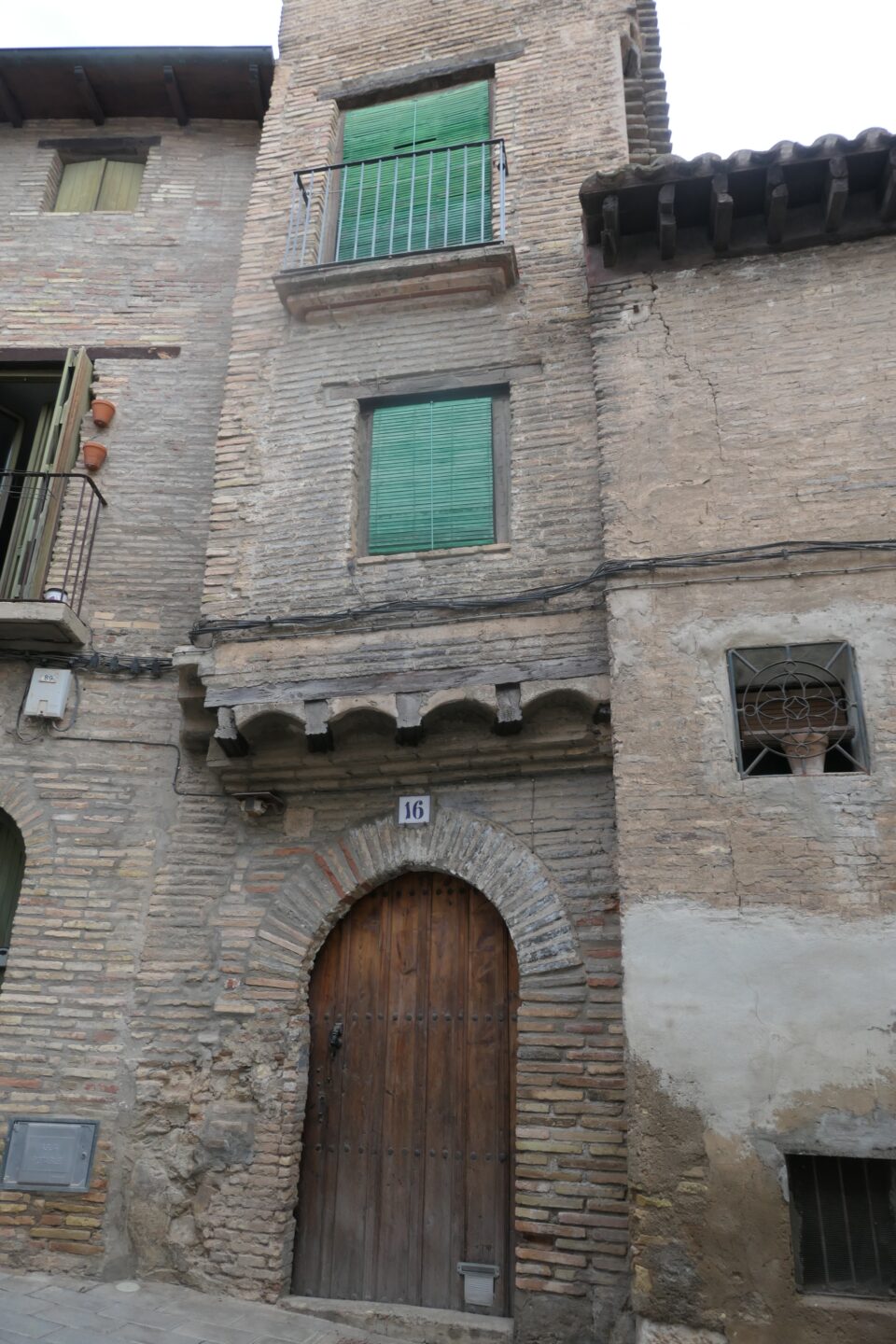
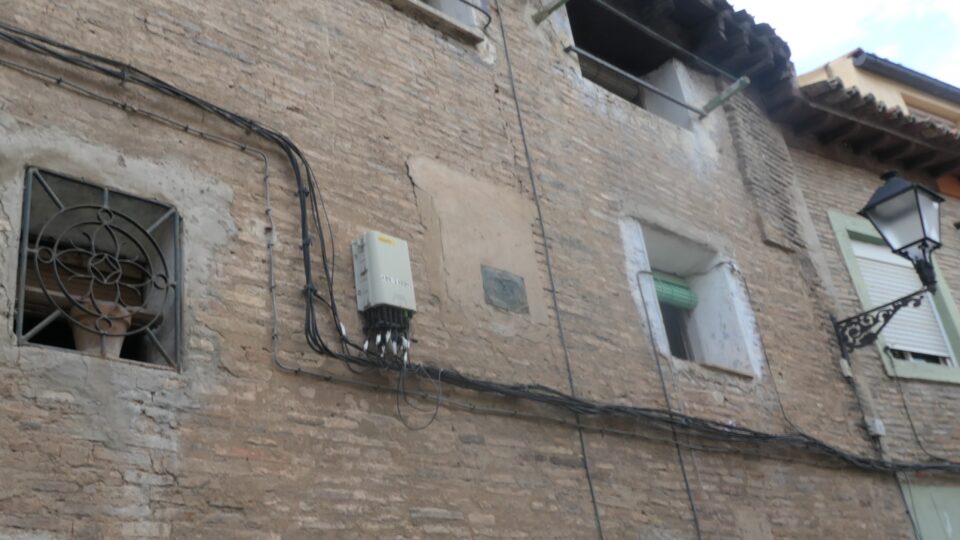
It was interesting seeing how electricity has been added to these old medieval buildings. They put a patchwork of exposed wires across the front of the buildings – a hodgepodge of cables.
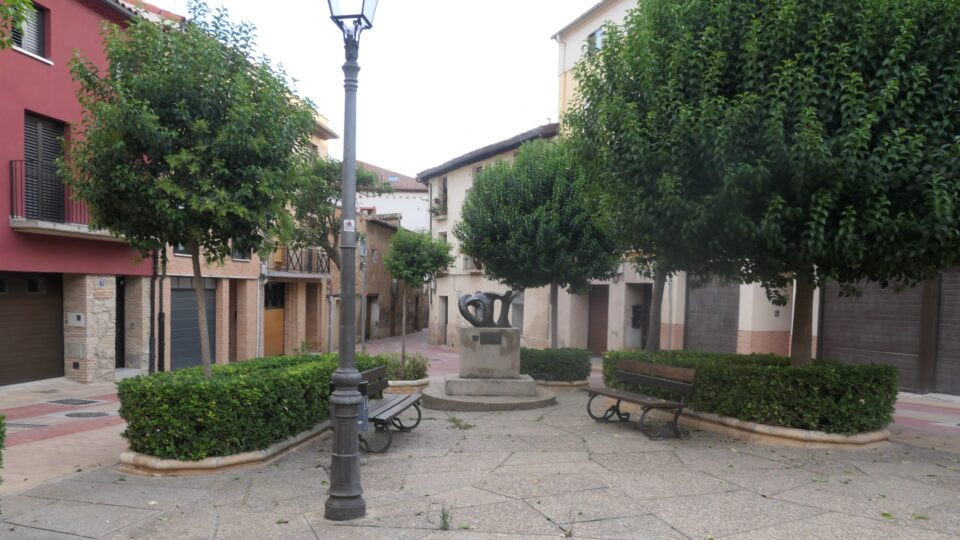
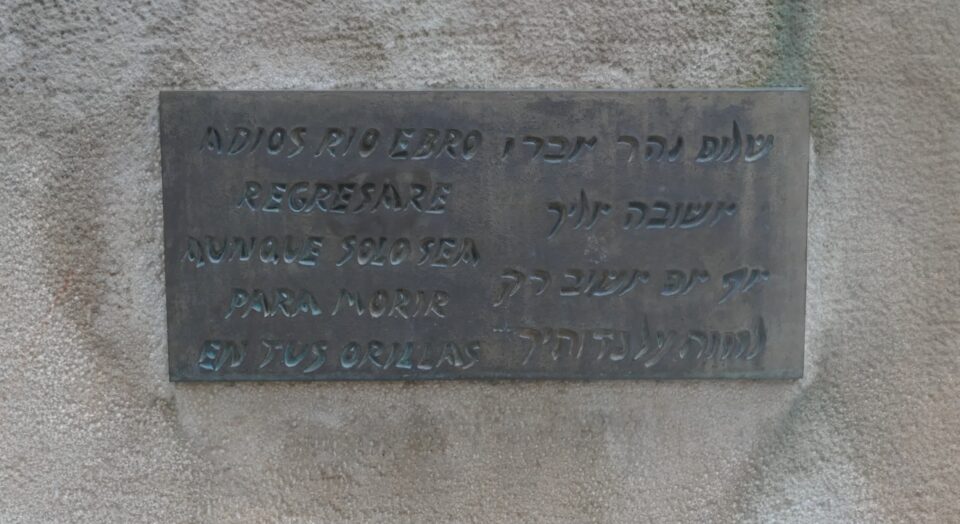
Heading back to the apartment (we’ll leave the New Jewish Quarter for tomorrow), we passed Salvador square. In this small square, stands a monument commemorating the twinning between Tudela and Tiberias, which features words attributed to Benjamin of Tudela: “Goodbye, River Ebro. I will return, even if only to die on your shores.”
After this initial introduction to Tudela, we returned to our apartment for our first child-free evening in nearly two weeks—finally, a bit of quiet.
That was a very busy day.