MARCH 22–24, 2025: We arrived at our Airbnb in Agrigento on Friday afternoon. Our host had generously stocked the apartment with food – eggs, bacon, cheeses, and a large assortment of snacks. It was thoughtful and kind, but not particularly useful for us. She also left a small tray of fresh pastries from Pasticceria Rizzo, one of Agrigento’s best-known Sicilian pastry cafés, family-run since 1982. On the tray were ricci di mandorla (“almond curls”) – a local favorite made with finely ground almonds, crisp on the outside and soft in the center, and almond amaretti, a classic Sicilian confectionery. Those I appreciated.
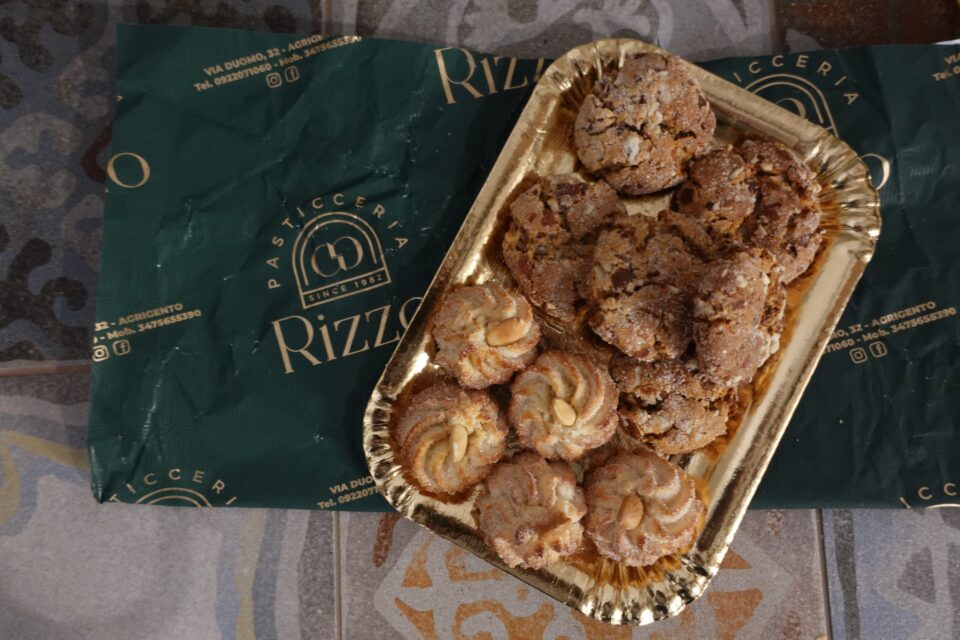
The use of almonds in traditional pastries isn’t random – almonds are grown widely on the island and thrive in the hot, dry climate. Over centuries, especially during the Arab period, Sicilian bakers perfected the classic combination of almonds and sugar, creating the marzipan-style pastries that are still part of Sicilian culture today.
On Saturday, after kiddush, we walked into the historic center with the goal of locating the former Jewish quarter. Agrigento had a Jewish community from at least late antiquity that flourished in the medieval period – with its own quarter and a significant population – that lasted until the Jews of Sicily were expelled in 1492.
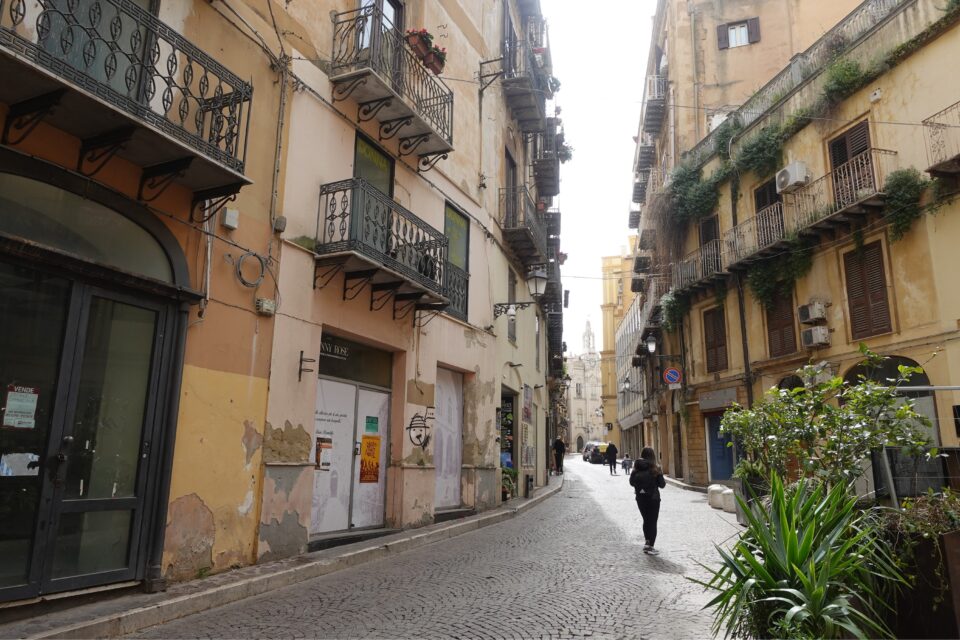
We walked down narrow lanes and past modest homes – much less polished than in other places. Unlike some Sicilian towns where Jewish history is now signposted, Agrigento offered little information about the precise location of the medieval Jewish neighborhood.
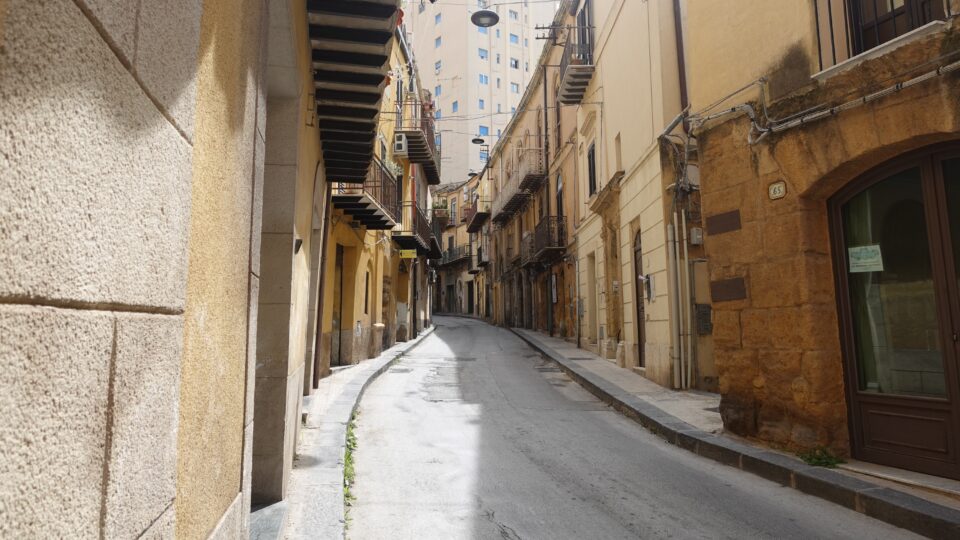
An Italian article we found suggested a general area—between two churches and around what may have been Via Sferri—so we walked the surrounding streets looking for plaques, markers, or references to a Jewish quarter. There were none.
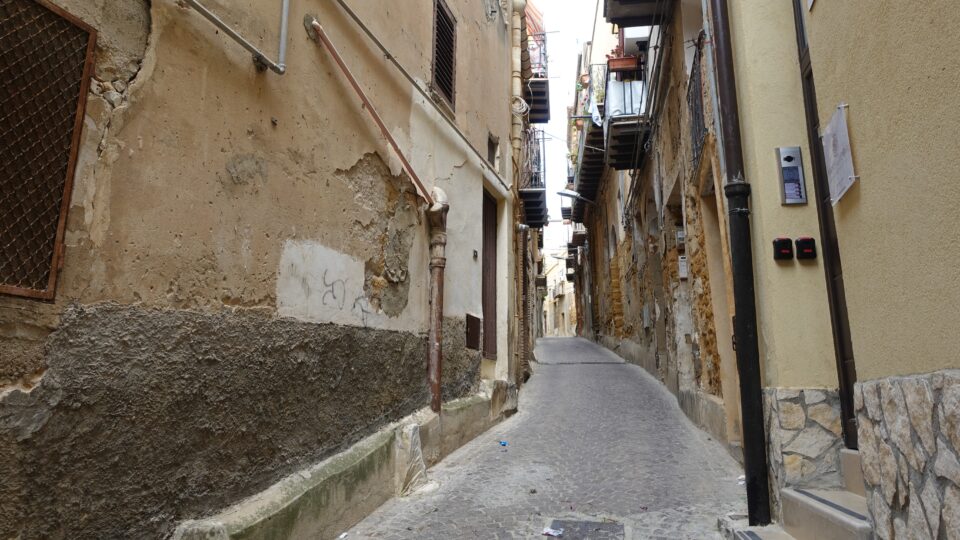
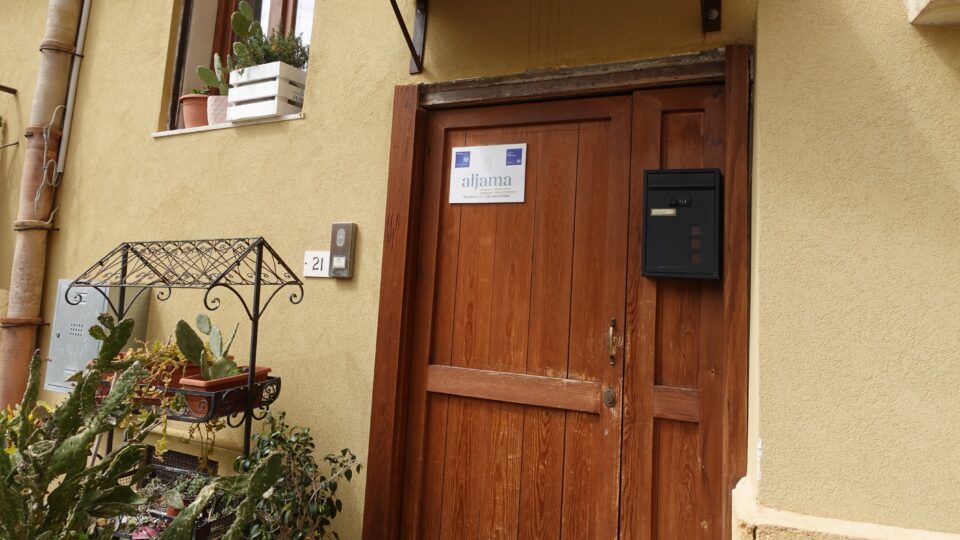
The only hint that Jews once lived here came indirectly through the name of a guesthouse called “Aljama,” an Arabic term historically associated with Jewish communities in medieval Iberia and parts of the Mediterranean. The name choice suggested local awareness of the area’s past, even if that history was not visible for tourists.
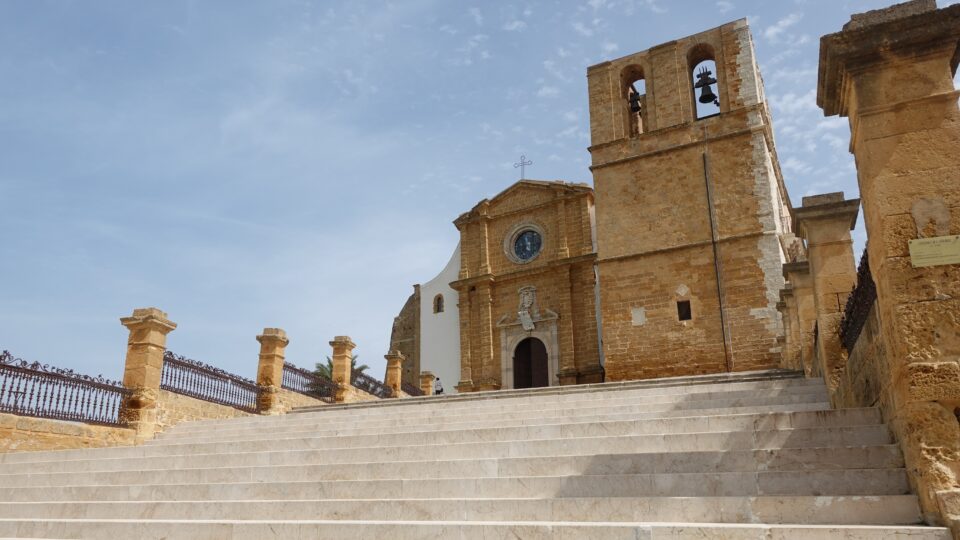
From there, we climbed up and up and more up through the city’s steep stairways to the cathedral at the top of the hill, emerging onto Via Duomo. Agrigento’s cathedral—the Cathedral of San Gerlando—perches high at the very top of the old town, and from there we got a beautiful view of the hills of Sicily.
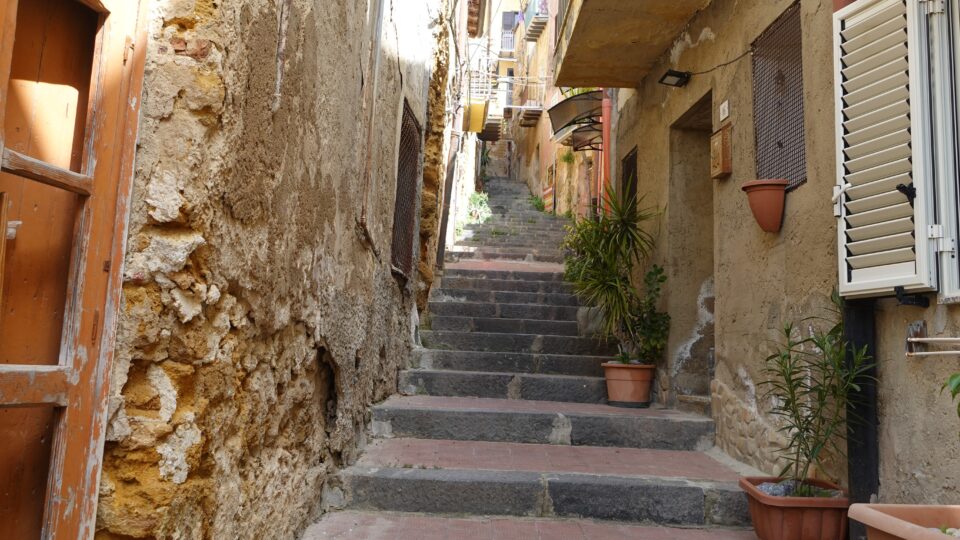
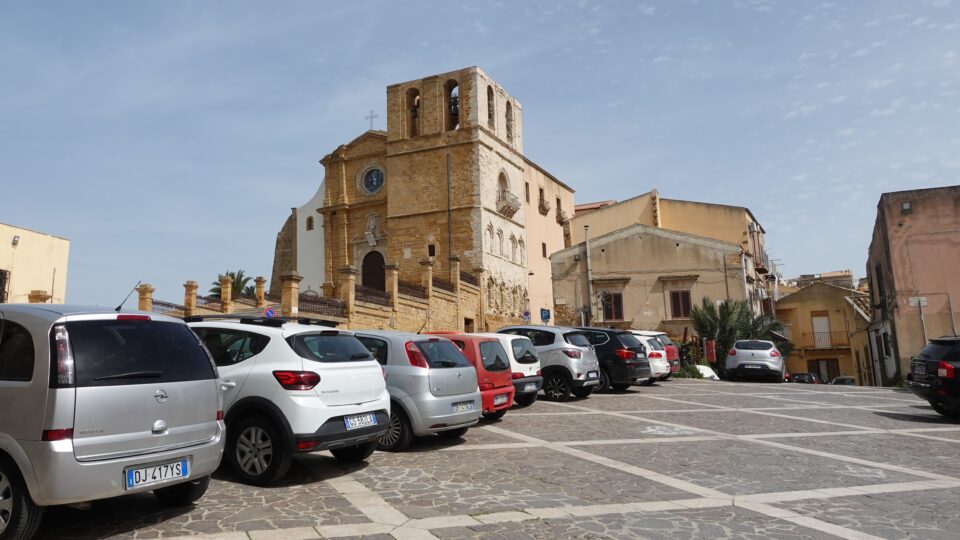
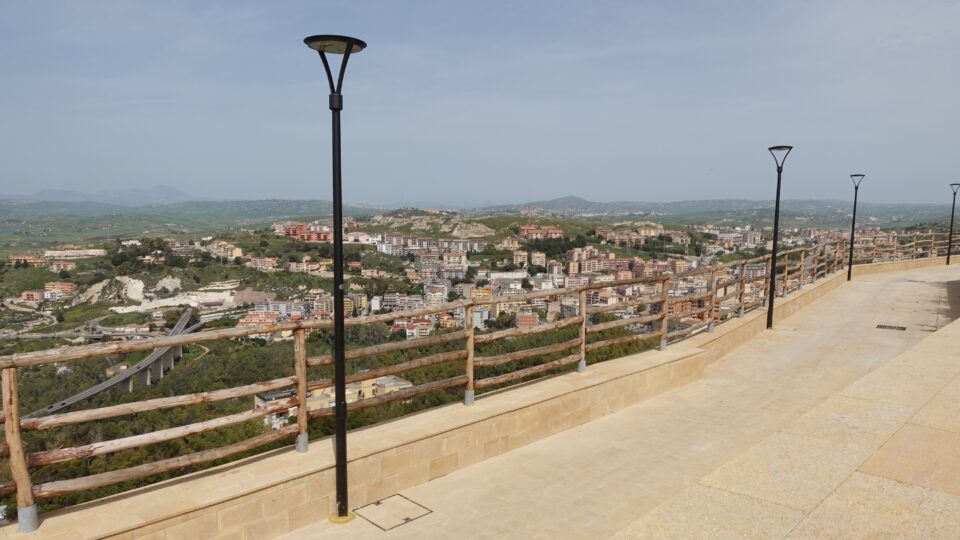
We continued our exploration walking down Via Duomo. By chance, we encountered crowds entering the Biblioteca Lucchesiana. Normally closed on weekends, today the library was offering free entry due to a local cultural festival.
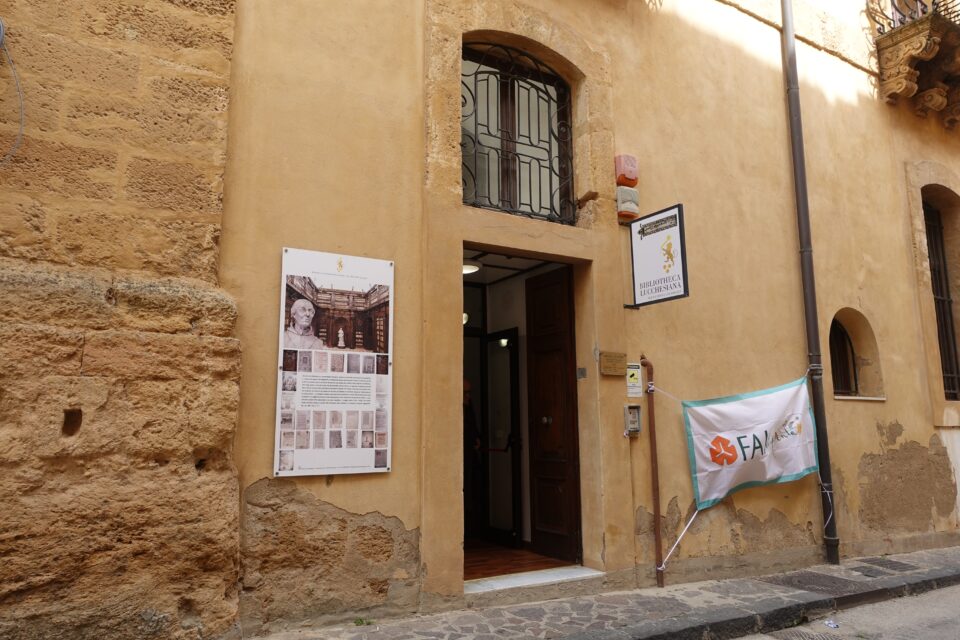
Founded in 1765 by Bishop Andrea Lucchesi Palli, the Biblioteca Lucchesiana began as the bishop’s private collection and was later donated to the city. It now holds more than 80,000 volumes, including rare manuscripts and early printed books.
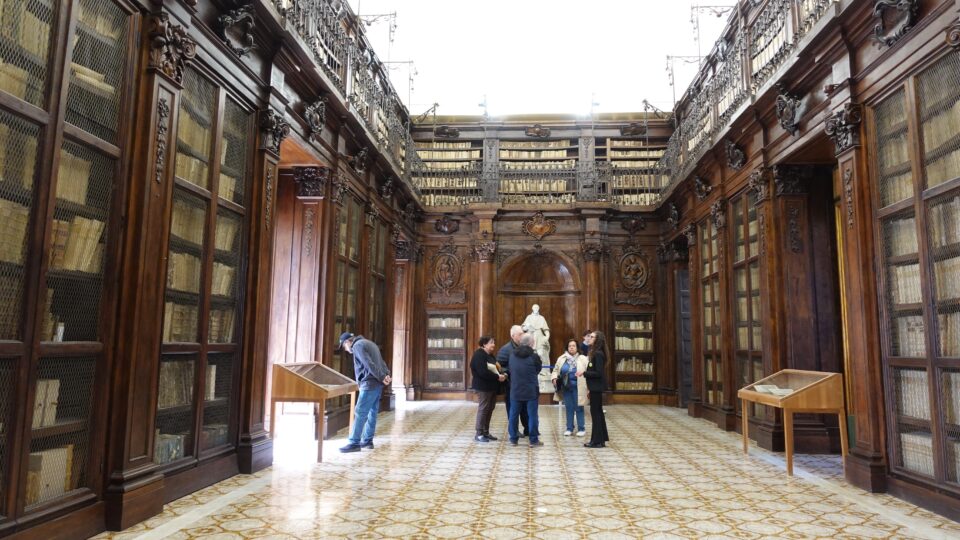
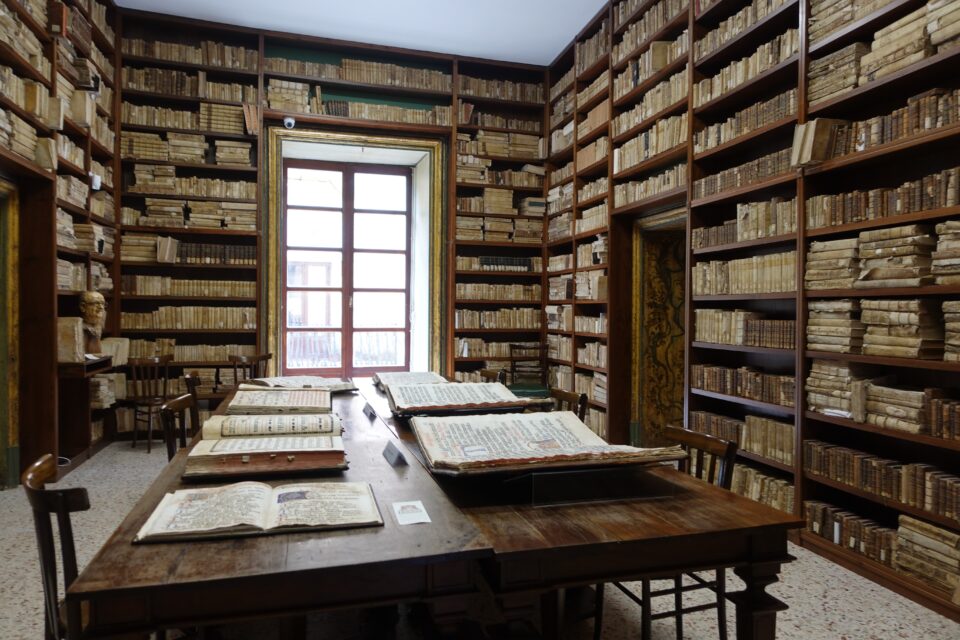
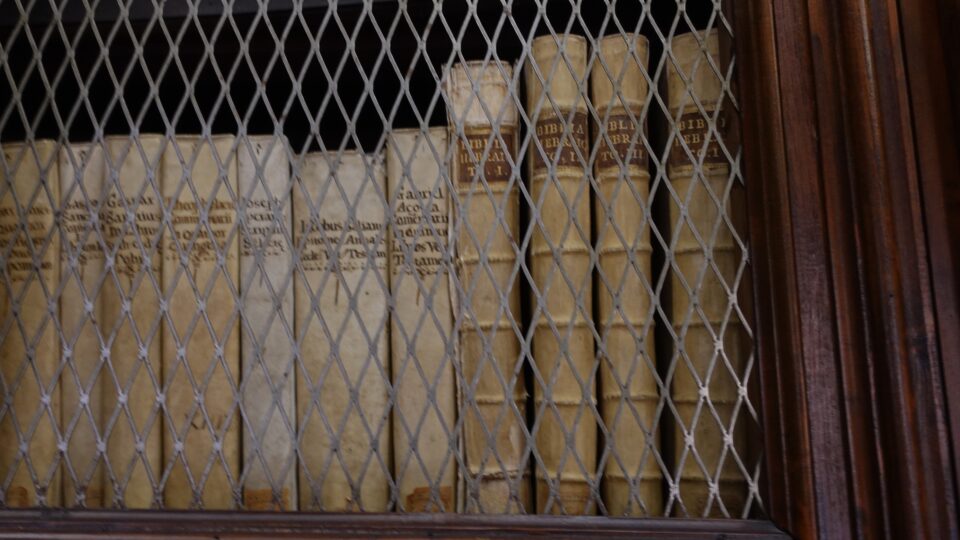
While the Biblioteca Lucchesiana primarily preserves European cultural heritage, it also offers a link to Jewish history through its medieval manuscripts – texts that reflect Sicily’s once multicultural society. As we browsed the sacred texts section, we spotted a Biblia Hebraica, a small reminder that traces of Sicily’s Jewish heritage can be found here.
Agrigento often appears on lists of Sicily’s top places to visit – not so much for the city itself, but because it is home to the Valley of the Temples, a vast archaeological site just outside town. The next day, Sunday, we visited there and saw so many interesting things, that it will be my next blog.
Still in Agrigento on Monday, we had a quiet day, mostly staying in the apartment catching up with things. After lunch we headed out for a short walk around the city. The weather was hazy with low visibility, so the famous views toward the sea and the Valley of the Temples never really appeared. The town was quiet – it was siesta hour and many shops and cafés were closed.
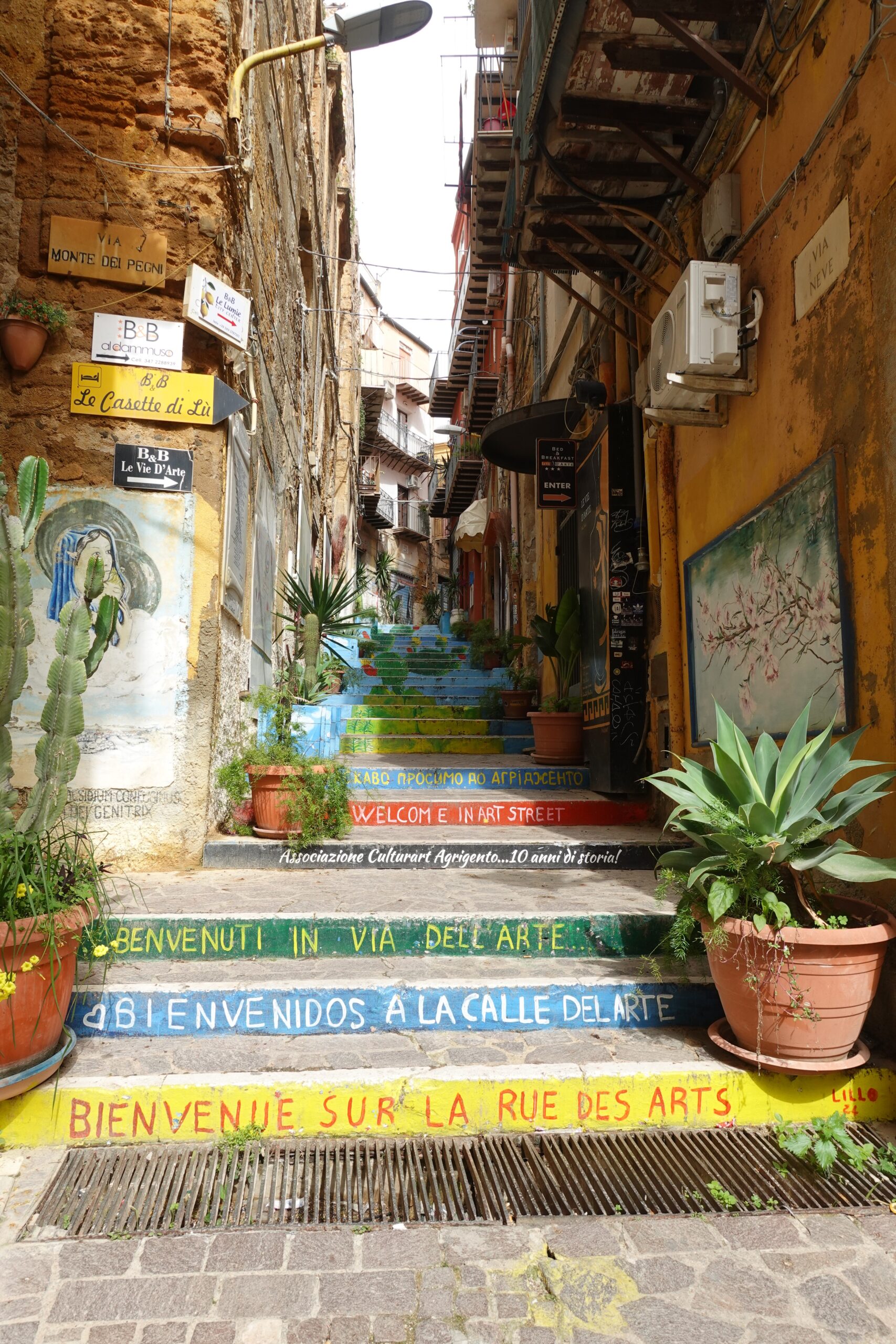
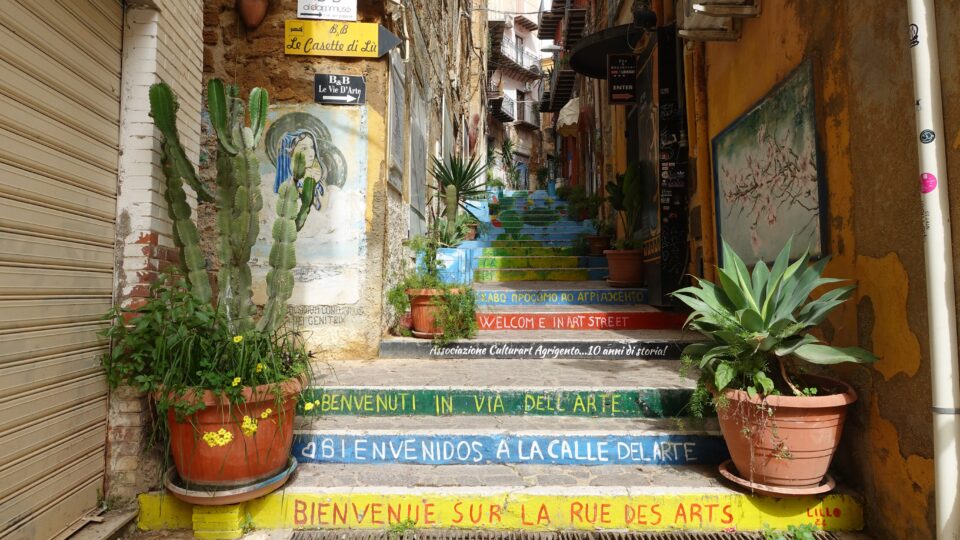
We walked down to see one of the small artistic touches the city has added in recent years: a staircase where each step is painted with words and phrases. These kinds of decorated stairways have become popular in several Sicilian towns, turning ordinary steps into small public art pieces.
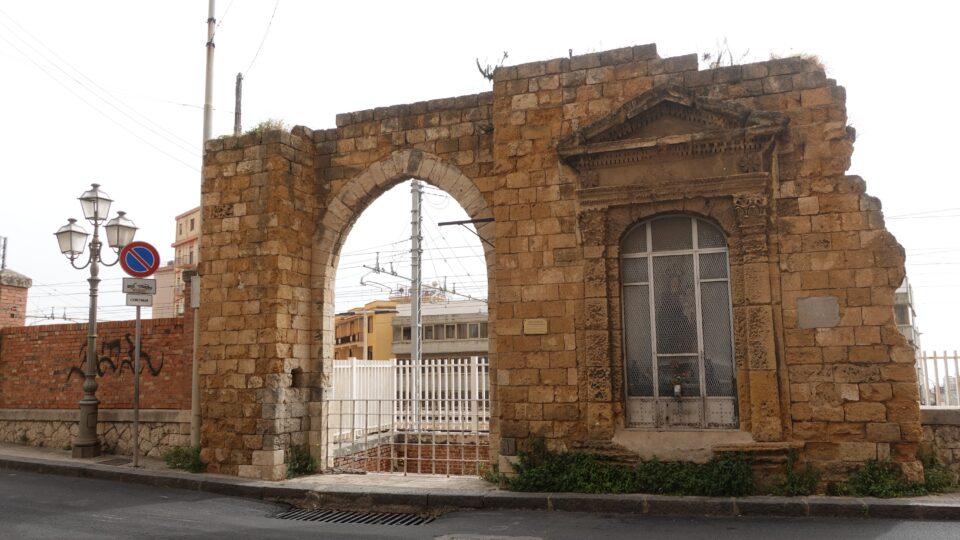
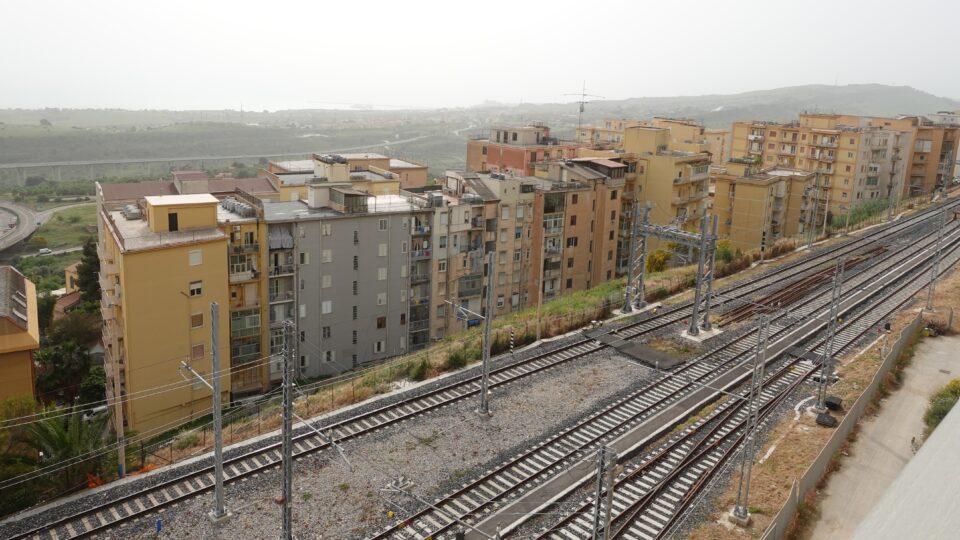
From there we continued along the main streets of the old town and eventually reached one of the historic gates in the medieval walls. Outside this gate, known as Porta dei Panettieri, once stood the Jewish cemetery of Agrigento. Today the landscape has changed dramatically: railway tracks run through the area, leaving no trace of the cemetery itself.
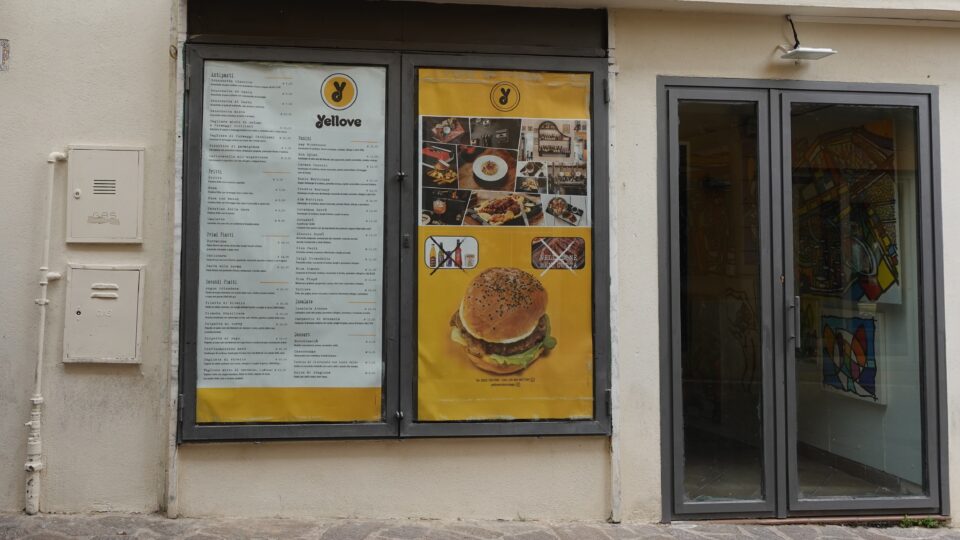
While walking the streets of Agrigento, we came across a few interesting things. One was Yellove, a restaurant serving rock-and-roll themed burgers. Specialties include the Amy Winehouse (Hamburger with crispy bacon, cheddar, lettuce, and fried egg), the Bob Dylan (hamburger with guacamole sauce, caramelized onion, and cheddar) or the Freddie Mercury (hamburger with buffalo mozzarella and cherry tomatoes). Several burgers were named after Italian singers that we did not recognize.
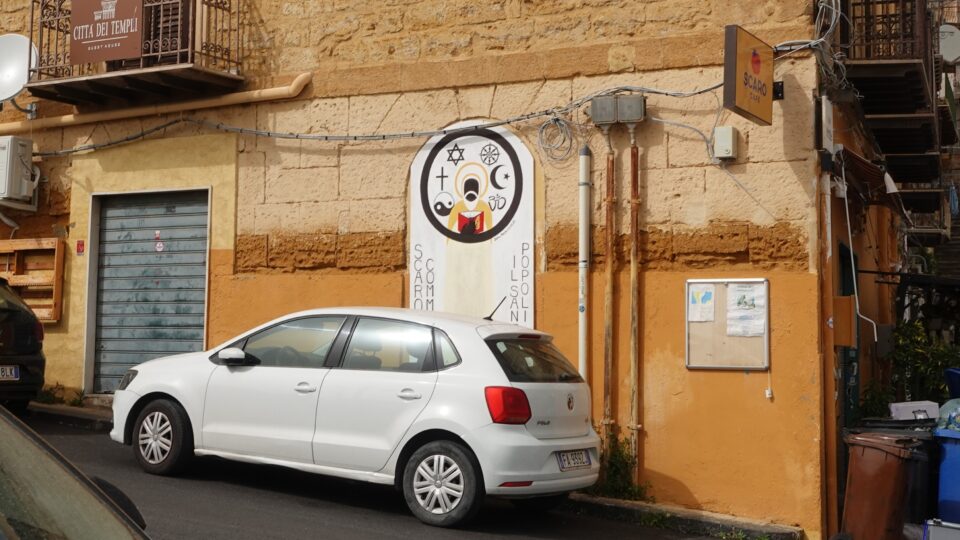
We also passed this sign and the Magen David caught my eye, and then I noticed the Cross (Christianity), Crescent and star (Islam), Dharma wheel (Buddhism), Yin-yang (Taoism) and the Om (Hinduism). A curious collection maybe promoting unity among religions? Don’t know.
We returned to our apartment after a calm and uneventful day, to get ready for tomorrow’s adventure when we leave Agrigento and continue searching for more Jewish heritage sites in other towns nearby.