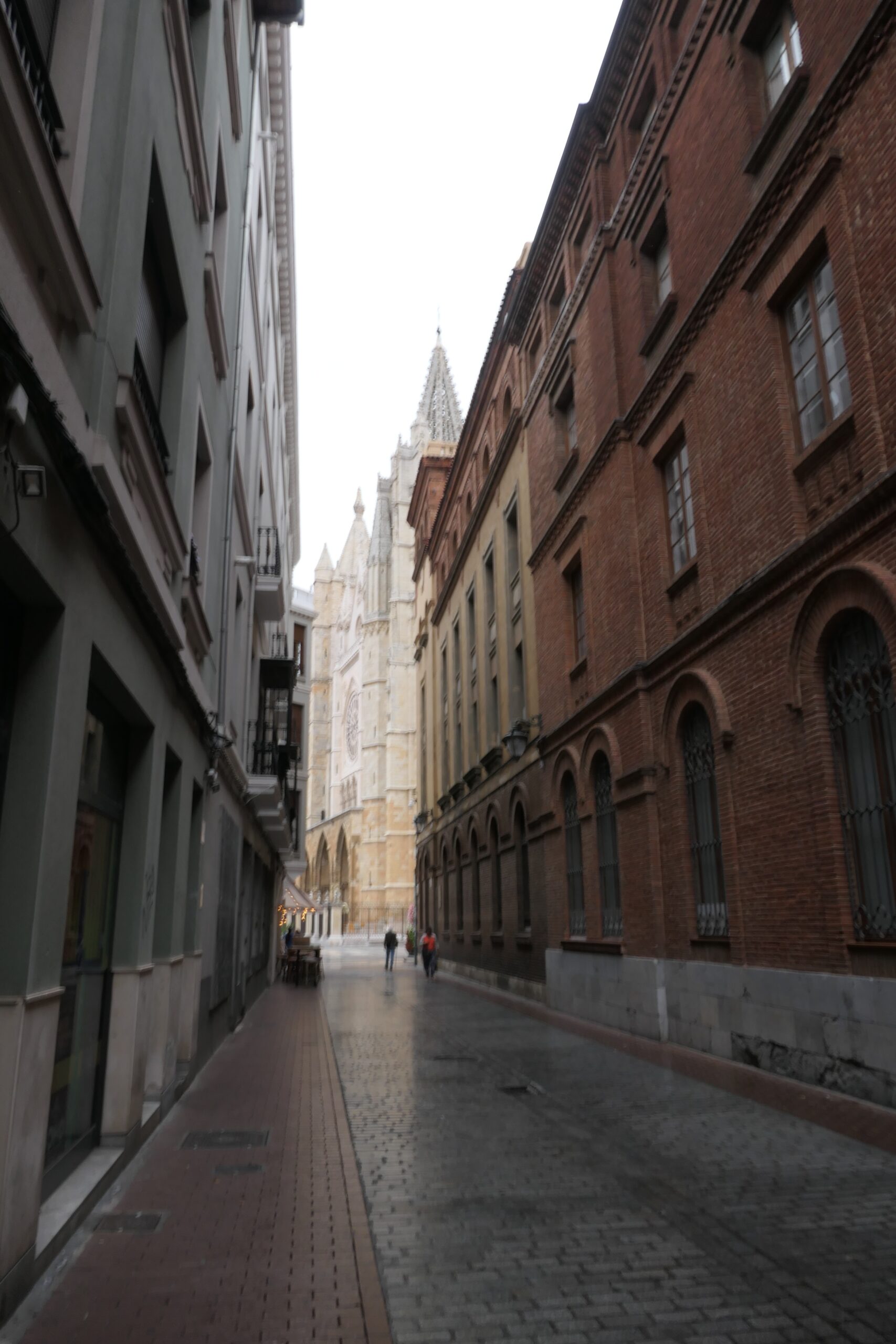
SEPTEMBER 5, 2024 : Some days, we chase clues to Jewish heritage sites only to end up empty-handed. Today was one of those unsuccessful days.
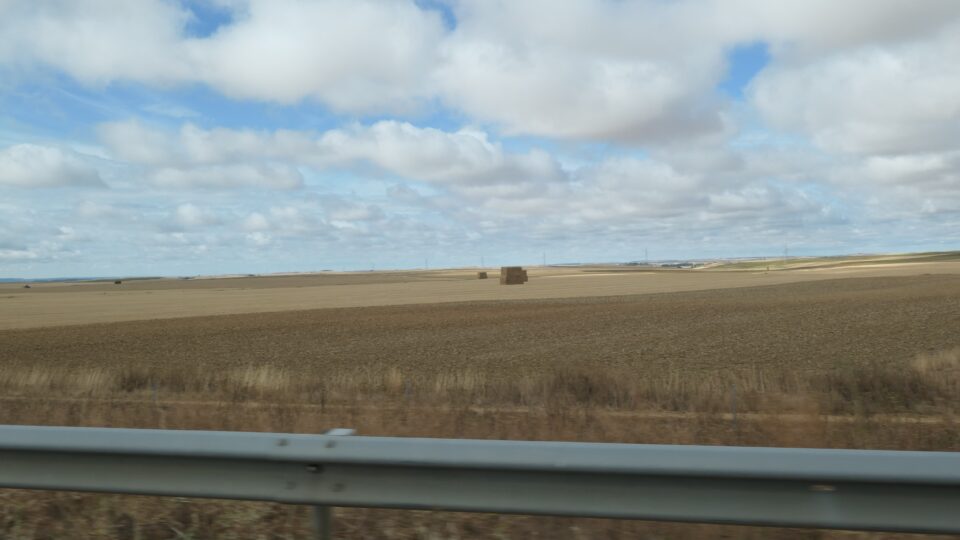
This morning, we left the town of Aguilar de Campoo, which we really enjoyed, and drove south to Amusco, a very small town, with a population of only about 500 inhabitants. The drive was through agricultural land, mostly flat hay fields.
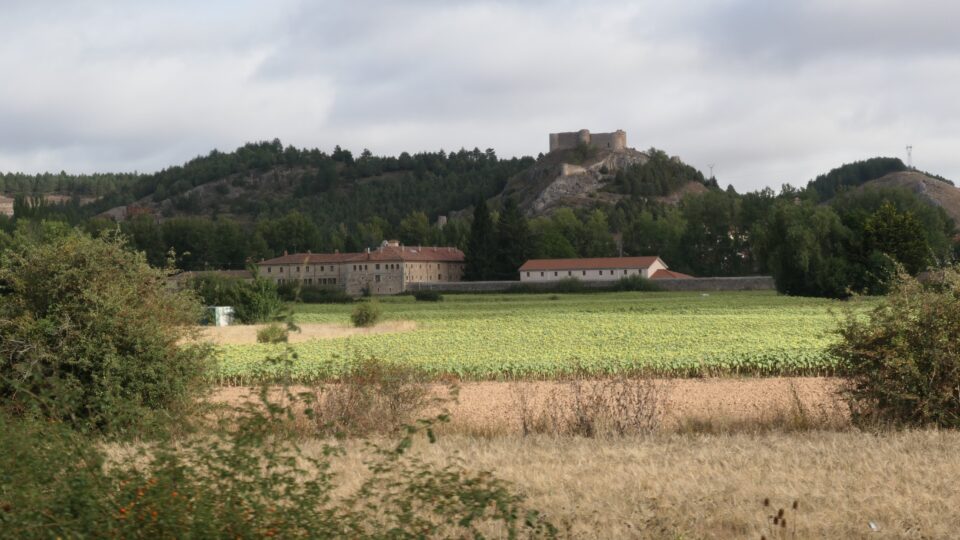
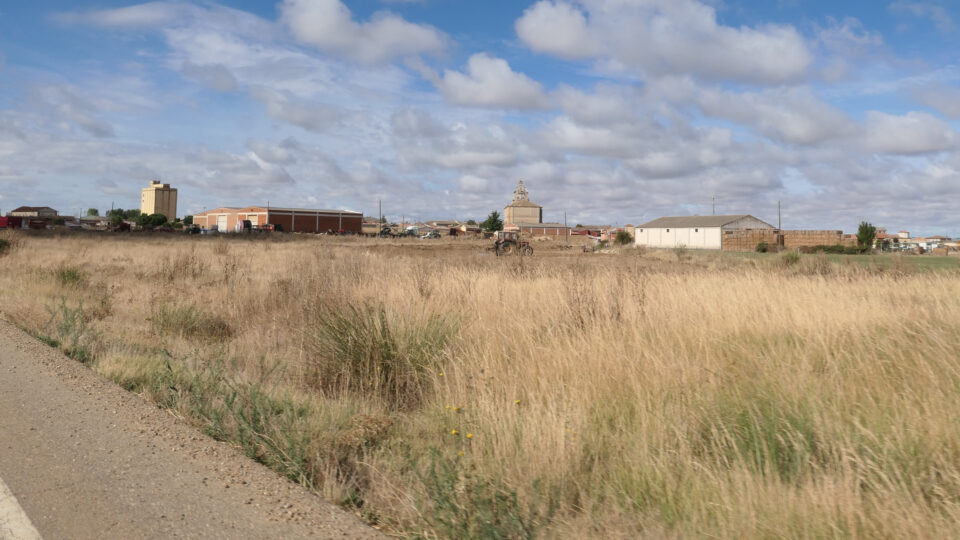
In the Middle Ages, Amusco was home to a Jewish community of about 300 people. Our research indicated that part of the synagogue that once served this community still stands. Like other synagogues of the time, it was built partially underground, as no building was allowed to rival the height of the church.
After undergoing renovations in the late 1990s with development money from the European Union, it was converted into a cafe. It seemed like it would be the perfect place for my morning coffee.
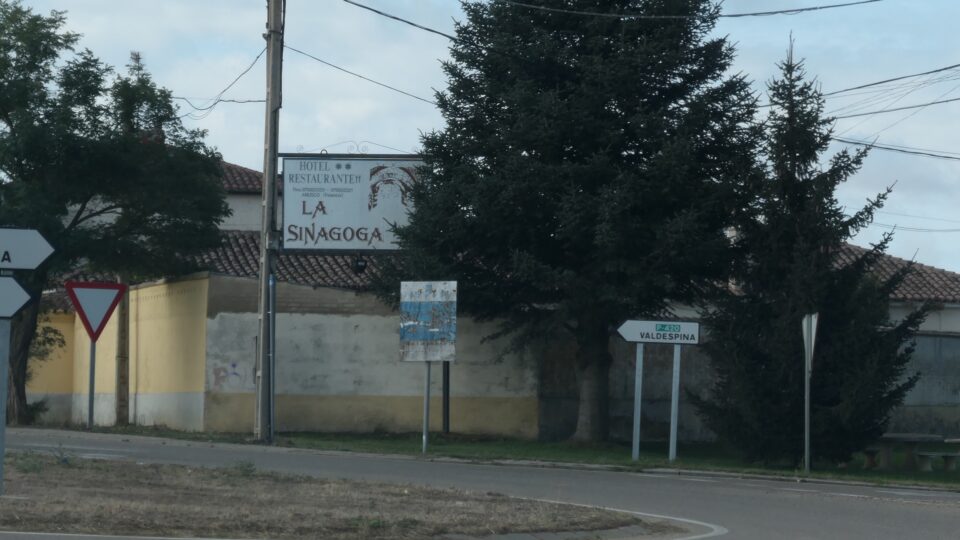
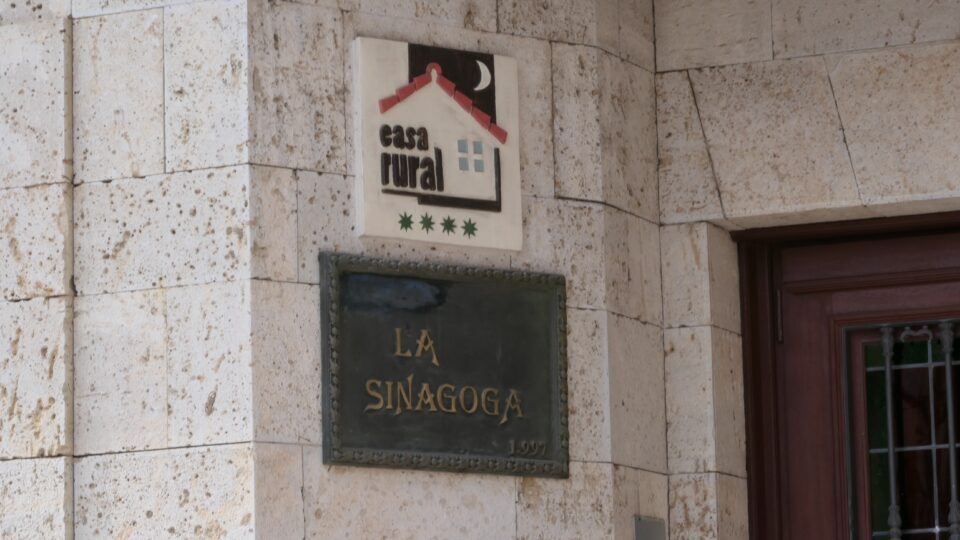
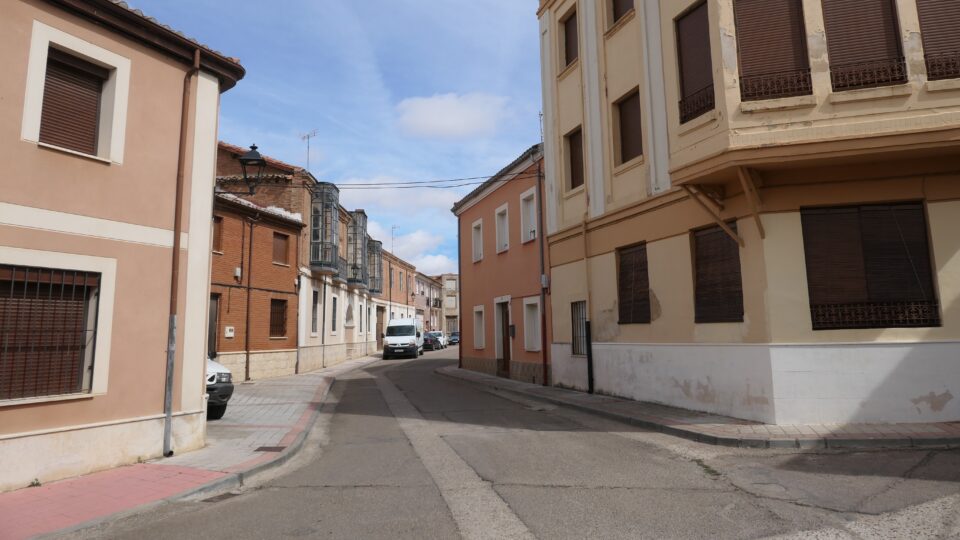
At the entrance to Amusco, a large sign advertised the hotel and restaurant “La Sinagoga,” raising our hopes for a nice visit. However, as we drove in, the town felt quiet and nearly abandoned—narrow lanes lined with run-down, aging houses, and not a single person in sight.
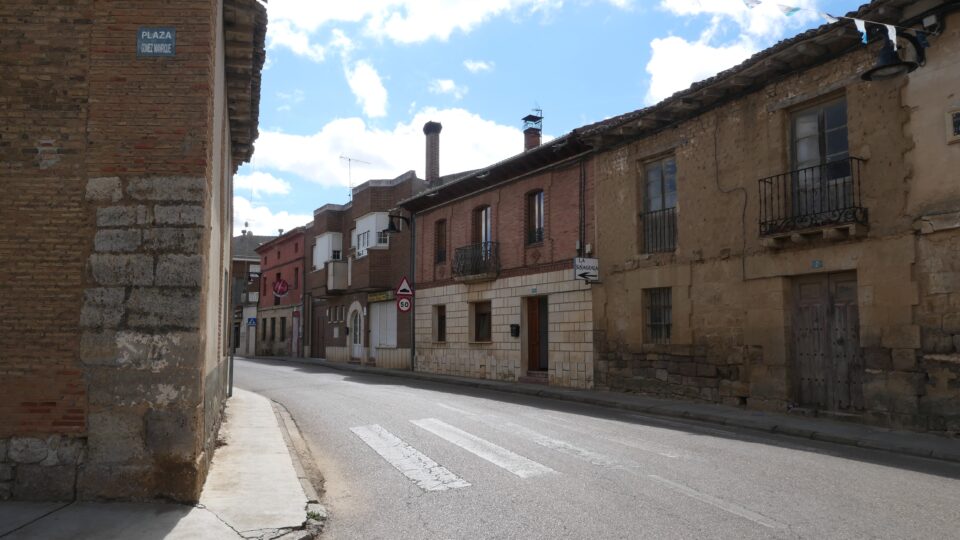
Reaching the main square, we found it equally deserted. The large church stood prominently on one side, and next to it was the former synagogue.
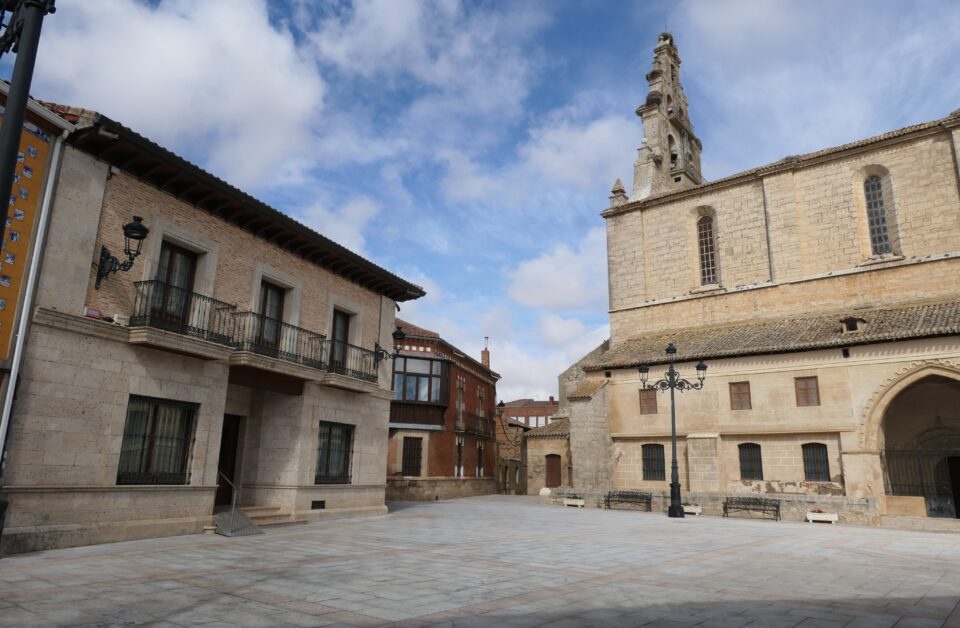
The building was locked, with no sign of life. The café was gone. Instead, it appeared to now be operating as an Airbnb. Later, I found the listing: the synagogue space was now available for rent, featuring a living room, kitchen, dining area, twelve bedrooms, and a private outdoor patio. What was once a center of Jewish communal life had become a vacation rental.
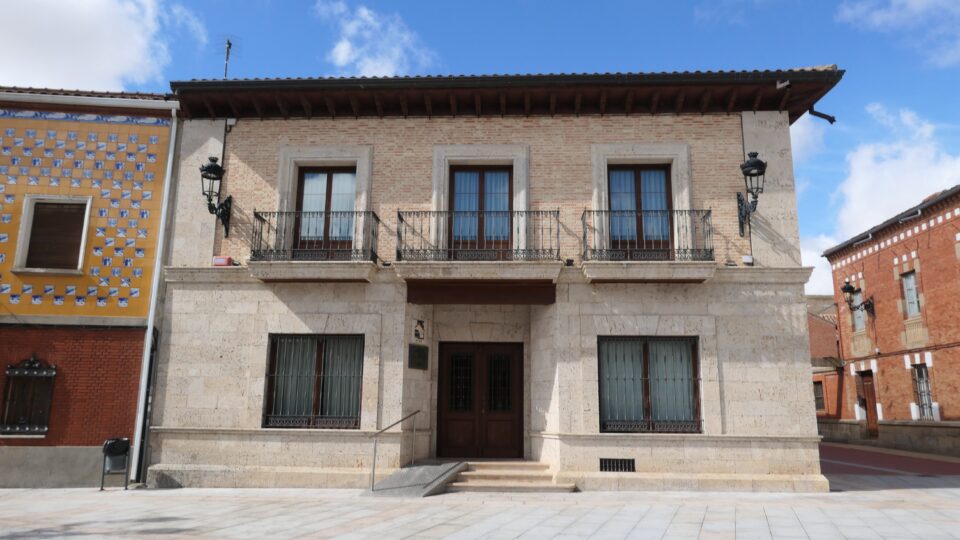
From Amusco, we drove to the town of Paredes de Nava. It wasn’t originally on our list of sites to visit, but I was drawn to the place due to its Hebrew sounding name. We had read that the town once had a synagogue, which after 1492, was converted into the Iglesia del Corpus Christi de la Bella Cruz.
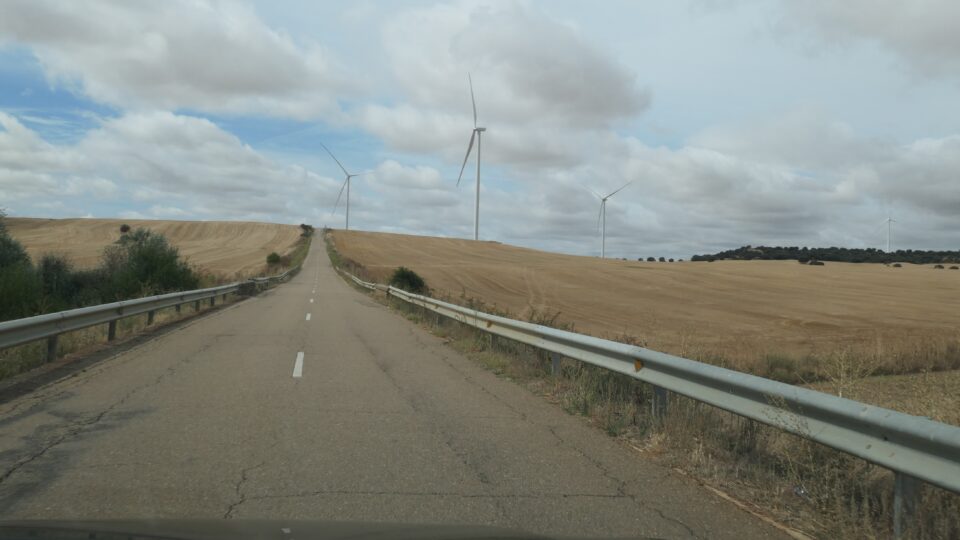
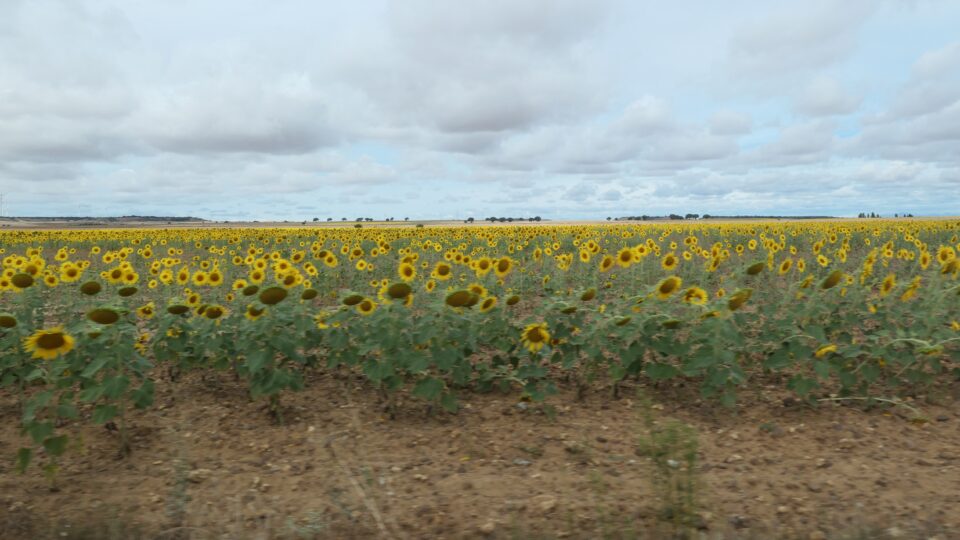
Leaving the highway behind, we took small back roads to reach Paredes de Nava. According to our research, the town now has four churches, yet none bore the name Iglesia del Corpus Christi de la Bella Cruz. To solve this mystery, Mark headed to the tourist office—only to find it empty. A sign on the counter stated that the clerk was attending a wedding at the town hall.
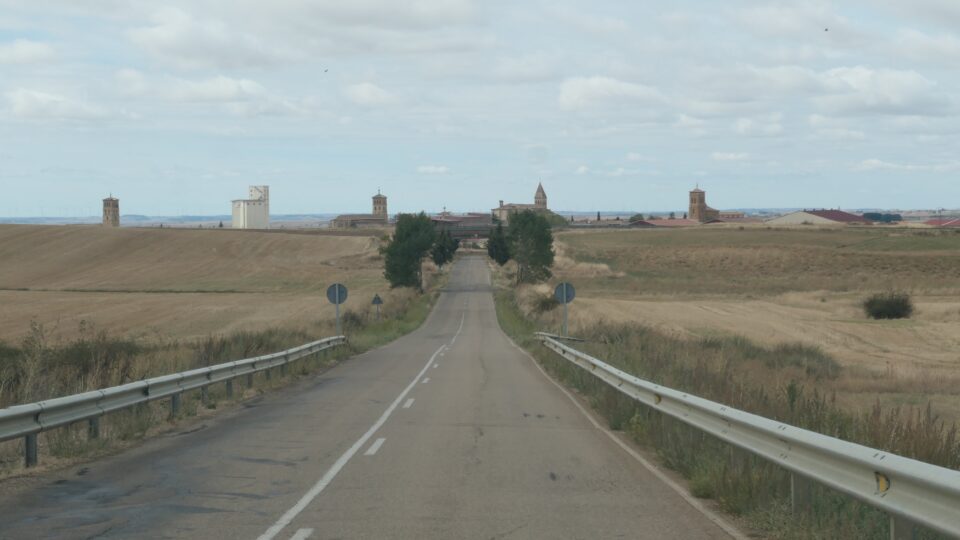
With no one to ask for guidance, Mark wandered through the streets, searching for any trace of the former synagogue. He found nothing. On his way back to the car, he noticed someone had returned to the tourist office. When he inquired, they claimed the synagogue was elsewhere. We followed their directions to this alternative location, but once again, we found no signs of a Jewish past. A frustrating wild goose chase, or a wild Jews chase as Mark would say.
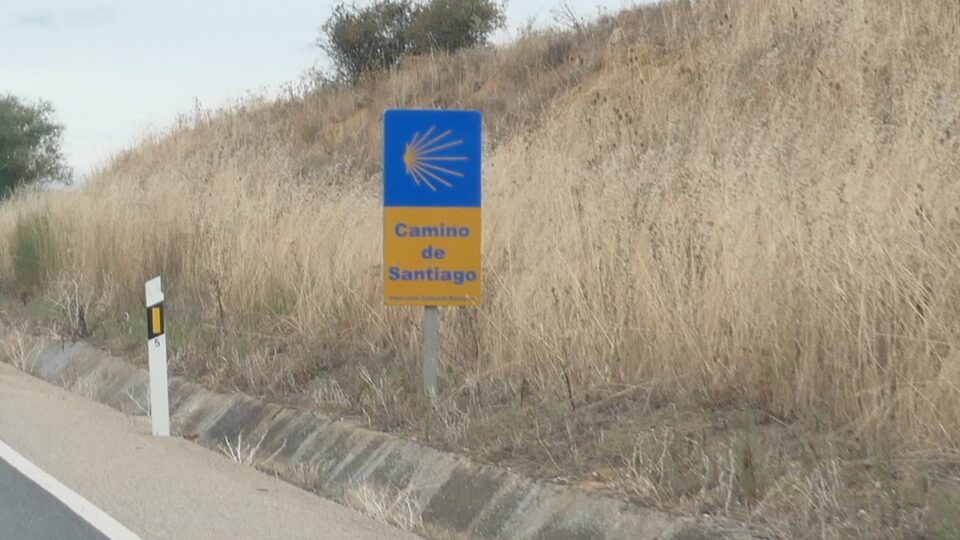
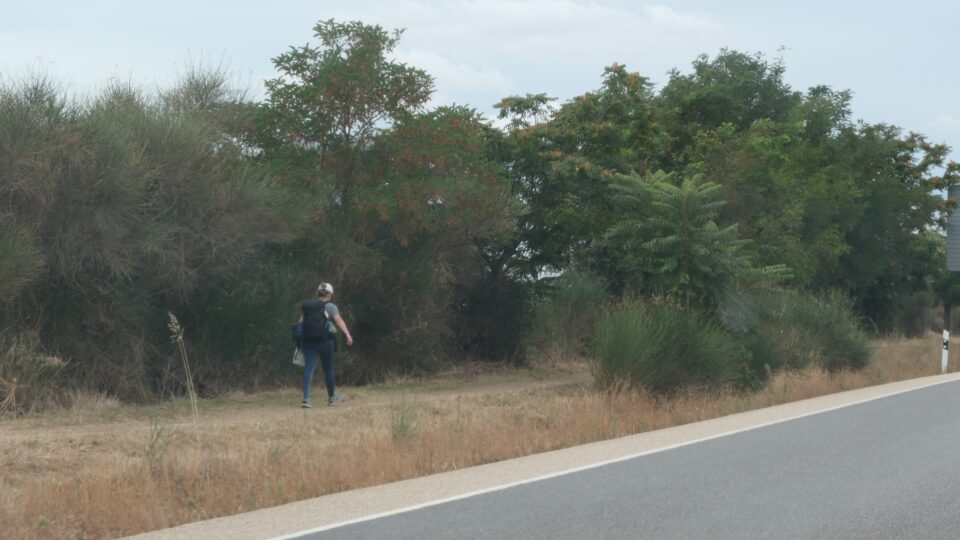
Our final destination today was León, an hour’s drive northwest. On the way, we saw the blue-and-yellow signs marking the Camino de Santiago, the historic pilgrimage route leading to the shrine of St. James in Santiago de Compostela in northwest Spain. Pilgrims were walking along the roadside path, also heading toward León, one of the important stops along their route.
As the largest city in the region, with a population of about 125,000, León offered to our delight, a choice of three vegan/vegetarian restaurants. We selected one, made a reservation, and were fortunate to find a parking space nearby. The restaurant, called L’Union, was full, with walk-ins being turned away.
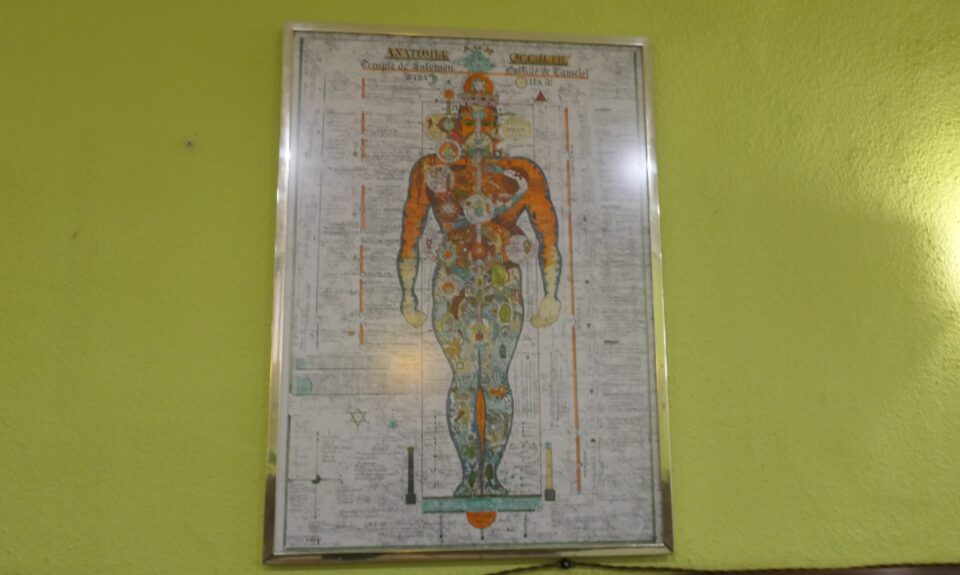
Once seated, we were surprised to see an Occult Anatomy poster, complete with Hebrew letters and Jewish stars, hanging on the wall opposite us. In hindsight, this shouldn’t have been so baffling, given that León’s most illustrious Jewish figure is Moshe de León, the editor of the Zohar, one of the most significant works of Jewish mysticism. Seems like the spirit of the Kabbalah lives on here.
At the restaurant, the food was excellent, served as part of a fixed-price menu that included an appetizer, main course, beverage, and dessert. By the time we left, our mood was much better than when we arrived.
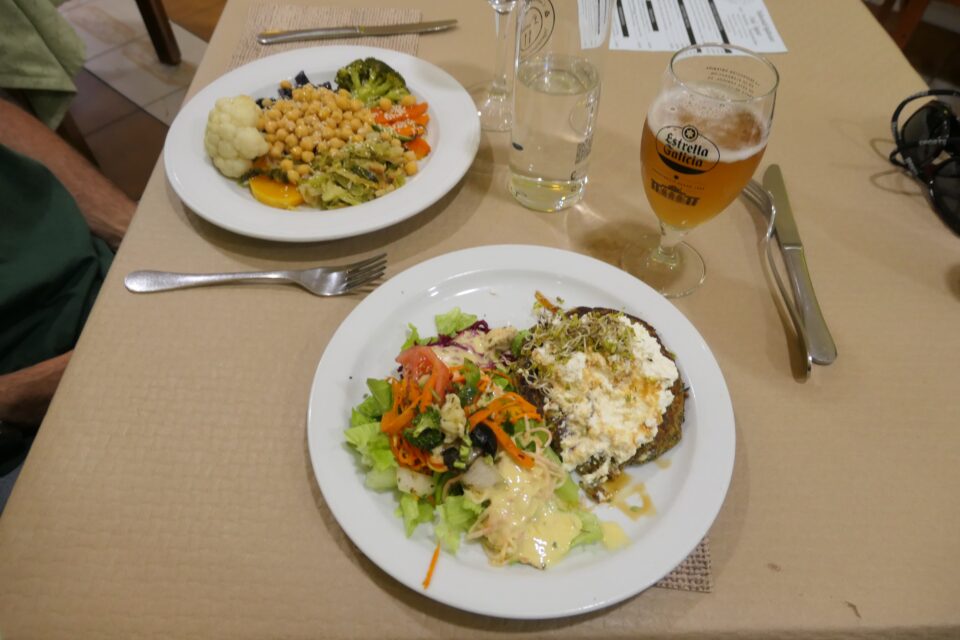
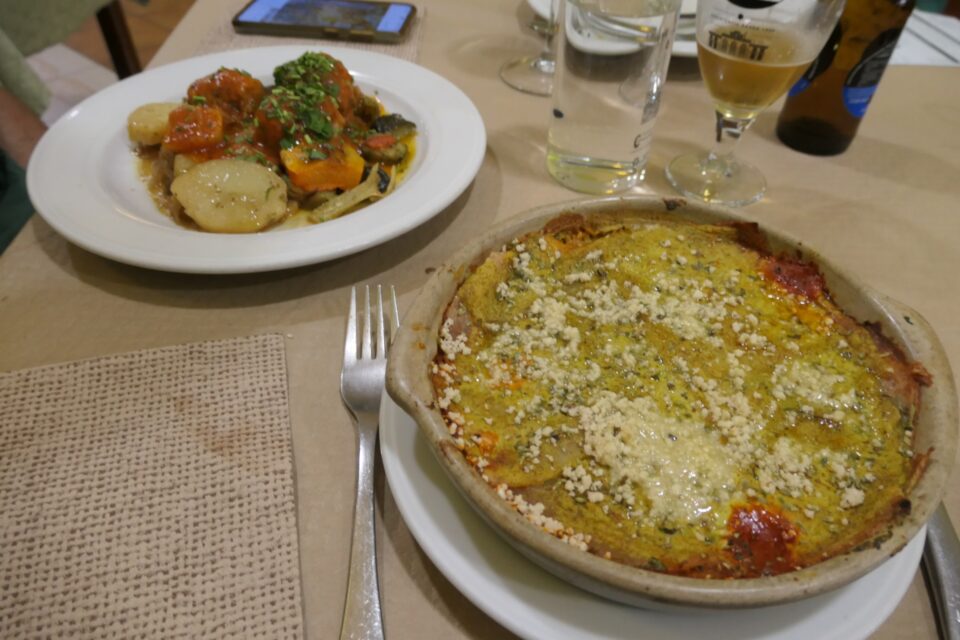
León is part of the Network of Jewish Quarters, and its brochure highlights nine points of Jewish interest in the city. Additionally, the regional government of Castilla y León features its own Jewish route on its website, detailing 11 stops. Although the two lists overlap significantly, it still added up to a long itinerary of sites for us to explore.
The history of the Jews of Leon is very similar to the Jewish history in the other cities we have visited so far in Spain. The Jewish community here dates back at least to the 10th century, when they played a vital role in the city’s economic and cultural development. By the 12th and 13th centuries, the Jewish population in León flourished, engaging in trade, finance, craftsmanship, and medicine. The community also benefited from periods of royal protection, especially under King Alfonso VII and Alfonso X, who granted privileges that allowed Jews to own property and participate in civic affairs.
However, like elsewhere in Spain, León’s Jewish community faced increasing restrictions and persecution in the late 14th and 15th centuries. Anti-Jewish riots in 1391, economic pressures, and forced conversions weakened the community. By 1492, the Edict of Expulsion forced León’s remaining Jews to either convert or leave Spain entirely.
After settling into our Airbnb, our first stop was the tourist office, where I added a León stamp to my Jewish Network Passport. The clerk on duty knew little about the city’s Jewish heritage sites, but the official tourist map featured several Sefarad markers, which we used to guide us.
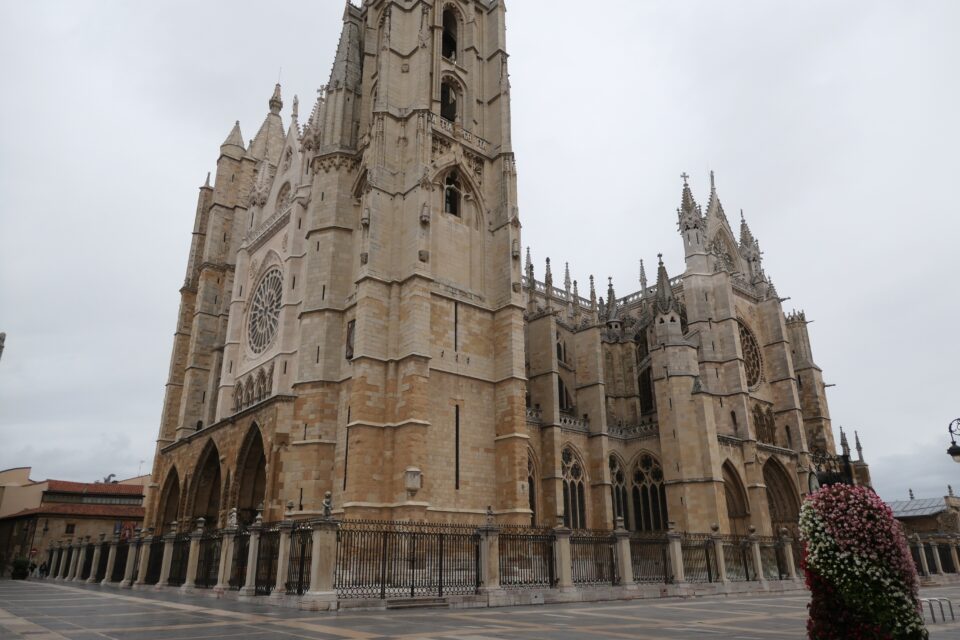
Our next destination was the renowned León Cathedral, also known as Catedral de Santa María de Regla, a masterpiece of Gothic architecture celebrated for its more than 700 stunning stained-glass windows—among the finest in Europe. Its twin towers rise dramatically over the city’s skyline, making it one of León’s most iconic landmarks.
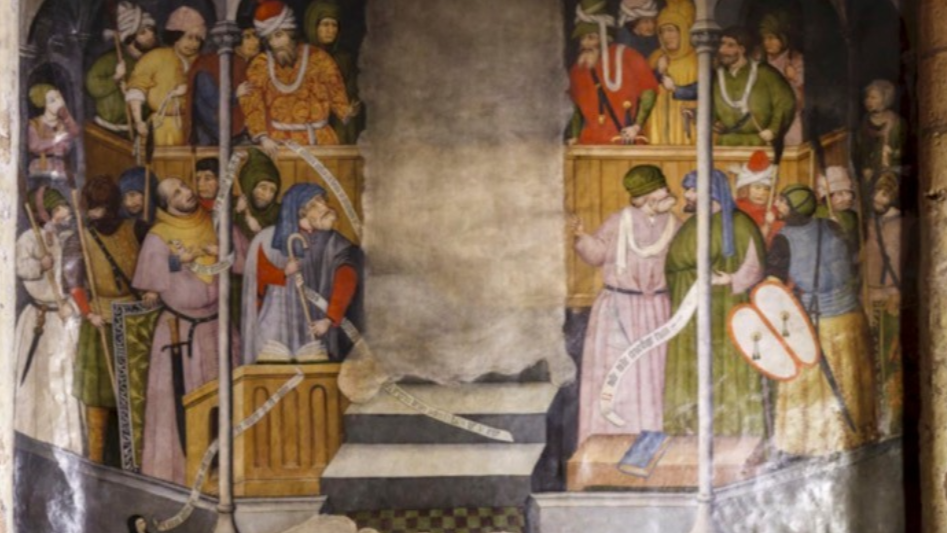
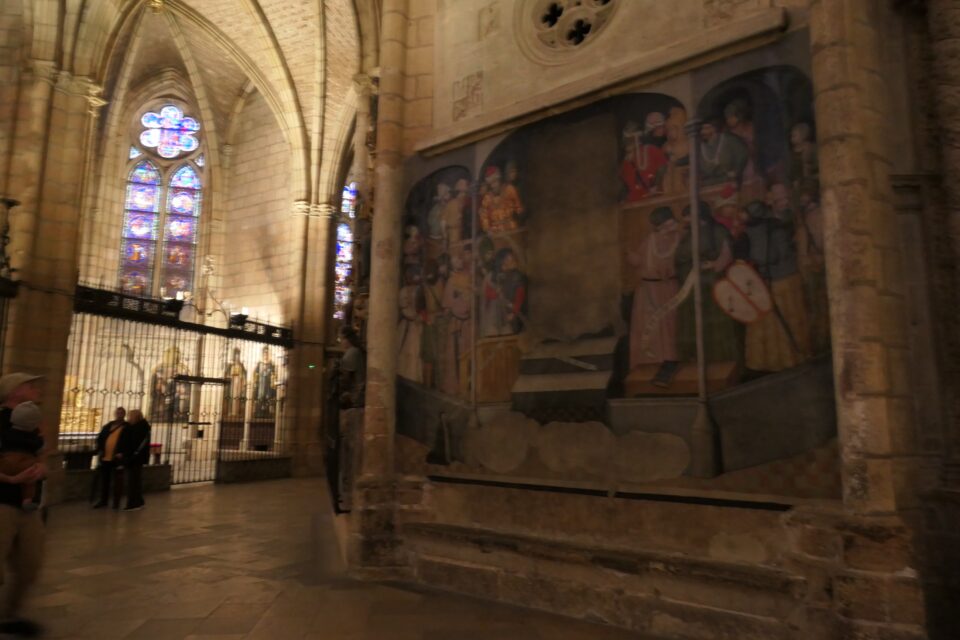
Inside this huge, impressive cathedral is a polygonal ambulatory—a walkway behind the choir— that features murals by master Nicolás Francés. One of these paintings, depicts a group of Jews dressed in 15th-century attire, offering a visual record of the final chapter of Jewish presence in León.
Upon exiting the Cathedral, it was raining, and we were tired. Rather than pushing on, we decided to call it a day and plan to continue exploring León’s Jewish Heritage sites tomorrow. Hopefully, León will prove more successful than Amusco and Paredes de Nava had been this morning.
These days makes you appreciate the days you do discover Jewish places
I also had high expectations from הפרדס של נאווה
oh well, at leas the food was good
I like the wild Jews chase. Maybe the economic activity by the Jewish merchants gave birth to the saying the Jews that laid the golden egg.